
The People’s Main Message to the Scholars
This is a translation of a special note written by the Editor-in-Chief of The Islamic Republic News Agency (IRNA), and published in the newspaper on February 9th, 2026. On the next day, on Tuesday February 10, 2026, Ustad Soroush Mahallati also responded and added his thoughts to this crisis, which is the relationship of scholars and the people (of Iran in particular).
Editorial – Jomhouri Eslami Newspaper
Monday, 20 Bahman 1404
Special Note from the Editor-in-Chief
In the Name of God, the Most Compassionate, the Most Merciful
When speaking of the Islamic Revolution, one cannot ignore the role of the scholars in bringing it into existence. The origin of this revolution was the Qom Seminary and its leader, Imam Khomeini, as one of the most prominent marāji, while it was the people who played the primary role in bringing it to victory.
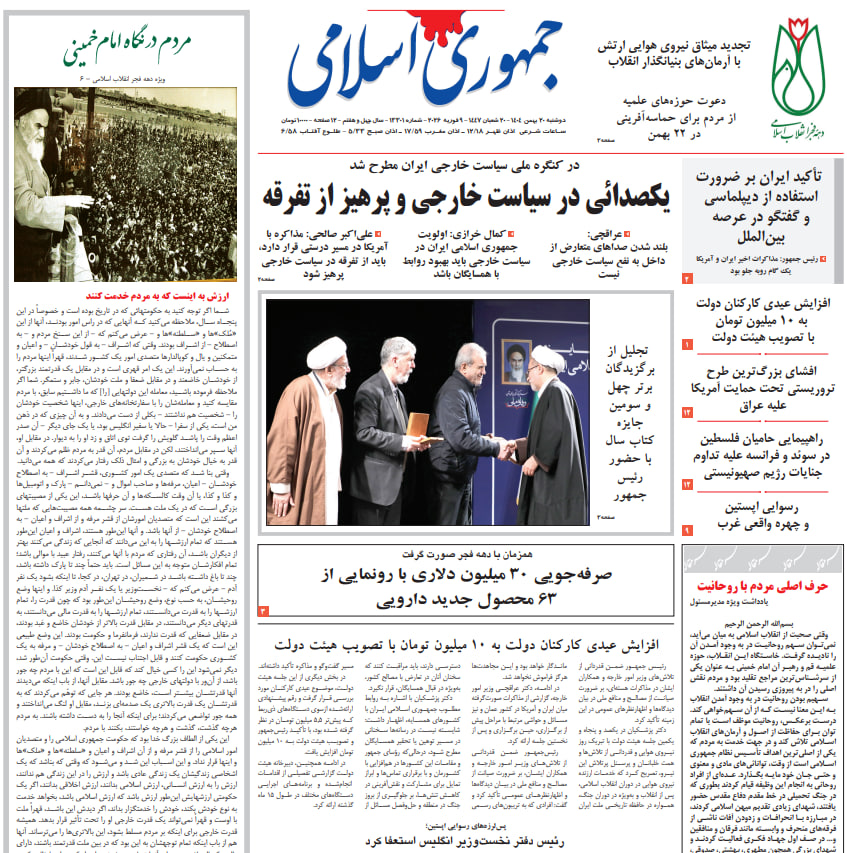 The scholars’ participation in bringing about the Revolution does not mean that they should claim a share of it. On the contrary, the scholars are duty-bound to exert their full capacity to safeguard the principles and ideals of the Islamic Revolution, and to dedicate their time, material and spiritual abilities – even their lives – to serving the people, which was one of the fundamental aims behind establishing the Islamic Republic.
A number of scholars rose to fulfill this duty. During the imposed war, they stood on the front lines of the Sacred Defense, offering many martyrs for the Islamic homeland. In confronting deviations and eliminating the harms caused by deviant and affiliated groups such as Furqan and the Monafeqin (MEK), they were at the forefront of intellectual struggle, giving distinguished martyrs such as Motahhari, Beheshti, Saduqi, Madani, and Qazi Tabataba’i in this path. In addition, many scholars, through immense effort in various sectors, devoted themselves to serving the people and spared no effort in this regard.
Nevertheless, the conduct of some scholars, and even more so, the ideas that fall outside Islamic frameworks held by certain individuals among them, who are only familiar with the outward shell and unaware of the depth of God’s religious teachings, have unfortunately inflicted devastating blows upon the people’s faith. They have also directed the course of the Islamic Republic, across various branches of the three powers, toward paths that run contrary to its original objectives.
Although the sacrifices and struggles of the first group are bright and invaluable, they have unfortunately been overshadowed and forgotten due to the missteps and misleading narratives of the second group. The result is that inclination toward religion has now declined, while aversion to it is on the rise.
Although official propaganda apparatuses attempt to portray participation in certain rituals, such as iʿtikāf, the vigils of Laylat al-Qadr, religious mourning ceremonies, the Arbaʿeen pilgrimage march, and similar events, as signs of religious growth, the reality is that losses (in religious commitment) far exceed gains. Despite possessing sufficient information in this regard, these institutions do not deem it prudent to address these declines openly. Unfortunately, they either neglect, or choose to neglect, the undeniable educational and communicative principle that weaknesses must first be identified and articulated in order to confront them and resolve to correct them.
After nearly half a century since the victory of the Islamic Revolution and the establishment of the Islamic Republic, the conclusion that can be drawn regarding the scholars is this: the scholars have distanced themselves from their most essential position, that of being the refuge of the people.
Throughout centuries, the people of Iran have regarded the scholars as their support and shelter. The principal reason for their participation in the Islamic Revolution, for their immense sacrifices in overthrowing the dependent tyrannical regime, for establishing the Islamic Republic, for defending it during the Sacred Defense, and for standing firm against all conspiracies, was their trust in the scholars. This trust, and this role of being the people’s refuge, is a matter that transcends political systems and the various transformations of historical eras. The scholars must always remain the refuge of the people, whether in supporting the Islamic Republic or in critiquing its performance.
The scholars can only fulfill this mission in practice if it remains independent. An independent scholarly class can both support governance and those who govern, and at the same time, place their reform on its agenda. Only then will the people feel that the institution of the scholars is truly their refuge, and that safeguarding their interests and welfare is always its foremost duty. The people’s central message to the scholars today is precisely this: return to your true and essential mission: be the people’s support and shelter.
Editorial – Jomhouri Eslami Newspaper1
By Ustad Soroush Mahallati
Tuesday, 21 Bahman 1404
Yesterday’s editorial of Jomhouri Eslami, titled “The People’s Main Message to the Scholars,” addressed an important issue that cannot be brushed aside with indifference. That the relationship between the people and the scholars was once closer and more intimate, and that today this relationship has changed, are two undeniable realities. It would be simplistic to analyze this change by saying: since people have distanced themselves from religion, they have also distanced themselves from religious scholars. This superficial response is unacceptable because even in the distancing from religion, one cannot ignore the performance of those scholars themselves. Moreover, not everyone who has distanced themselves can be accused of abandoning religion altogether.
It appears that this gap stems from a divergence in “understanding” and “pain.” In the past, shared understandings and shared pains bound them together. Today, however, “the people’s understanding” differs from what the scholars present. For example, for religious scholars, the primary issue may be the preservation of outward religious forms, whereas for the people, the primary issue is the preservation of justice and equity. Thus, the scholars’ strongest objections may arise when a religious ruling is violated, while the people’s strongest objections arise when justice is violated, and oppression appears.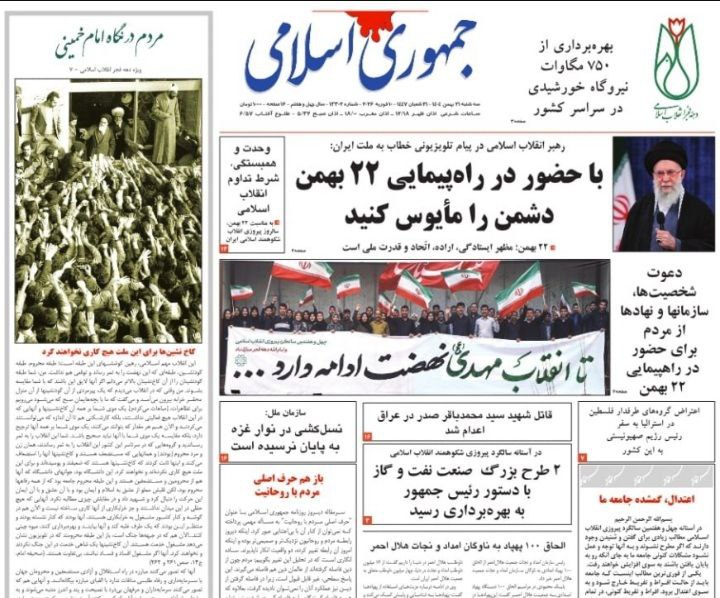
For instance, they may ask: why do banks impose late-payment penalties, and is this not usury? The people, meanwhile, say: the banking system distributes credit unjustly, and parasitic elites take the largest share. At most, some among them may gently speak of the problems of the hungry, but they do not expose the “gluttony of the oppressor” that leads to the “hunger of the oppressed.” Yet those who are themselves struggling in hunger expect a cry against the “gluttony of the oppressor.”
In the past, due to their longstanding tradition of asceticism and contentment, they earned the trust of the people, so much so that when the founder of the seminary passed away, his children reportedly had nothing to eat that night (as narrated by Imam Khomeini and others). Today, however, some enjoy the finest worldly comforts. Those who once lived in modest seminary rooms now reside in the most luxurious buildings, each bearing the name of an institution, surrounded by attendants, to the extent that the head of one term of the judiciary angrily rebuked his predecessor for having built not a school but a palace.
There was a time when their great figures avoided titles and honorifics, and after death were buried on the margins of a mosque or beside one of the holy shrines, even instructing that the verse “And their dog stretched forth its forelegs at the threshold” be inscribed upon their gravestone. Even for the highest rank of marjaʿiyyah, the title “Ayatollah” was not extended beyond its measure (as seen on the gravestone of Ayatollah Ha’eri). Today, however, grand shrines are constructed for them, and even large gravestones cannot contain the length of their titles and honorifics.
Yet these factors that create distance are not equally visible to all people, nor do they affect every segment of society in the same way. The more fundamental and serious issue concerns the position and status of the scholars within the political system. In the past, the seminary at times stood against the government, at times alongside it, and at times separate from it, but in any case, it maintained its independence. Its positions were independent, its income independent, its pulpit and prayer niche independent, and its organizational structure independent. In the past decade, however, this independence has weakened to the point that not only the ears and tongues of many have inclined toward the center, but even their pockets have turned in that direction.
Of course, the people do not expect the scholars to stand “above the government” or to adopt a posture of opposition to the system. But they do expect that if scholars are committed to strengthening the system, they do not equate strengthening merely with praise and glorification. Rather, they should stand with the broader masses of the people in presenting criticism and even reasonable protest. Failure to perform this role has shaken the popular roots of the scholarly class. The more this independent institution becomes dependent, the weaker it will grow.
Some, in their naïveté, sought to strengthen the seminary and expand religious propagation by using government funds, unaware that in doing so they reduced popular financial support and weakened its genuine foundation. They aimed to dispatch preachers to various regions through state funding, unaware that this approach leads villagers to regard the cleric as a government employee, thereby diminishing the sanctity of the prayer niche and the pulpit and turning people away from him.
Thus it came to pass that whereas before the Islamic Revolution, in the days preceding the blessed month of Ramadan, thousands of requests would pour in from towns and villages to the senior marājiʿ of Qom and the great scholars of various regions, today not even one-tenth – indeed, not even one-hundredth – of those requests remain.
As a result of this trajectory, the broad doctrinal and emotional bond that once existed between the people and the scholars has been reduced to a dry administrative relationship with a limited number of individuals who secure their positions through particular connections. The consequences are a weakening of the seminary’s financial strength, a sharp decline in human resources within the seminary, and ultimately, excessive caution in speaking the truth.
Source: Jomhouri Eslami Newspaper, Tuesday, 21 Bahman 1404.