
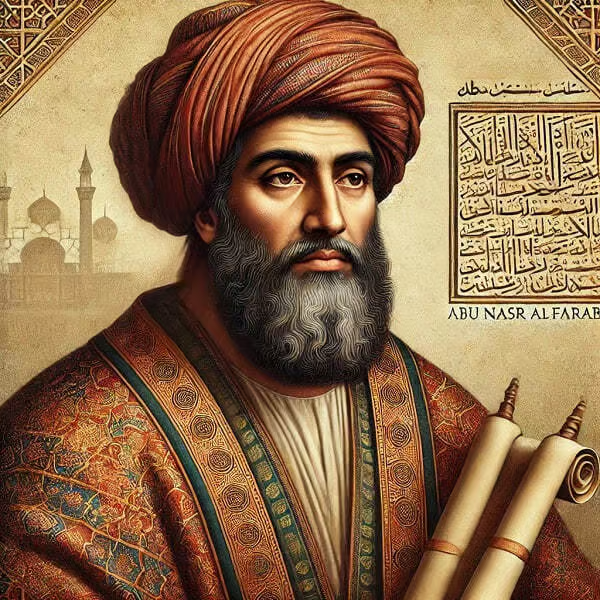
By Ustad Soroush Mahallati – Translated by Sayyid Ali Imran
These are translations of classes delivered by Ustad Soroush Mahallati during the summer vacation on political philosophy and political jurisprudence. In this post, I have translated the seventh lesson below.
The Difference Between Religion and Philosophy
In the name of God, the Most Compassionate, the Most Merciful
All praise is due to God, Lord of the worlds, and may peace and blessings be upon our Master and Prophet, Abū al-Qāsim al-Muṣṭafā Muḥammad (p) and his family.
I extend my greetings to our dear friends and companions, and I wish for all of you the best of divine success. In the previous session (the sixth session), we discussed Fārābī’s treatment of the relationship between religion and philosophy. A part of this discussion remained incomplete and unfinished, and we will bring it to a close in today’s discussion (the seventh session).
The Difference Between the Language of Religion and Philosophy
In brief, Fārābī’s view regarding the relationship between religion and philosophy, or between the millah and philosophy, is that the subjects of religion and philosophy are shared. What religion discusses under the title of doctrines (ārāʾ) is the very thing that is discussed in theoretical philosophy. The issues are shared issues, but the difference lies in this: the method that religion has for these propositions and for proving these issues differs from the method that philosophy has for them. For example, religion discusses the existence of the Exalted Truth, and it likewise discusses the Return (maʿād), and these are issues that are also raised in philosophy; but the difference is in the manner and method of proof. The method philosophy has for proving its issues is the demonstrative method: it uses demonstration (burhān) to arrive at certitude and certainty, whereas the millah, or religion, uses two other methods: one is the method of dialectic (jadal), and the other is the method of rhetoric (khiṭābah). And this is not because the method of demonstration has some flaw or defect from the standpoint of religion; rather, it is because the application of the demonstrative method is specific to philosophers and sages and those who think like them, whereas the application of the methods of dialectic and rhetoric is a general application for all people. And add to this: since the addressee of religion is the general public, it must necessarily use, in expressing its aims, a manner and method that is understandable and comprehensible for the general public, and what is comprehensible for the general public is precisely the method of dialectic and rhetoric. This is the basis of Fārābī’s discussion here.
Now I will offer a brief explanation of the difference between these methods, and then we will enter the text of the book. This discussion appears in logic, and in all the books of logic: in the syllogism (qiyās) that is formed, the premises can differ. According to the difference in the premises found in the syllogism, the syllogism becomes different. If the premises used for the syllogism are certain premises, this syllogism will be a demonstrative syllogism. Now, what are certain premises? This is itself a detailed and serious discussion in logic, and the best work in this field is the Kitāb al-Burhān of Shaykh al-Raʾīs Abū ʿAlī Sīnā, which counts as a textbook. The late ʿAllāmah Ṭabāṭabāʾī (r) taught it, and some of his distinguished students also later taught Kitāb al-Burhān.
In any case, if the premises of the syllogism are certain, it becomes demonstration; if the premises of the syllogism are probable (ẓannī), that syllogism is called dialectic; if the premises of the syllogism are aimed at persuasion (iqnāʿ), the syllogism is rhetoric; if the premises of the syllogism are fallacious, it is sophistry (mughālaṭah); and if the premises of the syllogism are imaginative (khayālī), it is the syllogism of poetry.
Fārābī does not mention two types of premises, namely fallacious and imaginative premises. Of the other three types of syllogism, one uses certain premises, which belong to demonstration, and that is specific to philosophers and those acquainted with the language of philosophers, and this method cannot be considered a general method in explaining realities. But in the millah, probable premises are used, which becomes dialectic, and persuasive premises are also used, which will be rhetoric, so that consequently these teachings become digestible and understandable for the general public. This is the part of Fārābī’s discussion that remains here.
Text of Kitāb al-Millah
«و إذا كان الجدل يعطي الظنّ القويّ فيما تعطي فيه البراهين اليقين أو في كثير منها، و كانت الخطابة تقنع في كثير ممّا ليس شأنه أن يبرهن و لا أيضا ممّا ينظر فيه الجدل، وكانت الملّة الفاضلة ليست إنّما هي للفلاسفة أو لمن منزلته أن يفهم ما يخاطب به على طريق الفلسفة فقط، بل أكثر من يعلّم آراء الملّة و يلقّنها و يؤخذ بأفعالها ليست تلك منزلته – و ذلك إمّا بالطبع و إمّا لأنّه مشغول عنه – و كانوا أولئك ليس ممّن لا يفهم المشهورات أو المقنعات، صار الجدل و الخطابة لذلك السبب عظيمي الغناء في أن تصحّح بهما آراء الملّة عند المدنيّين و تنصر بهما و يدافع عنها و تمكّن في نفوسهم و في أن تنصر بهما تلك الآراء إذا ورد من يروم مغالطة أهلها بالقول و تضليلهم و معاندتها.»
“Since dialectic yields strong opinion in that in which demonstrations yield certainty, or in much of it; and rhetoric persuades in much of what is not of the kind that is demonstrated, nor even of what dialectic examines; and the virtuous millah is not only for the philosophers, or for one whose rank is that he understands what is addressed to him by way of philosophy alone—rather, most of those who are taught the doctrines of the millah, who are instructed in them, and who are made to take up its actions are not of that rank, and that is either by nature or because they are preoccupied away from it—and those people are not among those who do not understand generally accepted things (al-mashhūrāt) or persuasive things (al-muqniʿāt); for that reason, dialectic and rhetoric have become of great value in that the doctrines of the millah are validated by them among the citizens, and are supported by them, defended, and established in their souls; and in that those doctrines are supported by them when someone appears who seeks to mislead its people with words, to lead them astray, and to oppose it.” (Kitāb al-Millah, p. 47)
Analysis and Explanation of Fārābī’s Text
The Use of Demonstration in Philosophy and the Function of Dialectic and Rhetoric in Religion
We will read his passage, and then we will talk about some of the points surrounding it (page 47): «و إذا كان الجدل يعطي الظنّ القويّ فيما تعطي فيه البراهين اليقين أو في كثير منها، و كانت الخطابة تقنع في كثير ممّا ليس شأنه» “Since dialectic yields strong opinion in that in which demonstrations yield certainty, or in much of it; and rhetoric persuades in much of what is not of the kind…” This “idhā” (since/if) is a conditional sentence that continues; across four lines, conditions are stated, and in the fifth line, then, its apodosis (jawāb) comes: «صار الجدل و الخطابة لذلك السبب عظيمي الغناء» “dialectic and rhetoric have, for that reason, become of great value.” This conditional sentence has three parts that are conjoined to one another.
The first condition is: what is dialectic? He says: dialectic is something whose result is strong opinion (ẓann qawī), in matters where, if demonstration entered, it would grant a person certainty. «إذا كان الجدل يعطي الظنّ القويّ فيما تعطي فيه البراهين، اليقين» “Since dialectic yields strong opinion in that in which demonstrations yield certainty”: in those matters in which demonstration gives a person certainty, dialectic gives a person strong opinion. «أو في كثير منها» “Or in much of it”: either in all of those matters in which demonstration gives a person certainty, or in many of them. The reason “many” is said is that it is possible an issue has no demonstration, yet a person reaches strong opinion through dialectic. This was the characteristic of dialectic.
As for the second condition: «و كانت الخطابة تقنع في كثير ممّا ليس شأنه أن يبرهَن» “And rhetoric persuades in much of what is not of the kind that is demonstrated.” What, then, is the function of rhetoric? The role of rhetoric is persuasion, and it uses persuasive premises, in things that are not of the kind for which demonstration is established. «و كانت الخطابة تقنع» “And rhetoric persuades”: rhetoric creates conviction for the human soul; a person becomes convinced, «في كثير ممّا ليس شأنه أن يبرهَن» “in much of what is not of the kind that is demonstrated”: in many of those issues that are not by their nature demonstrable, that is, they lack the capacity for demonstration to be established for them. For example, demonstration can be established in universal issues. Now, if an issue is a particular issue, it is necessarily not capable of having demonstration established for it, and persuasion takes place by way of rhetoric. «و لا أيضا ممّا ينظر فيه الجدل» “Nor even of what dialectic examines”: issues that are not only not demonstrable, but perhaps dialectic is not possible in them either, that is, probable premises cannot be presented for them in a universal form either. For in dialectic we are compelled to use accepted things (maqbūlāt), that is, something that the other party accepts and has admitted—this becomes dialectic.
Now, sometimes it is the case that demonstration cannot be established, because the subject is not a universal discussion, and dialectic cannot be used either, because there are no shared accepted things with the other party. Here, specifically, is the space for using rhetoric for persuasion.
If you pay attention to the passage, two “idhā”s have come as conditions: 1. «إذا كان الجدل يعطي الظن» “Since dialectic yields opinion,” 2. «و إذا كانت الخطابة تقنع» “And since rhetoric persuades,” 3. «و كانت الملة» “And the millah is” (that is, «و إذا كانت الملة» “and since the millah is”). On the other hand, the virtuous millah (millah fāḍilah)—that is, the religion that the divine prophets present—is not only for philosophers who have the ability to analyze demonstrations; rather, it is for the general public, who are not philosophers. «و كانت الملة الفاضلة ليست إنّما هي للفلاسفة أو لمن منزلته أن يفهم ما يخاطَب به على طريق الفلسفة فقط» “And the virtuous millah is not only for the philosophers, or for one whose rank is that he understands what is addressed to him by way of philosophy alone”: the virtuous millah (religion) is not only for philosophers, nor for those who are merely the addressees of philosophers. For there are some people who are not philosophers themselves, yet at the same time they have an interest in philosophy and are addressees of philosophers, and to some extent they can understand and grasp the issues of the philosophers, although they do not independently have the ability to present demonstration. The virtuous millah is not only for philosophers, nor only for their addressees. «بل أكثر مَن يُعلَّم آراء الملّة و يلقّنها و يؤخذ بأفعالها ليست تلك منزلته» “Rather, most of those who are taught the doctrines of the millah, who are instructed in them, and who are made to take up its actions are not of that rank”: rather, most of those who learn the doctrines of the city—«يُعلَّم آراء المدينة» “are taught the doctrines of the city”—most of those who learn the first part of the millah, which is doctrines and beliefs, and accept them, and then, in the second stage, take up the actions as the millah has stated, «ليست تلك منزلته» “are not of that rank”: they are not of that rank. Which rank? That is, the rank of philosophers and of their addressees. «و ذلك» “And that”: why are most people in this case regarded as not being in the position of philosophers? «و ذلك إمّا بالطبع و إمّا لأنّه مشغول عنه» “And that is either by nature or because they are preoccupied away from it.” Most people lack the capacity to grasp demonstration, for two reasons: either because they are by nature weak human beings, whose intellect simply does not have the capacity—this is a natural and inherent weakness that exists in some individuals; we see that some individuals are truly incapable of understanding mathematical issues, although in some other matters of life, or in other sciences, they may be capable human beings. In any case, some either by nature lack the capacity for demonstration, or, if they do have the capacity by nature, they are currently preoccupied away from it; that is, they have other preoccupations. Had they used their intellectual capacities, they would have been good philosophers, but they entered other fields, and now their minds, their intellects, their thoughts, and their abilities have gone in another direction. So the majority do not use demonstration «إما بالطبع و إمّا لأنّه مشغول عنه» “either by nature or because they are preoccupied away from it,” whether because they are engaged in their other affairs.
But these same people who are not people of demonstration—it is not as if they do not understand generally accepted things (mashhūrāt), do not grasp persuasive things (muqniʿāt), and that dialectic and rhetoric are of no use to them. «و كانوا أولئك ليس ممّن لا يفهم المشهورات أو المقنعات» “And those people are not among those who do not understand generally accepted things or persuasive things”: a negation of a negation is an affirmation; that is, they are among those who do understand generally accepted and persuasive things. These same people who do not grasp demonstration are at a level where they understand the generally accepted things used in dialectic and grasp the persuasive things used in rhetoric. Now, consider these three points: what the characteristic of rhetoric was, what the characteristic of dialectic was, and that the majority of people lack the capacity for demonstration but have the capacity for rhetoric and dialectic.
Now we reach the apodosis of “idhā”: «إذا كان الجدل كذا و كانت الخطابة كذا و كانت الملة كذا صار الجدل و الخطابة لذلك السبب عظيمي الغناء» “Since dialectic is thus, and rhetoric is thus, and the millah is thus, dialectic and rhetoric have, for that reason, become of great value.” For this reason, and on this ground, rhetoric and dialectic are beneficial in two respects. ʿAẓīmay al-ghanāʾ means that dialectic and rhetoric are of great benefit in two respects; they are useful and serviceable. What use do dialectic and rhetoric have?
The first role: «في أن تصحّح بهما آراء الملّة عند المدنيّين» “In that the doctrines of the millah are validated by them among the citizens.” The doctrines of the millah, that is, the doctrinal issues, among the citizens (madaniyyīn), meaning those who live in the city: dialectic and rhetoric make the doctrines of the millah understandable for the people—such that if those generally accepted premises were not employed, the people would not understand anything—so that they can grasp them. «في أن تصحّح بهما آراء الملّة عند المدنيّين» This is one. «و تنصر بهما» “And are supported by them”: these doctrines are helped by this means; support is given. «و يدافع عنها» “And are defended”: it defends these doctrines. «و تمكّن في نفوسهم» “And are established in their souls”: it fixes and establishes these doctrines in their hearts (that is, the citizens’), in their souls. This is the first role of dialectic and rhetoric: for understanding and for establishing.
And the second role is that when these doctrines come under attack from opponents and sophists, we use dialectic and rhetoric, we give their answer, and we stand in the way of the people being misled. This is the second function. So the people themselves use them, and they also serve as a response to the opponents and obstinate ones who want to lead the people astray.
«و في» “And in” is conjoined to two lines above, and in reality it belongs to ʿaẓīmay al-ghanāʾ, that is, two important benefits: the first benefit was validation and establishment, and the second benefit is: «و في أن تنصر بهما» “and in that they are supported by them,” that is, by means of dialectic and rhetoric, help is given, support is given. «تلك الآراء» “Those doctrines”: in what case do we defend these doctrines, that is, the doctrines of the millah, by means of dialectic and rhetoric? «إذا ورد من يروم مغالطة أهلها» “When someone appears who seeks to mislead its people”: if someone has the intention of drawing the people of this city into sophistry, «بالقول» “with words”: wanting, with his speech, to lead them into error, we, with this same method of using generally accepted things in dialectic and persuasive things in rhetoric, stand against him and give him an answer. «من يروم مغالطة أهلها بالقول و تضليلهم و معاندتها» “Who seeks to mislead its people with words, to lead them astray, and to oppose it”: if he wants to lead the people astray and has obstinacy toward the millah (religion), by this means an answer is given to them.
So, given these two functions—which have both an internal aspect and an external aspect: they have the aspect of persuading the people within the city, and also of standing in the way of opponents and objectors—religion uses dialectic and rhetoric, and demonstration, of course, is the responsibility of the philosophers. This is the account that the honorable Fārābī has presented here.
Religion and Demonstration in Fārābī’s Works
Does Religion Not Make Use of the Tool of Demonstration?
The question that arises here is whether Fārābī wants to say that there is a dividing line and a boundary, such that religion exclusively uses rhetoric and dialectic, just as philosophy exclusively uses demonstration? Perhaps the apparent wording of his statement may convey such a meaning, but it is clear—as I pointed out in the previous session as well—that one cannot say that the entire content of religion is made up of non-demonstration, and that religion itself is not at all a presenter of demonstration, always using the two other methods of dialectic and rhetoric for persuasion and for faith, without ever turning to demonstration.
I do not attribute such a thing to Fārābī, and such an attribution cannot be made to anyone else either—that someone would claim that in the millah and in religion there is absolutely no demonstration of any kind, and that everything presented in religion consists only of the two methods of rhetoric and dialectic. But in any case, the wording may suggest such an understanding, and if that were the case, it would necessarily be unacceptable.
Unfortunately, in other places in Fārābī’s works as well, we see this same ambiguity, and this separation that Fārābī has made here is also seen elsewhere: that demonstration belongs to philosophy, while the millah and religion aim at persuasion and use dialectic and rhetoric.
In another book of Fārābī’s, which we have not used in these past days, the book Taḥṣīl al-Saʿādah, Fārābī also has a discussion regarding the relationship between the millah and philosophy. There, on page 184,1 he raises this discussion: that every instruction has two foundations. Its first foundation consists of understanding, and its second foundation consists of assenting (taṣdīq) and accepting, which we call faith (īmān), while we call the first knowledge (ʿilm). After Fārābī raises this point, he says regarding understanding and knowing that it is of two kinds: «و تفهيم الشيء على ضربين: أحدهما أن تعقل ذاته و الثاني أن يتخيل بمثاله الذي يحاكيه» “And making a thing understood is of two kinds: one of them is that its essence is intellected, and the second is that it is imagined through its likeness (mithāl) that imitates it.” This is the same point we read earlier: that sometimes a person directly perceives and recognizes the thing itself, and sometimes becomes acquainted with that thing by way of acquaintance with its likeness—a likeness that imitates the thing. Then he says that assent, too, is sometimes by way of demonstration and sometimes by way of persuasion: «و إيقاع التصديق يكون بأحد طريقين: إما بطريق البرهان اليقيني و إما بطريق الإقناع» “And bringing about assent occurs by one of two paths: either by the path of certain demonstration or by the path of persuasion.” Then he says that certain demonstration is the work that philosophy does, and it causes a person to assent to a matter: «فإن عُقلت معانيها أنفسها و أوقعت تصديق بها عن البراهين اليقينية كان العلم المشتمل على تلك المعلومات فلسفة» “If their meanings themselves are intellected, and assent to them is brought about through certain demonstrations, the knowledge comprising those known things is philosophy.” If you have attained demonstrative knowledge, that knowledge is philosophy. «و متى علمت بأن تخيلت بمثالاتها التي تحاكيها» “And when they are known by being imagined through their likenesses that imitate them”: if the awareness you attain is by way of likenesses that represent that reality, «و حصل التصديق بما خُيّل منها عن الطرق الإقناعية» “and assent to what is imagined of them is attained through persuasive methods”: and if the assent you make, and the acceptance and admission you have, is through persuasive methods, not through demonstrative methods, «كان المشتمل على تلك المعلومات تسميه القدماء ملة» “then what comprises those known things is what the ancients call millah.” These known things that are obtained through persuasion, the ancients called millah. And now here he places the term millah over against philosophy in terms of method and manner, although with respect to the issue itself they may be one.
And he continues: «فالملة محاكية للفلسفة عندهم و هما يشتملان على موضوعات بأعيانها و كلتاهما تعطيان المبادي القصوى للموجودات» “So the millah, in their view, imitates philosophy; both comprise the very same subjects, and both give the ultimate principles of beings.” The millah and philosophy both look at the same real subjects, with this difference: philosophy treats them directly and demonstratively, whereas the millah (religion) brings about persuasion indirectly. And of course, both bring a person to knowledge and awareness of the First Principle, bring a person to knowledge and awareness of the Return, and likewise bring him to the ultimate end. «فإنّهما تعطيان علم المبدأ الأول و السبب الأول للموجودات و تعطيان الغاية القصوى التي لأجلها كوّن الإنسان و هي السعادة القصوى و الغاية القصوى في كل واحد من الموجودات الأخر» “For both give knowledge of the First Principle and the First Cause of beings, and both give the ultimate end for the sake of which the human being was brought into being, which is ultimate happiness (al-saʿādah al-quṣwā), and the ultimate end in each one of the other beings.”
Then here he has this passage, which is the crux of the issue, and the point of difficulty for us is exactly here: «و كل ما تعطيه الفلسفة من هذه معقولاً أو متصوراً فإن الملة تعطيه متخيلاً» “And everything of these that philosophy gives as intellected or conceived, the millah gives as imagined.” Whatever philosophy presents an intellected conception of, the millah (religion) presents an imagined conception of. Whatever! «كل ما تعطيه الفلسفة من هذه معقولا أو متصورا فإن الملة تعطيه متخيلا» “Everything of these that philosophy gives as intellected or conceived, the millah gives as imagined.” And, at the opposite point, the converse of this proposition: «و كل ما تبرهنه الفلسفة من هذه فإن الملة تقنع» “And everything of these that philosophy demonstrates, the millah persuades of.” Whatever philosophy establishes a demonstration for, the millah brings about persuasion for; and this is a difference that exists completely on both sides.
We cannot make an evaluation and a universal judgment regarding every millah, and his expression here is not an expression related to Islam either. What he has stated is «ما تسميه القدماء ملة» “what the ancients call millah”: the millah among the ancients; and usually, when “the ancients” is said, the sages of Greece are meant. We cannot say whether in the previous divine religions there was demonstration or not, nor raise a question in this area. What the Qur’an presents, even about previous religions, is not devoid of demonstration and contains demonstration. For example, it relates from Prophet Ibrāhīm, regarding the setting of the sun, the moon, the stars and the like: ﴾قَالَ لَا أُحِبُّ الآفِلِينَ﴿ “He said, ‘I do not love those that set.'”2 This contains a demonstration.
At the same time, without wishing to speak in detail about the previous prophets—since we may not have sufficient documentation apart from the Qur’an—at least regarding the Qur’an, this point is very clear: what has come in the Noble Qur’an does, on the whole, also contain demonstrative issues. Even if we do not accept that everything the Qur’an presents in terms of doctrines and beliefs contains demonstration, on the whole it is undeniable.
And it is possible to explain Fārābī’s statement in this way: that the main aim of the millah (religion) is not establishing demonstration. It may also establish demonstration, but what is important in religion is faith itself—assent and acceptance itself. The main approach of religion is to create faith, and faith can also be realized by way of rhetoric, by relying on generally accepted things. So let us interpret Fārābī’s statement this way: in philosophy, demonstration is necessary—that is, if you take demonstration away from philosophy, nothing remains of philosophy—whereas in the millah and in religion, demonstration is not necessary; not that it cannot exist [there], or that it does not exist in religion. If you take demonstration away from religion, religion is not destroyed, because religion aims at persuading the believers, and persuasion is possible by other means. If this is what is meant, Fārābī’s statement will be justified. And in any case, in what we take from Islam and Islamic teachings, we see that ﴾ادْعُ إِلَى سَبِيلِ رَبِّكَ بِالْحِكْمَةِ وَ الْمَوْعِظَةِ الْحَسَنَةِ وَ جادِلْهُمْ بِالَّتِي هِيَ أَحْسَنُ﴿ “Invite to the way of your Lord with wisdom and good exhortation, and argue with them in the way that is best”:3 there is disputation (jidāl), there is persuasion through exhortation (mawʿiẓah), and alongside them there is also wisdom (ḥikmah). This concerns the statement that Fārābī has presented here, and of course the discussion is an important and serious one.
Summary of the Discussion on the Role of Demonstration in Philosophy and Religion
And we can summarize it as follows:
A conflict between what demonstration establishes in philosophy and the doctrines and beliefs that exist in the millah is not possible. This is in the form of a universal proposition—a negative one, of course—that what religion presents cannot be contrary to demonstration. This is the first matter.
The second matter is that it is possible for religion to present demonstrations in its doctrines and to speak with people in the language of demonstration, although the language of demonstration is not a general language for all believers. Not all people have a perception at the level of demonstration, and so religion uses another language to persuade them. This is the second point: that both demonstration and non-demonstration exist [in religion].
And the third point, where again Fārābī’s statement suffers from ambiguity, is this: is it possible for the philosopher to establish demonstration for all the doctrines that exist in religion, or not? That at the level of reality (maqām al-thubūt), all the doctrines that were revealed to the Noble Prophet (p) by way of revelation (waḥy) correspond to the truth, are correct, and correspond to reality—there is no doubt about this. But at the level of proof (maqām al-ithbāt), is everything the prophets said capable of having demonstration established for it by philosophers in exactly the same form? Perhaps from some of Fārābī’s expressions such a meaning may come to mind, which, in our view, cannot be proven in this form either. What revelation presents can be proven to correspond to reality and to be true. But that what we receive by way of revelation can always be accompanied by demonstration seems to be a difficult thing to prove.
Fārābī, Ibn Sīnā, and ʿAllāmah Ṭabāṭabāʾī on Religion and Philosophy
Now, here, after presenting Fārābī’s view, it seemed to me that, in order to complete this discussion, I should also present to you ʿAllāmah Ṭabāṭabāʾī’s discussion regarding the relationship between philosophy and religion. Here I will complete Fārābī’s discussion with a discussion by ʿAllāmah Ṭabāṭabāʾī. Although there is a great temporal distance between Fārābī and ʿAllāmah Ṭabāṭabāʾī, unfortunately this serious discussion that Fārābī raised—some of whose aspects are still not very clear—was, unfortunately, not taken seriously throughout the history of Islamic philosophy, and for this very reason I turn to ʿAllāmah Ṭabāṭabāʾī. Even Ibn Sīnā, who brought philosophy to its peak in his own era and time, and the collection of whose works cannot be compared in volume with a few short treatises of Fārābī’s—even so, from this great encyclopedia that Ibn Sīnā has in philosophy, the totality of what pertains to this issue of the relationship between the millah (religion) and philosophy is very, very thin and slight, and does not exceed a few lines; this is, of course, according to the investigation I have carried out.
A Brief Discussion by Ibn Sīnā on the Difference Between the Paths of Philosophy and Religion
Ibn Sīnā has a relatively brief treatise titled ʿUyūn al-Ḥikmah, which has various editions. In this ʿUyūn al-Ḥikmah, he has a section on wisdom and the divisions of wisdom. There, when he discusses theoretical philosophy, Ibn Sīnā points out that the headings that philosophers have discussed in theoretical philosophy are taken from the divine millah, that is, taken from the divine religions—with this difference: the divine religions raise these issues and discussions by way of alerting (tanbīh), that is, they give reminders concerning those very primordial assets that exist in the human being—by way of alerting—whereas the sages have tried, with the intellectual faculty, to present proof and demonstration for these same issues. This is similar to the same foundation and view that Fārābī has raised.
Ibn Sīnā’s passage in ʿUyūn al-Ḥikmah is as follows: «و مبادئ هذه الأقسام التي للفلسفة النظرية مستفادة من أرباب الملة الإلهية على سبيل التنبيه و متصرّف على تحصيلها بالكمال بالقوة العقلية على سبيل الحجّة» “And the principles of these divisions that belong to theoretical philosophy are derived from the masters of the divine millah by way of alerting, and are worked upon, so as to attain them completely, by the intellectual faculty by way of proof.” Two words in this passage play a foundational role: one is alerting (tanbīh), and the other is proof (ḥujjah). He regards the manner and method of the millah as alerting, and the manner and method of wisdom and theoretical philosophy as proof based on the intellectual faculty.
We do not have more than these allusions in the books of the philosophers in this area, and it is for this reason that I pointed out that Fārābī’s discussions, although brief and concise, are the first discussions—and even the last—raised on this issue, and from this perspective we must regret that we did not take these issues seriously. In any case, after more than ten centuries, ʿAllāmah Ṭabāṭabāʾī (r) pursues this discussion. Of course, so that no one’s due is overlooked, I must point out that during these ten centuries there are allusions in these same philosophical works of ours—I pointed to one example of them from Ibn Sīnā—and other examples exist as well, in the works of Ṣadr al-Mutaʾallihīn in particular.
ʿAllāmah Ṭabāṭabāʾī: Divine Religion and Divine Philosophy Are One
The Difference Between ʿAllāmah Ṭabāṭabāʾī’s View and Fārābī’s on the Application of Demonstration in Philosophy and the Religious Worldview
ʿAllāmah Ṭabāṭabāʾī has a treatise titled ʿAlī (a) wa al-Falsafah al-Ilāhiyyah, which was translated into Persian before the Revolution under the title ʿAlī va Falsafah-yi Ilāhī. I believe this treatise of ʿAllāmah’s has had several translations. In this treatise, the late ʿAllāmah’s aim is to show what the intellectual and philosophical foundations in the words of the Commander of the Faithful, ʿAlī (a), are like. As the name of the book shows, he wants to explain the power of reasoning and demonstration in the words of the Commander of the Faithful; but before entering his own main discussion, ʿAllāmah presents in this book a general discussion regarding the relationship between religion and philosophy.
I will read for you a part of that same Arabic text, because there are particular subtleties in ʿAllāmah Ṭabāṭabāʾī’s Arabic expressions; then you can also make full use of its Persian translation. Since we do not have the opportunity to read and explain all of this text in this section, I only want to say that ʿAllāmah’s view on this issue is a relatively different view, and now I will explain why it is different.
ʿAllāmah’s principal claim is that divine religion and divine philosophy are inseparable, and there is no possibility of separating them. Why? His first statement is a weighty statement, and it has been cited here and there. May God have mercy on our great teacher, the late Ayatullah Ḥasanzādah Āmulī (r); he too, in his own discussions, would frequently quote this sentence from ʿAllāmah, which he has cited here: «حقا لظلم عظيم أن يفرق بين الدين الإلهي و بين الفلسفة الإلهية» “Truly, it is a great injustice to separate divine religion from divine philosophy.” Now, if someone has a materialist philosophy and does not believe in religion at all, that is not the topic of discussion. But divine philosophy—that is, a philosophy that establishes demonstration on the issues of theology (ilāhiyyāt)—this establishment of demonstration on these issues cannot be separated from what religion presents on these same issues. In ʿAllāmah’s words: «حقاً إنه لظلم عظيم أن يفرّق» “Truly, it is a great injustice to separate [them].” It is a very great injustice for someone to want to separate these two. Why is such a separation not possible? And why is this separation an injustice? He says: what is religion? Now, it makes no difference—however much the quiddity of religion may differ in breadth and narrowness (saʿatan wa ḍīqan)—in any case, religion is a collection of doctrinal teachings, in addition to practical branches (furūʿ ʿamaliyyah), which are juristic and ethical rulings. Second, the prophets came to bring the human being to his true happiness. Third, is the true happiness of humanity anything other than being able to perceive the teachings, to understand his place in the system of creation, and to recognize the correct path and method on the basis of justice? These are the three points.
Then he says: «و هل له مناص في تحصيل تلك المعارف عن الإلتجاء إلى الإستدلال و إقامة البرهان؟» “And does he have any escape, in acquiring those teachings, from resorting to reasoning and establishing demonstration?” Does the human being really have another way to obtain these teachings—the very teachings we pointed to—without taking refuge in demonstration and reasoning? He wants to say that we have no other way besides reasoning and demonstration. «و إذا كان الحال على ما تقدم.. فكيف يسوغ للأنبياء أن يدعوا الناس إلى السمع و القبول بلا بيّنة» “And if the situation is as stated above, how is it permissible for the prophets to call people to listening and accepting without clear proof?” So how is it possible for the prophets to invite people [by saying], “Accept our word; accept it without proof, without clear evidence”? And is it possible «أن يطلبوا منهم السير على غير طريق الإستدلال و إقامة البرهان» “that they ask them to proceed along a path other than that of reasoning and establishing demonstration?” It is not at all possible for the prophets to ask people to accept their claims by a path other than that of reasoning and the establishment of demonstration. «مع أنّ ذلک مخالف لجبلتهم» “Even though that is contrary to their innate disposition (jibillah)”: accepting something that has no proof or demonstration is contrary to human nature (fiṭrah). Can the prophets invite human beings to something contrary to fiṭrah? «و مناف لما جهّزوا به في أصل خلقتهم و بنية وجودهم، و الأنبياء و إن كانوا قد استمدّوا معارفهم و مبادئ دعوتهم من المبدأ الغيبي و ارتضعوا ذلک من ثدي الوحي» “And incompatible with what they were equipped with in the root of their creation and the structure of their existence. And the prophets, even if they drew their teachings and the principles of their call from the unseen Origin and suckled that from the breast of revelation”: it is true that the prophets receive these teachings from the unseen and drink from the breast of revelation, «إلّا أنّ الحقيقة هي:» “the truth nonetheless is this:” but the reality is that «لا فرق بين مسلک الأنبياء في دعوتهم إلى صريح الحقّ و بين سلوک الإنسان بشعور الفطري إلى نيل المعارف الإلهية» “there is no difference between the approach of the prophets in their call to the pure truth and the course a human being takes, by his innate awareness, toward attaining divine teachings.” He says that the prophets receive from revelation, but between the method of the prophets in calling to the truth and the human being reaching these awarenesses on the basis of his own innate awarenesses, there is no difference whatsoever; so all of these look at one reality. «و حاشا ساحة الأنبياء عليهم السّلام أن يحملوا الناس على أن يخبطوا خبط عشواء، و أن يسوقوهم سوق البهيمة العمياء» “And far be it from the court of the prophets (a) that they should drive people to stumble about blindly, like a night-blind she-camel, and herd them as a blind beast is herded.” Is it possible that the prophets would plunge people into darkness and set them in motion like beasts? «فإنهم عليهم السّلام كانوا . على عكس ذلک تماما . إذ خاطبوهم بما يفهمون، و إذا أتوهم بآية معجزة فإنما يكون ذلک بعد أن تكون أممهم قد اعتبرتها صالحة للدلالة على صدق الدعوى،… بل و قرّرت و أثبتت دلالتها على صدق دعوتهم الحقّة» “For they (a) were—quite the opposite of that—addressing them with what they understand; and when they brought them a miraculous sign, that happened only after their nations had considered it fit to indicate the truthfulness of the claim… indeed, had affirmed and established its indication of the truthfulness of their true call.” He says that even the miracle has a demonstrative backing at the outset: that people accept the necessary connection (mulāzamah) between the miracle and the truthfulness of the claim. Otherwise, the prophets did not want people to accept the truths blindly. Then he cites the Noble Qur’an, [saying]: see that the teachings of the Qur’an are by way of proof, and only by way of proof. «هو لا يأخذ إلا عن حجّة بيّنة» “It takes only from a clear proof,” and apart from clear and evident proof, there is nothing in the Qur’an.
Then he continues: «و خلاصة القول:» “And the gist of the matter:” in any case, the summary of the matter is that «إنّ الدين لا يدعو الإنسان إلا إلى نيل الحقائق الإلهية بشعوره الإستدلالي الذي جُهّز به، و هذا هو بالذات ما يعبر عنه بـ”الفلسفة الإلهية”» “religion calls the human being only to attaining divine truths through his inferential awareness, with which he has been equipped, and this is precisely what is expressed as ‘divine philosophy.'” This sentence is the most important sentence on this subject in this book, and he too has termed it “the gist of the matter.” This important sentence, and ʿAllāmah’s important view, is that «إنّ الدين لا يدعو الانسان إلّا» “religion calls the human being only…”: this “lā” and “illā” indicate restriction (ḥaṣr); that is, religion calls the human being solely and exclusively toward attaining divine truths by way of inferential awarenesses. The important thing in this sentence is this “only”: religion invites to nothing except receiving truths by way of awarenesses that the human being obtains through reasoning, the materials of which reasoning lie in the human being’s own fiṭrah and in his intellect and reason; and this very thing to which religion invites by way of reasoning—«هذا هو بالذات ما يعبر عنه بـ”الفلسفة الإلهيّة”» “this is precisely what is expressed as ‘divine philosophy'”—we call divine philosophy. «فكيف صحّ . بعد هذا . الفصل بين الدين الإلهي و بين الفلسفة الإلهية، مع أنّهما شيء واحد، لا تعدّد فيه و لا اختلاف؟» “So how is it valid—after this—to separate divine religion from divine philosophy, when they are one thing, with no multiplicity or difference in it?” There is no longer any difference at all between what we call divine religion and divine philosophy. Now, by divine philosophy is meant that we have nothing to do with materialist philosophies. This “one thing”: both are one thing, «لا تعدد فيه و لا اختلاف» “with no multiplicity or difference in it.”
Fārābī would say that the issues are shared, but the path of explaining them is different. The path of explanation in the millah and religion is a general path, and that general path consists of rhetoric and of dialectic: using generally accepted things, which becomes dialectic, and using persuasion and persuasive premises, which becomes rhetoric; whereas philosophers come by way of demonstration and reasoning. But ʿAllāmah here denies this difference and says: religion is based on reasoning and invites to reasoning, and there is basically no difference—no difference at all!
«فكيف صحّ . بعد هذا . الفصل بين الدين الإلهي و بين الفلسفة الإلهية» “So how is it valid—after this—to separate divine religion from divine philosophy?” Can these be separated from each other, «مع أنهما شيء واحد، لا تعدّد فيه و لا اختلاف؟» “when they are one thing, with no multiplicity or difference in it?” There is no duality at all, and no difference either.
Here, ʿAllāmah has taken one step forward—indeed, several steps forward—from the discussion Fārābī has, and he denies these differences in terms of the method of explaining the issues, and he continues this matter in the same way. Since a portion of the material is long, unfortunately I cannot read all of ʿAllāmah’s text here. And at the end of this section—of course, this book is detailed; afterward, he enters discussions of the ʿAlawī teachings [the teachings of Imam ʿAlī (a)], which are discussed in detail, and which are presently outside our discussion. And here, which is the introduction and in which he raises this general discussion, at the end of this first part he says: «و تيقّن» “And be certain”: he says, believe! Have certainty! Be assured! That «أنّ الدين لا يدعو إلا إلى الفلسفة الإلهية و هي الحصول على المعارف الإلهية عن حجّة عقليّة» “religion calls only to divine philosophy, and that is the attainment of divine teachings through rational proof.” This is ʿAllāmah’s final word: religion invites to nothing but divine philosophy, and divine philosophy, too, is nothing but attaining divine teachings through rational proof.
So both religion and divine philosophy seek to gain access to the teachings by way of rational proof, and there is basically no duality in this area. This is the claim. Then he applies it, taking some of the words of the Commander of the Faithful, ʿAlī (a), as evidence, and shows through analysis that all of them contain rational proof. Of course, rational proofs have different levels. ʿAllāmah has explained in other places that a rational proof is sometimes in accord with fiṭrah, simpler, and understandable to everyone, and at the same time it is a rational proof. A rational proof does not necessarily mean using specialized philosophical premises and philosophical terminology; but a rational proof is a rational proof, that is, it fully possesses the features of a demonstration. And sometimes rational proofs also have complexities and greater subtleties, such that not all human beings perceive these complexities and subtleties; but in any case, it is still a proof—it is reasoning and it is demonstration. But religion uses nothing other than rational proof. This is a point that ʿAllāmah has raised here, in this treatise. In Tafsīr al-Mīzān as well, this discussion has come up in various places throughout this exegesis.
Wisdom, Good Exhortation, and the Best Disputation in Tafsīr al-Mīzān
The Grounding of Religion’s Theoretical Issues on Demonstration in ʿAllāmah Ṭabāṭabāʾī’s View
Someone might raise this point here with his eminence ʿAllāmah and ask him this question: religion itself has accepted that it sometimes invites with wisdom, sometimes invites with good exhortation (mawʿiẓah ḥasanah), and sometimes invites with the best disputation (jidāl aḥsan); and according to the exegesis that you yourself present, this good exhortation and that best disputation correspond to the same two things that Fārābī was also speaking of, namely rhetoric and dialectic. That is, sometimes we use accepted things that hold for the other party—this is rhetoric, and now you call it exhortation. As for a statement in favor of the truth and reasoning for the truth, to which the verse is also pointing—﴾ادْعُ إِلَى سَبِيلِ رَبِّكَ بِالْحِكْمَةِ﴿ “Invite to the way of your Lord with wisdom”—wisdom is not used exclusively; yet you said in this discussion of yours that religion is based on wisdom, and only wisdom?
The answer ʿAllāmah gives is a point that he has explained in volume 5 of Tafsīr al-Mīzān, and it is this: religion contains various issues, and the type of reasoning for these issues also differs. Some of these issues are demonstrable, and some of these issues are not demonstrable. So if an issue is not demonstrable and we use non-demonstration, this is not a contradiction [of the claim]. The contradiction would be if religion presented theoretical discussions by some path other than demonstration. Yes! There is a section in religion—the second section—that pertains to rulings, and these rulings have conventional (iʿtibārī) aspects, not real aspects. Since they do not have real aspects, demonstration basically cannot be established for them. Regarding conventional matters, we must discuss them on the basis of generally accepted premises and what is generally accepted among reasonable people (ʿuqalāʾ). This is the nature of the matter.
Therefore, ʿAllāmah, under this noble verse, ﴾ادْعُ إِلَى سَبِيلِ رَبِّكَ بِالْحِكْمَةِ وَ الْمَوْعِظَةِ الْحَسَنَةِ وَ جادِلْهُمْ بِالَّتِي هِيَ أَحْسَنُ﴿ “Invite to the way of your Lord with wisdom and good exhortation, and argue with them in the way that is best,” does not want to say that in all religious issues there are three paths. He presents this in the form of a division (tanwīʿ): the first section, theoretical religious issues, will be only with wisdom, and the second section will be the place for good exhortation and the place for the best disputation. And with this explanation of the foundation he presented, ʿAllāmah [holds] that the basic issues of religion, that is, in beliefs—which are shared with divine philosophy, because the second section is not raised in divine philosophy—those theoretical discussions are raised in religion only by way of proof and reasoning, just as they are raised in philosophy only by way of proof and reasoning.
In volume 5 of Tafsīr al-Mīzān, page 267,4 the late ʿAllāmah raises the method of the Qur’an, and there he explains that what is innate to the human intellect from the perspective of reasoning is precisely the use of certain premises, which is demonstration—but this is in theoretical issues; and in things other than these, which are conventional matters, we cannot use demonstration.
ʿAllāmah’s passage is as follows: «القرآن الكريم يهدى العقول إلى استعمال ما فطرت على استعماله و سلوک ما تألفه و تعرفه بحسب طبعها» “The Noble Qur’an guides intellects to employing what they were innately made to employ, and to following what they are familiar with and know by their nature.” In ʿAllāmah’s view, the method of reasoning—rational inference—has been placed by God in human creation and nature, as a trust deposited in fiṭrah. «و هو ترتيب المعلومات لإستنتاج المجهولات» “And that is arranging known things to infer unknown things”: known things must be ordered in such a way that the human being gains access to his unknowns. «و الذي فطرت العقول عليه هو أن تستعمل مقدمات حقيقية يقينية لإستنتاج المعلومات التصديقية الواقعية و هو البرهان» “And what intellects are innately disposed to is that they employ real, certain premises to infer real assentive knowledge, and that is demonstration”: what human fiṭrah approves is to use real, certain premises in order to arrive at real assentive knowledge, which is demonstration (this is the matter of demonstration). «و أن تستعمل في ما له تعلق بالعمل من سعادة و شقاوة و خير و شرّ و نفع و ضرر و ما ينبغي أن يختار و يوثر و ما لا ينبغي و هي الأمور الإعتبارية المقدمات المشهورة أو المسلمة و هو الجدل» “And that, in what pertains to action—happiness and wretchedness, good and evil, benefit and harm, what ought to be chosen and preferred and what ought not, which are conventional matters—they employ generally accepted or conceded premises, and that is dialectic.” In the second section of human awarenesses, which does not pertain to realities but rather pertains to knowing happiness and wretchedness, good and evil, benefit and harm, what must be done and what must not be done—these lie in the domain of conventional matters—here generally accepted or conceded premises are used, unlike the first category, in which real, certain premises were used; and this is dialectic. And likewise, there is a third path as well: «و هو أن تستعمل في موارد الخير و الشر المظنونين مقدمات ظنية لإستنتاج الارشاد و الهداية إلى خير المظنون» “And that is that, in cases of probable good and evil, they employ probable premises to infer guidance and direction toward the probable good.” In addition to using generally accepted and conceded things in cases of good and evil, another path can also be used, and that is guidance toward probable good and keeping away from probable evil, which is also exhortation. «و الظاهر أن المراد بالحكمة هو البرهان» “And it appears that what is meant by wisdom is demonstration”: in the noble verse ﴾ادْعُ إِلَى سَبِيلِ رَبِّكَ بِالْحِكْمَةِ﴿ “Invite to the way of your Lord with wisdom,” what is meant is demonstration, «كما ترشد إلى ذلک مقابلته الموعظة الحسنة و الجدال» “as is indicated by its being set against good exhortation and disputation.” This is ʿAllāmah’s account.
ʿAllāmah Ṭabāṭabāʾī, first of all, considers the path of philosophy and the path of religion in explaining realities to be one: in the theoretical section, both use reasoning, and in this section ʿAllāmah basically does not accept any other path in religion and explicitly denies it. And this is an important difference that exists here between ʿAllāmah’s view and Fārābī’s—and not only Fārābī’s, but also [a difference] from the view of Ibn Sīnā, whose passage on this matter I read for you earlier. This was a short comparison between these views.
The Difference Between ʿAllāmah Ṭabāṭabāʾī’s and Fārābī’s Views on Grounding Religious Actions on Demonstration
There is also an important and foundational point that ʿAllāmah has pointed out here, which shows the difference between his view and Fārābī’s. It is that Fārābī would say that in the second part of the millah, which is the section on actions (afʿāl), we use philosophy there too; and Fārābī’s account was that philosophy explains the causes and reasons concerning these very rulings and actions, which I explained sufficiently in this part in the previous discussion.
ʿAllāmah Ṭabāṭabāʾī has now pointed out that in the section on actions—the “musts” and “must-nots,” good and evil—there is basically no possibility of using demonstration. These are conventional matters, and in this second section, which consists of conventional matters, the measuring of awarenesses is completely different from the measuring of awarenesses grounded in realities. Here we must necessarily use two other methods: the method of rhetoric and the method of the best disputation, both of which ʿAllāmah raised here, citing the verse as support and distinguishing [them]. ʿAllāmah believes that in the domain of ethics and rulings, there is no place for using demonstration, whereas Fārābī explicitly raised the application of demonstration [there].
Of course, one of the difficulties with ʿAllāmah Ṭabāṭabāʾī’s discussions is that, since he wrote these varied and numerous discussions within Tafsīr al-Mīzān and over a span of time, his views under different verses are sometimes not consistent with each other. That is, some kind of discrepancy may exist among his views.
In volume 4 of al-Mīzān, he attributes this difference in religious statements to a difference in the level of people’s understanding and thought, and relates the verse to this very difference in individuals’ thinking. Volume 4, page 163:5 «و أمره صلى الله عليه و آله و سلم أن يستعمل جميع فنون البيان على حسب اختلاف الأفهام و استعدادات الأشخاص قال تعالى ادع إلى سبيل ربک بالحكمة و الموعظة الحسنة» “And He commanded him (p) to employ all the arts of exposition according to the differences in people’s understandings and capacities. He, the Exalted, said: ‘Invite to the way of your Lord with wisdom and good exhortation.'” There, from the apparent meaning of his statement, it is understood that for some there is wisdom, for some exhortation, and for some others disputation; that is, this diversity and multiplicity accords with the differing states of individuals—whereas in the discussion from volume 5 that I just read for you, he attributed this difference to a difference in subjects.
Likewise, in volume 12, page 372,6 he has raised all three in an unrestricted form; that is, in various areas we can use demonstration, exhortation, and disputation; in other words, in theoretical discussions too, the way is open for employing all three. These are cases in which a difference of view arises. But what ʿAllāmah explicitly raised in the book ʿAlī va Falsafah-yi Ilāhī is that there is no difference at all between religion and philosophy: the issues are one, the reasoning is one, and we must not regard them as separable in any respect. Some evidence in favor of this view also exists in the noble Tafsīr al-Mīzān, and I pointed to some of these cases.
My aim in this addendum to Fārābī’s statement, which I emphasized, was that Fārābī opened a good path here and made a good beginning, but we have still not fully made use of the capacity of this discussion; and even a thinker like ʿAllāmah Ṭabāṭabāʾī, after the passage of a thousand years, shows a kind of inconsistency in some of his views and opinions on these issues. Our thinkers, researchers, and scholars, in the ḥawzah and in the university, must take these issues seriously and pay more attention to them than in the past.
I am grateful for the patience, forbearance, and companionship of you dear ones. We have brought to an end this part of Fārābī’s discussion in Kitāb al-Millah concerning the millah and philosophy, and, God willing, we will take up the next section in the coming session.
Wa al-salāmu ʿalaykum wa raḥmatullāhi wa barakātuh.