
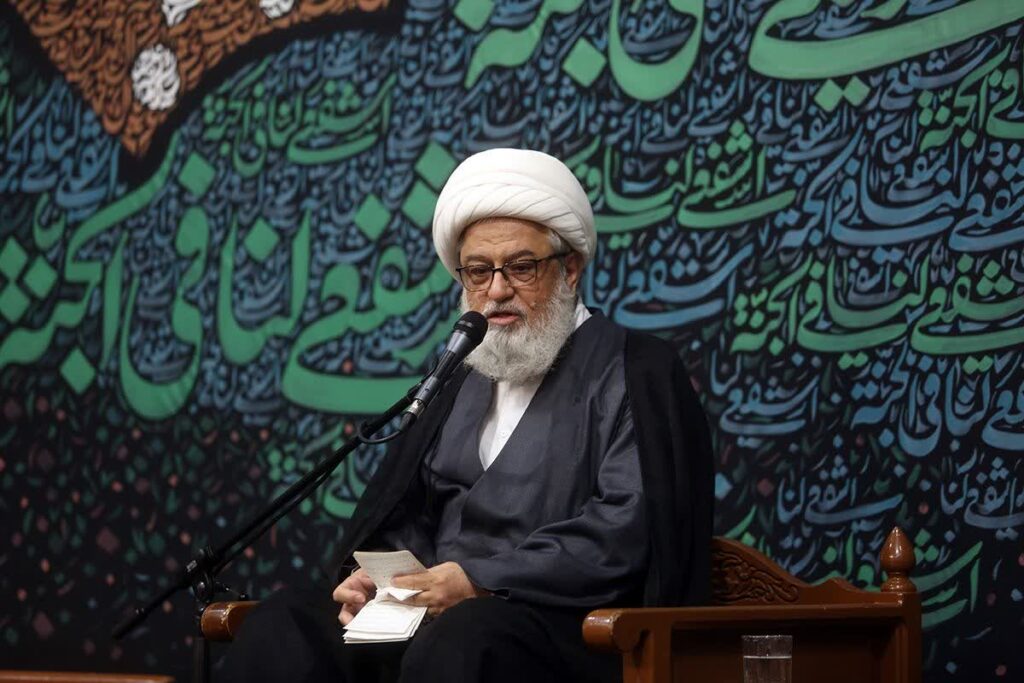
This is a translation of a lecture delivered by Agha Mohammad-Reza Abedini. Agha Abedini is a prominent scholar based in the seminary of Qom, and is widely recognized for his work in Islamic theology and intellectual discourse, including Qur’anic exegesis, analysis of hadith literature, and advanced discussions in Mahdism (Mahdawiyyah). Since 2018, his lectures and writings have been systematically compiled and published through the Tamhis Institute (http://tamhis.ir/), making his work more widely accessible to students and researchers.
Thanks to one of the brothers who initially provided me with the Farsi transcript of the lecture, which allowed for an easier translation.
In the Name of Allah, the Most Gracious, the Most Merciful. O Allah, be for Your representative, the Proof, son of al-Hasan—Your blessings be upon him and upon his forefathers—in this hour and in every hour, a guardian, a protector, a leader, a helper, a guide, and an eye (watchful over him), until You cause him to dwell upon Your earth willingly and allow him to enjoy it for a long time. Send your salutations upon the family of Allah, so that, God willing, you may be among the commanders of the Imam.
[O Allah, send blessings upon Muhammad and the family of Muhammad, and hasten their relief.]
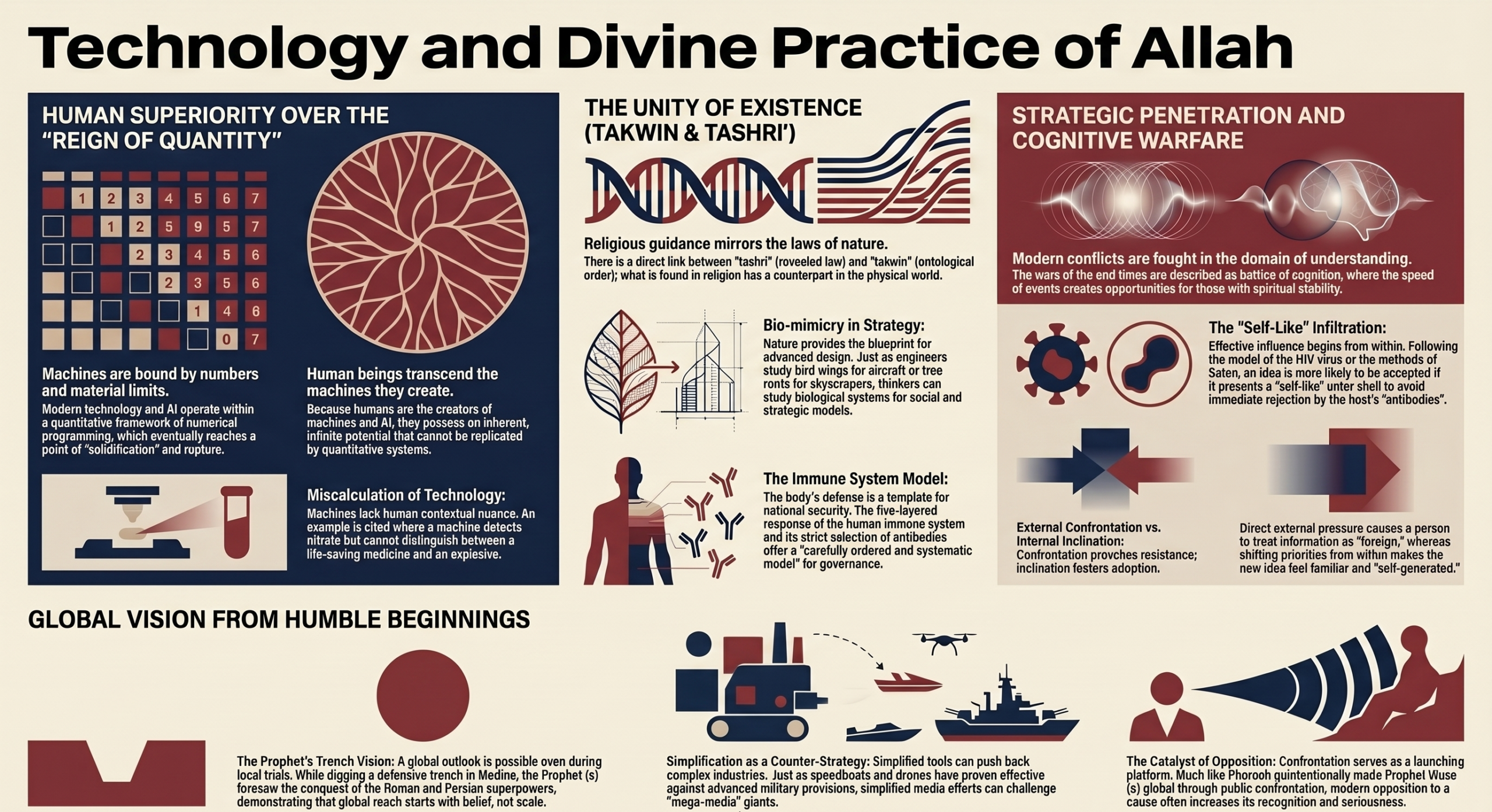
We are truly fortunate to be in the presence of friends, and all praise belongs to the Lord of the worlds, that the Exalted God has decreed in such a way that in this era, where mega media are towering, we begin from zero and arrive at results. Just as, in the face of warships, speedboats proved effective, and in the face of advanced aircraft and all their sophisticated military provisions, drones proved effective, this was a form of simplifying an industry that could stand against a complex industry. Our belief is that in the face of mega media as well, if we rely upon the Exalted God and truly believe that we can, then we can carry out actions that, in comparison to all their complex operations, resemble a fast boat that can push back their warships. If this belief is established, then a person will never feel intimidated by questions such as, “When will we achieve global reach or recognition?” Rather, they will see that even through these very efforts, impact and a global perspective are attainable. And praise be to the Lord of the worlds, you have demonstrated this in its practical form, you have shown that friends are indeed capable of doing this, and praise be to Allah.
From here onward, you must also adopt your outlook as a global outlook. This too is achievable. That is, do not see yourselves merely at a national scale. If you adopt a global scale, perhaps right now a slight smile might arise within us, a global scale, yet the Prophet, during the Battle of the Trench, while they were digging the trench to protect Medina, when sparks appeared from striking the rock, he said, “This is the conquest of Rome; this is the conquest of Persia.” This is a global vision, even at a time when some people may have smiled, thinking that he could not even secure a small Medina, that they were digging trenches and sharing a single date pit between them, and yet he spoke of conquering Rome and Persia, the two superpowers. This belief is crucial. If this belief takes shape, it is not far-fetched that you will see yourselves, at a global level, as a network representing the oppressed, those who do not fit within their frameworks, rapidly gaining influence. And the more they attempt to obstruct it, you will see it spreading even further. The more they try to block it, the more it grows.
Consider: who, in your view, made Prophet Musa (a) global? Who made him global? Pharaoh. Pharaoh made him global. He declared, “Our appointed time is the Day of Adornment,” when all people would gather. He intended that before the world, Prophet Musa would be exposed and disgraced among the people of that time, and be uprooted once and for all. Yet God said, “I will make that very event the launching platform for him.” In the same way, how have they made us global today? Through their confrontations. That is, if they had not dealt with us in this manner, if they had not highlighted and targeted our core, if they had not spoken against us in all these international forums, then we would have simply been another country among the many countries in the world, neither particularly visible nor prominent.
These confrontations of theirs are opportunities; that is, they are opportunities that the Exalted God has created. You should also know this: the more resistance and opposition arise against your current work, and the more limitations are created globally, these all become opportunities for you; these very things make your cause more serious and more recognized. This is one point. The next point is that we must believe that the wars of the end times are cognitive. This is certain, and do not doubt it. In our narrations, the majority of the wars of the end times are wars of cognition and understanding. One aspect of this is that the speed and intensity of events in the end times become very great, and thus there are many declines and many emergences; but the key point is that people have the capacity for this. The ability and capacity of people have reached such a level that they can endure and sustain this speed and intensity. If you come to believe this, then the rapid pace of events becomes an opportunity for us. For those who are trapped in worldly attachments, like our enemies, this becomes a pit and a challenge; but for us, what is it? That same rapid succession of events that they themselves generate, you see that before one event has even concluded, another begins, then another begins, they themselves become stuck within it, while we move forward. If you internalize this belief, then you will see that this too is a divine practice (سنت الهی). This divine practice is that all the terrifying challenges that enemies wish to impose upon us, with the full capacity of their being, those very same things become opportunities for us because we have the ability for them, while for them, they become challenges.
One of the friends who was here last night had just arrived from America four or five days ago. He had come for a short visit. He said, Haj Agha, there is a point… – he was a sharp individual – he said, a precise and noteworthy point in global developments is that their reliance on material tools in all of their struggles, even in their media warfare, in their analyses, is extremely high, and this is precisely their weakness. Because the human being, in comparison to the machine, even artificial intelligence – I mean, do not think when we say ‘machine’ we are only referring to the physical aspect, rather even artificial intelligence. He said, although they depend heavily on this – he gave an example: for instance, when I was going there, they would take a cloth, wipe it inside a bag, and then place it into a device; it can detect any trace of substances, even if, for example, ten years ago I had carried explosive materials in that bag, it could identify that traces, dust, and particles of such materials still remained. He said they would make a big issue out of it. He continued, my father used nitrate – nitroglycerin tablets, and since nitrate is present in that, suddenly you would see, for example, a hundred people surrounding me, out of fear and anxiety. The machine correctly detects nitrate, but it is nitroglycerin in a medicinal tablet; this is very different from the nitrate used in bombs. Yet this causes them to make miscalculations. Because the machine’s detections, despite their precision, are still limited.
If we understand this perspective, that the human force we possess exists alongside supercomputers, programs, and advanced artificial intelligence, all of which they currently utilize, then we should recognize that all of this is still a machine. In comparison to the human being, it remains a machine, and a machine cannot truly stand against or resist the human being. This is an important point. Of course, it is capable of accomplishing many things. We are not denying or rejecting the machine. Rather, we are asking a fundamental question: who is its creator? The human being.
Ali ibn Abi Talib says, “Through the endowment of faculties of perception to creatures, it is known that He Himself has no such faculty.” The Exalted God has created perceptive faculties for living beings, yet He Himself is not bound by such faculties. He is beyond them, the Creator of perception itself. He also says, “Through the origination of substances, it is known that He Himself is not a substance.” He has created all substances, yet He Himself is not a substance. He is beyond substance.
The human being is the creator of the machine. Therefore, what is the human being? Beyond the machine. This must be believed. If this is truly understood, it will not produce within us a sense of retreat, fear, or being overwhelmed. Instead, it will generate strength, enabling a person to believe that we can design strategies superior to theirs. We can, just as their work itself is also the product of human beings.
So these are perspectives on the divine practices (سنتهای الهی) and the power of the human being. On the other hand, the reality of the human being is that his capacity is infinite. No machine possesses infinite potential. René Guénon presents a very compelling discussion on this in his book The Reign of Quantity and the Signs of the Times. Although it was written around 1945, roughly eighty years ago,1 it remains a highly valuable work. He argues that the Western world is moving toward the domination of quantity, and the domination of quantity means numbers. This computer itself is numbers; everything operates through numerical programming. This is what he calls the reign of quantity. When quantity becomes dominant, it eventually reaches a point of explosion. In his terminology, this represents the peak of solidification within matter. At that stage, matter and quantity together represent the height of material existence. It is important to pay attention to this. While it is true that Pythagoras held that the world is composed of numbers and that everything can be interpreted through them, Guénon advances a more precise argument. When quantity dominates bodies, a rupture occurs, a tendency to break away from it, because the reality of the human being lies beyond this level. His work offers a powerful explanation of this phenomenon.
Now, in light of the precise analyses being carried out today through artificial intelligence, one should not become intimidated by the results. Do not think that we have lost, or that they are so advanced that we must simply struggle to keep up. The aim is not to belittle these developments, but to understand their horizon. They remain within the domain of quantitative dominance, measuring how many operations a computer can perform within a second or less, and the speed of execution. We do not deny this capacity, but we must recognize its limits. It is important not to merely follow their path, because following them means remaining within their framework. Instead, we must seek other paths, including simplifications that can open up shortcuts. This requires a genuine belief that alternative pathways are possible. The path they have taken is neither the only path nor necessarily the closest one. Between any two points, there are infinitely many possible paths. They have taken one of those paths and may believe they have reached the destination, but between our starting point and that destination, there is not just one route, and theirs is not necessarily the shortest. This must be believed. Once this is understood, other pathways become visible, and one can pursue solutions that yield faster and more effective results. If the mind remains open in this regard, divine inspirations (خطورات الهی) become powerful tools in solving problems.
Another point, and these are all interconnected themes, is that we believe the Creator of the human being and the Creator of the universe are one and the same. The path of the human being toward perfection, what we call tashriʿ (the revealed and legislative path), and the Creator of takwin (the ontological order of existence) are unified. The One who guides the human being through religion, prophets, and revelation is the very same Creator who brought the cosmos into being. The result of this is a precise and powerful principle: there is a correspondence between tashriʿ and takwin. In other words, whatever is found in religion has a counterpart in the external world of existence. If we truly believe that the Creator of the universe and the One guiding the human being are one, as expressed in the verse “He gave everything its creation, then guided it” (أَعْطَىٰ كُلَّ شَيْءٍ خَلْقَهُ ثُمَّ هَدَىٰ), then it follows that solutions exist within the very structure of existence that can assist us in moving toward perfection. With this perspective, a person begins to look at the world with awareness, attentiveness, and a problem-solving mindset. Everything they encounter becomes meaningful. They begin to ask: what connection does this have to me? What is it revealing? What solution does it hold?
To some extent, even our opponents have engaged with this reality in a limited way. For instance, when constructing tall buildings and towers, they draw from the model of tall trees and their root systems. If a tree is to grow to great heights, its roots must be structured in a particular way, whether through depth or spread. This has been carefully studied and applied. Similarly, in the design of fast aircraft, they have thoroughly analyzed birds, studying how they flap their wings, ascend, descend, and cut through the air. These patterns have been examined in detail and translated into engineering design. While they may not consciously hold the philosophical belief in this correspondence, they have arrived at aspects of it through observation. In contrast, we hold this as a principled understanding, grounded in the unity of the Creator. From this perspective, there is no shortage of models and inspirations that can be drawn for our own work, even in fields such as media and communication. The possibilities are numerous. To make this clearer, consider the following example.
Consider the human immune system, the field of human immunology. Within the body, there exists a powerful defensive system composed of multiple layers. What I am describing comes from medical specialists, as I am not an expert in this area. They explain that there are five significant layers, and at each layer a specific type of response is activated. The first level engages, and if it does not succeed, the second, third, fourth, and fifth follow in sequence. When the response reaches the fifth level, the body develops a fever. This indicates that the internal capacity has reached its limit. It is a warning, a red alert, signalling the need for external support. This fever is, in fact, a great blessing. When this red alert is triggered, normal bodily functions begin to shut down. Even appetite diminishes significantly. The entire system of the body becomes focused and unified in confronting the threat. This reflects the remarkable design of the human body.
Within this system, every cell is continuously monitored by antibodies that function like highly efficient mobile laboratories. At every moment, they interact with cells to determine whether they are self or non-self. This ability to distinguish between the two is extraordinary. Even more striking is the process of their production. Out of every hundred antibodies generated, they are subjected to a form of testing. Ninety-five do not pass and are broken down and returned to the system, while only five are retained. This indicates the level of rigour built into the system. The immune system is designed with such strength that it depends on strict selection. The structure of this system is not only precise but also transferable. Its layered design can serve as a model for systems of governance and national security. Discussions with security professionals have confirmed that these principles can be implemented in structured and practical ways. This is not a vague idea, but a carefully ordered and deeply systematic model.
At one point, during an extended stay in Tehran, we held regular sessions with specialists from different disciplines. These gatherings took place early on Friday mornings in Laleh Park, when it was quiet and largely empty. Experts in fields such as hematology, immunology, neurology, and others would come together. Each participant would present a key concept from their field that they found particularly insightful. From there, we would explore parallels across other disciplines and identify similar patterns. We would then examine these ideas through the lens of Islamic teachings, philosophy, and religious understanding. What emerged from these discussions was striking. There was a deep coherence across fields, a unifying thread that connected them. Even now, those who attended recall those sessions as some of the most profound experiences they had. Without formal planning, simply through open exchange, a sense of unity across knowledge became clear. Recognizing this unity transforms how a person sees the world. Nothing appears trivial. Everything becomes connected, and each observation invites reflection on how it relates to one’s own work and purpose.
In our mystical tradition, there is an expression: “In everything is everything” (في كلّ شيء كلّ شيء). It is a beautiful phrase. It means that in whatever God has created, everything is present. Although its primary manifestation appears as one thing, its hidden layers contain everything.
Consider stem cells:2 I once visited the Royan Institute and observed their work in simulation. From the very beginning, they explained fascinating stages. They said that stem cells are not easily obtained from every individual, and preserving them over time is not simple. However, there is a method. When cells have already become differentiated, such as skin cells, muscle cells, or neural cells, and have moved beyond the stem stage into specific forms, some of them can be reversed. Certain cells have a shorter path to specialization, perhaps six or eight transformations from the stem state to their current form. Others, such as neural cells, have much more complex pathways and are not easily reversible with current technology. However, some cells, like muscle cells, are more readily reversible. These cells can be taken backward and returned to a stem-like state. From there, they can be directed along a new pathway to reconstruct parts of the body, within the limits of current scientific capability. This process requires the creation of a structural framework, similar to the steel skeleton of a building, after which the cells are guided along a path that allows them to transform in accordance with that structure. They explained that, scientifically, there is confidence that, in the future, all organs can be reconstructed, provided that the correct structural blueprint is obtained.
What is even more remarkable is that within our own bodies, a similar process is constantly taking place without our awareness. Consider what happens to the food we eat. Digestion involves stripping away its specific forms and transforming it into a fluid essence that circulates throughout the body. In each part of the body, this essence is absorbed and reshaped according to the needs of that organ. This reflects an intricate and continuous process that modern science has only recently begun to understand and appreciate, yet it has always been active within us. A similar pattern can be observed in plants. Water is absorbed through the roots, carried through the vascular system, and distributed to branches, leaves, and fruits. This fluid adapts itself to each part, being absorbed and transformed according to its function. In this way, the plant has its own form of a digestive system, suited to its nature. Reflect on the beauty and precision of these systems.
This means that within our intellectual system as well, we have a kind of “stomach,” a foundational state, and determinate forms. This reality is not limited to the material realm. This is an important point. From here, we move to a related insight expressed beautifully by Morteza Motahhari. In the introduction to his book An Introduction to Islamic Sciences, whether in the section on philosophy and logic or in the introduction itself, he presents a profound idea. He explains that a living culture is one which, when it encounters other cultures, neither confronts them destructively nor becomes disconnected from them. It neither rejects them entirely nor absorbs them uncritically. Rather, a living culture takes what it encounters, digests it, assimilates it, and removes its excesses. This is the mark of vitality. For example, when Islamic culture encountered Persian culture, it absorbed and integrated it so deeply that it came to appear as though they had always been intertwined, while still discarding elements that were not aligned. The same pattern can be seen in its interaction with Arab and African cultures. This reflects the strength and depth of a living culture.
Sometimes a culture can absorb certain elements, but a truly powerful culture goes further. Its strength allows it to take an existing form and its determinations, return it to a foundational level, and then rearticulate it in a new form through that same foundation, without destroying it. This is a deeply astonishing process when fully understood.3
Within this perspective, if you position yourselves in a role where your work operates in a subtle and often unseen manner, then its function becomes the monitoring and foundational reprocessing of existing ideas. This does not require overt manipulation that makes the other side immediately aware. Rather, the question is whether this hidden line of influence can become part of your program. To what extent does the opposing side already use such methods to shape minds and direct thought, through shifts in priority and emphasis, through what is highlighted and what is allowed to fade? Can minds be guided in a particular direction? Here, Allama Tabatabai offers a profound insight in al-Mizan. He explains that Satan does not approach a human being as an external voice. Instead, he creates an inclination from within the person. When something arises from within, it resembles a “self” element, like a cell recognized as belonging to the body, and therefore it is not resisted. In contrast, when we speak from the outside in a confrontational manner, the immediate response of the self is to treat it as foreign, unless proven otherwise. However, when something emerges from within, the default assumption is that it belongs, unless it is later shown to be foreign.
Footnotes
- There was an error in the speech of Agha Abedini as he said it was written “in 1975, roughly fifty years ago”. I corrected it to “1945, roughly eighty years ago”.
- At this part of the lecture, Agha Abedini says something off tangent to someone in the audience which I have removed and added it here in the footnotes:
…when we examine the cells of the body in processes of simulation. Are you tired? No? I do not want to overwhelm you with examples. I had something else written here, but I felt that if you want to lead a movement, your mind must become highly dynamic in this domain. You must allow it to traverse different fields so that this leadership can take shape. You are working within a media context where you must convey the true unity of existence across particular details, so that in everything, that unity is visible. In everything.
- Moved this off-tangent conversation to the footnotes: Greetings and respect—how are you? These are excellent points; I do not know whether you enjoy them as I do. Are you bored? No? Why? They just arrived, and they have just begun to understand. He really enjoyed it—he has just arrived. Send a salutation. (Salawat) We do not even know what he said yet—someone once said, “Haj Agha, I listen to your talks and feel great peace, but I do not understand what you are saying. Yet even not understanding gives me peace.” Well, this itself is an effect. (Laughter.) Even a drop in your cup, yes, it is excellent.