
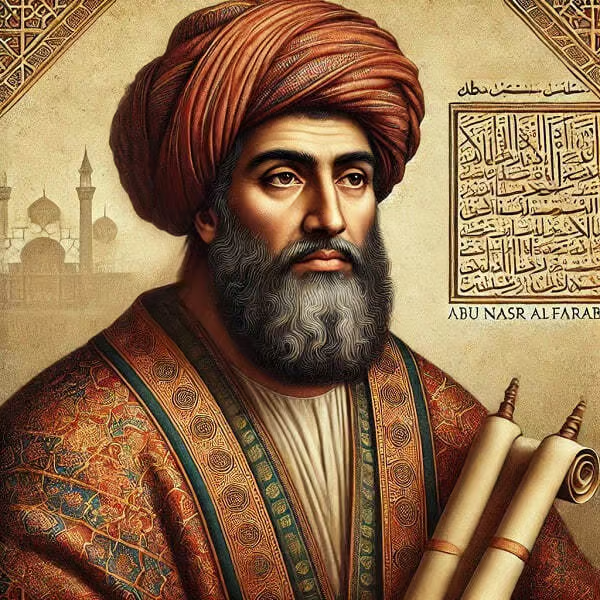
By Ustad Soroush Mahallati – Translated by Sayyid Ali Imran
These are translations of classes delivered by Ustad Soroush Mahallati during the summer vacation on political philosophy and political jurisprudence. In this post, I have translated the fifth lesson from July 17th, 2025.
The Language and Expression of Religion
In the name of God, the Most Compassionate, the Most Merciful
All praise is due to God, Lord of the worlds, and may peace and blessings be upon our Master and Prophet, Abū al-Qāsim al-Muṣṭafā Muḥammad (p) and his family.
Summary of the Previous Session
I extend my greetings and salutations to our dear friends and companions, and, God willing, we now begin the fifth session in the series of discussions on Fārābī’s Kitāb al-Millah.
In the previous session, Fārābī explained what issues the virtuous religion (millah fāḍilah), or the true religion, encompasses—what doctrines (ārāʾ) and what actions (afʿāl) it contains. He presented a relatively long and detailed list across two pages, which we went through together. One point remains regarding this discussion of Fārābī’s, and that is: is it necessary and essential for the people of the virtuous city to be aware of the matters he enumerated? To put it differently, what necessity does this discussion on the understanding of religion—on what religion encompasses, whether in beliefs or in behaviors—have for the formation of the virtuous city, in Fārābī’s view?
We may need to speak more about this question in future sessions. But there is one point that is connected to the previous discussion, which I will raise now before we enter a new discussion. It is this: although Fārābī seeks to describe the virtuous city—what kind of city it is—he also raises the ways and means of reaching the virtuous city. In Fārābī’s view, since the virtuous city is founded upon a virtuous religion, meaning it is founded upon religion and revelation, and since the First Ruler in the virtuous city is someone who has reached the highest level of intellect and receives revelation, the realization of such a city on the basis of that religion and way of life depends on the citizens of that city knowing their true religion and their true happiness. They must know which doctrines they ought to believe in and which actions they ought to commit themselves to. Thus, in this discussion, Fārābī does not merely want to explain the content of religion; rather, he also wants to explain the path toward forming the virtuous city.
The virtuous city is realized when the human beings in a city, in their social life, have arrived at these shared principles, and where these shared principles in beliefs and behaviors do not exist, the formation of the virtuous city is necessarily impossible. Keep this in mind as a fundamental point: Fārābī does not recommend the virtuous city for every set of circumstances and for every society, nor does he consider the virtuous city to be possible everywhere. Certain preliminaries must take place, and certain stages must be traversed. The first stage is these shared principles. That is why, in Kitāb al-Millah, where the discussion is about the millah, he enumerated these principles, and at the end Fārābī said: «فهذه جملة ما تشتمل عليه الملة الفاضلة» “So this is a summary of what the virtuous millah encompasses.” This was Fārābī’s explanation in Kitāb al-Millah.
The Worldview of the People of the Virtuous City in Ārāʾ Ahl al-Madīnah al-Fāḍilah
However, in his other book, Ārāʾ Ahl al-Madīnah al-Fāḍilah, he raises this same discussion from another angle, which is that all the people of the virtuous city must know and accept these shared matters. At the same time, the list is the same. On page 142 of Ārāʾ Ahl al-Madīnah al-Fāḍilah,1 the title of chapter 33 is: «القول في الأشياء المشتركة لأهل المدينة الفاضلة» “A Discourse on the Things Shared by the People of the Virtuous City.” He enters the discussion as follows:
«فأما الأشياء المشتركة التي ينبغي أن يعلمها جميع أهل المدينة الفاضلة فهي أشياء:»
“As for the shared things that all the people of the virtuous city ought to know, they are the following things:”
That is, the things that all the citizens of the virtuous city ought to know, and must have acquired knowledge of, so that it becomes possible to move toward the virtuous city, are the following:
1. Knowledge of God and His Attributes
«أولها معرفة السبب الأول وجميع ما يوصف به»
“The first of them is knowledge of the First Cause and all that it is described with.”
This is knowledge of the Exalted Truth, who is the origin of existence, and of everything with which the Truth is described. Now, there is one difference between this expression and the expression we read in Kitāb al-Millah: in Kitāb al-Millah it was «ما يوصف الله تعالى به» “what God the Exalted is described with,” and there we mentioned that the place of the principle of knowing the Exalted Truth was missing. Here it is not.
2. Knowledge of Immaterial Beings
The continuation of the passage from Ārāʾ al-Madīnah:
«ثم الأشياء المفارقة للمادة وما يوصف به كل واحد منها بما يخصه من الصفات والمرتبة إلى أن تنتهي من المفارقة إلى العقل الفعال، وفعل كل واحد»
“Then the things separate from matter, and what each one of them is described with in terms of the attributes and rank specific to it, until one reaches, among the separate beings, the Active Intellect; and the action of each one.”
The second discussion concerns beings that are immaterial and separate from matter, the characteristics of each of them, and the rank of each of them, until we arrive at the Active Intellect. Also included is what task each of these separate beings has been entrusted with, and what role they play in the system of creation—in other words, knowledge of the angels and the responsibility of each of them among the “managers of affairs” (mudabbirāt amran).
3. Knowledge of the Celestial Spheres and Natural Bodies
«ثم الجواهر السماوية وما يوصف به كل واحد منها»
“Then the celestial substances and what each one of them is described with.”
After this comes the discussion of knowing the celestial spheres.
«ثم الأجسام الطبيعية التي تحتها كيف تتكون وتفسد»
“Then the natural bodies beneath them: how they come into being and pass away.”
How natural bodies come into existence, and how they decay. For this world, the world of nature, is the world of generation and corruption (ʿālam al-kawn wa al-fasād).
4. The Operation of Justice, Perfection, and Wisdom in the System of Creation
«وأن ما يجري فيها يجري على إحكام وإتقان وعناية وعدل وحكمة»
“And that what takes place among them takes place with firmness, perfection, providence, justice, and wisdom.”
And you must know that whatever occurs in this system takes place on the basis of perfection and firmness. All beings are created in their proper place and in the manner befitting them, and the system is based on divine providence, justice, and wisdom.
«وأنه لا إهمال فيها ولا نقص ولا جور بوجه من الوجوه»
“And that there is no neglect in it, no deficiency, and no injustice in any way whatsoever.”
In this system, there is no shortcoming or deficiency whatsoever.
5. Knowledge of the Human Being, the First Ruler, the Nature of Revelation, and the Destiny of the People of the Virtuous City and the Ignorant City
Another area of knowledge:
«ثم كون الإنسان»
“Then the coming-into-being of the human.”
Then comes knowledge of the reality of the human being.
«وكيف تحدث قوى النفس، وكيف يفيض عليه العقل الفعال الضوء حتى تحصل المعقولات الأول والإرادة والاختيار»
“And how the faculties of the soul come about, and how the Active Intellect pours its light upon him so that the primary intelligibles, will, and choice are attained.”
Then comes knowledge of the First Ruler and knowledge of revelation:
«ثم الرئيس الأول وكيف يكون الوحي، ثم الرؤساء الذين ينبغي أن يخلفوه إذا لم يكن هو في وقت من الأوقات»
“Then the First Ruler and how revelation comes about; then the rulers who ought to succeed him when he is not present at some point in time.”
Then:
«ثم المدينة الفاضلة وأهلها والسعادة التي تصير إليها أنفسهم، والمدن المضادة لها وما تؤول إليه أنفسهم بعد الموت، إما بعضهم إلى الشقاء وإما بعضهم إلى العدم، ثم الأمم الفاضلة والأمم المضادة لها»
“Then the virtuous city and its people, and the happiness to which their souls arrive; and the cities opposed to it, and what their souls return to after death—some of them to wretchedness and some of them to nonexistence; then the virtuous nations and the nations opposed to them.”
This is a list that has been presented here somewhat in summary form, and in one respect, of course, in a more refined and orderly manner, and from the angle of what all the people of the virtuous city must know. So the virtuous city is formed when such knowledge exists, and in addition to this knowledge, there must also be a kind of acceptance—receptivity, faith, and conviction—behind it, which is a separate discussion. This was a point I needed to add as a complement to the previous session’s discussion: what role knowledge of the content of the virtuous religion plays in attaining the virtuous city.
Continuing the Discussion of Doctrines in Kitāb al-Millah
How Can One Arrive at These Doctrines?
Now to the discussion we have today. Today’s discussion is about how it is possible to attain this knowledge that we enumerated and listed. In the continuation of the passage we read in the previous session, Fārābī enters this discussion.
The Terms Millah, Dīn, and Sharīʿah
At the outset, he offers a reflection on one or two terms. The first term is millah, which we have explained up to now, along with the fact that its source is revelation, as well as its content.
Similar or synonymous to this term is the term dīn (religion). In Fārābī’s view, millah and dīn are synonymous with one another. What we have discussed until now under the title of millah is another expression of that same dīn. In the first session, I explained that the term millah lexically, in the primary sources, carries that same meaning of dīn, and I cited some of the noble verses of the Qur’an in which millah is used in the sense of religion.
The next term we have is sharīʿah, which, together with sunnah, are in his view synonymous with each other. What is the difference between millah or dīn and sharīʿah or sunnah? In the explanation we previously gave of millah, we said that millah consists of doctrines (ārāʾ) and actions (afʿāl). We also explained the doctrines: beliefs in the understanding of existence—its origin and its end, the matter of revelation, prophethood, soul, spirit, and intellect. These were the doctrines. The second part was actions, that is, the behaviors of the human being, what ruling each of them has, and what various conditions exist for them.
So the word millah, and likewise the word dīn, was a word that had both parts: doctrines and actions. By contrast, the words sharīʿah and sunnah are specific to the second part. Generally, it is with respect to the actions that are defined within the millah that the term sharīʿah is used. Thus, sharīʿah is specific to ethics, to the subsidiary rulings (aḥkām farʿiyyah), and to jurisprudence (fiqh), whereas millah also has a doctrinal part. Of course, in some usages, the word sharīʿah is used in a more general sense that includes doctrines and beliefs as well, and according to that usage, these three words become synonymous: millah, dīn, and sharīʿah. In any case, according to this definition, millah has two parts—doctrines and actions—that is, the delimitation of beliefs (taḥdīd al-ʿaqāʾid) and the prescription of actions (taqdīr al-afʿāl).
Text of Kitāb al-Millah (The Terms Millah, Dīn, and Sharīʿah)
«و الملّة و الدين يكادان يكونان اسمين مترادفين، وكذلك الشريعة و السنّة، فإنّ هذين إنّما يدلّان و يقعان عند الأكثر على الأفعال المقدّرة من جزأي الملّة. و قد يمكن أن تسمّى الآراء المقدّرة أيضا شريعة، فيكون الشريعة و الملّة و الدين أسماء مترادفة. فإنّ الملّة تلتئم من جزئين: من تحديد آراء و تقدير أفعال.»
“Millah and dīn are nearly synonymous names, and likewise sharīʿah and sunnah, for these two, for most people, signify and apply to the prescribed actions, which are one of the two parts of the millah. It is also possible for the prescribed doctrines to be called sharīʿah, in which case sharīʿah, millah, and dīn become synonymous names. For the millah is composed of two parts: the delimitation of doctrines and the prescription of actions.” (Kitāb al-Millah, p. 46)
Analysis and Explanation of the Text
This passage is clear; it is a statement of lexical and technical meaning, and it presents no difficulty. So let us read it: «و الملّة و الدين يكادان يكونان اسمين مترادفين» “Millah and dīn are nearly two synonymous names.” We have defined millah, and dīn is also synonymous with it and carries the same meaning as millah. «وكذلك الشريعة و السنّة» “And likewise sharīʿah and sunnah”—the two words sharīʿah and sunnah are also synonymous. Now, previously we had not given a definition of sharīʿah and sunnah; we had only defined millah, and consequently dīn. Now we explain sharīʿah and sunnah as well: «فإنّ هذين» “for these two,” meaning sharīʿah and sunnah: «إنّما يدلّان و يقعان عند الأكثر على الأفعال المقدّرة من جزأي الملّة» “signify and apply, for most people, to the prescribed actions, which are one of the two parts of the millah.” In the usage of most people, these two words, sharīʿah and sunnah, are applied to and denote the prescribed actions. We have repeatedly mentioned why they are called “prescribed actions” (afʿāl muqaddarah). We said that human actions and behaviors have specific conditions: with some conditions they become permissible, and with other conditions their permissibility is removed. In ethics, too, these same conditions exist—being right or wrong, being good or bad, being obligatory or forbidden—across various actions with various conditions. The very same marriage (nikāḥ) is permissible under one set of conditions, and under another set of conditions and circumstances it becomes forbidden. Hence the boundaries must be determined. The prescribed actions are sharīʿah and sunnah, which constitute one of the two parts of the millah, since the millah has two parts (doctrines and actions), the other part being doctrines.
Of course, there is another usage of sharīʿah in which sharīʿah, in a general sense, also includes doctrines, such that it is no longer a counterpart to doctrines. «و قد يمكن أن تسمّى الآراء المقدّرة أيضا شريعة» “And it is also possible for the prescribed doctrines to be called sharīʿah.” Sometimes the prescribed doctrines may also be called sharīʿah, in which case «فيكون الشريعة و الملّة و الدين أسماء مترادفة» “sharīʿah, millah, and dīn become synonymous names.” In that case, these three names would be synonymous with one another, and they would encompass both doctrines and actions.
The conclusion regarding millah in particular has now been reached, just as it applies to dīn and sharīʿah as well: «فإنّ الملّة تلتئم من جزئين» “For the millah is composed of two parts.” Millah and dīn are formed from two parts and have two sections. Iltiʾām from two parts means being formed from two parts: «من تحديد آراء و تقدير أفعال» “the delimitation of doctrines and the prescription of actions.” The first part is doctrines and beliefs, and the second part is actions. The role of the millah is to specify which doctrines and which beliefs, on the one hand, and which actions, on the other hand, are to be held. It specifies the limits and boundaries of each of these.
The Rational Criterion for Accepting the Doctrines of the Virtuous Religion
Up to this point, there is no particular discussion. Now Fārābī enters into an important and fundamental matter here, and that important and fundamental matter is this: how can these beliefs and doctrines that exist in the millah be known and accepted? The question Fārābī wishes to answer is that, in reality, there are many doctrines among human beings in various religions and traditions—so how can you adopt a doctrine, accept it, and regard it as part of the virtuous religion?
Truth as the Criterion for the Doctrines of the Virtuous Religion
The answer is that Fārābī says: what we can accept here is that those prescribed doctrines must be true (ḥaqq). The question then arises: how can being true be recognized? Here, Fārābī, by virtue of his philosophical and epistemological foundations, like other Islamic philosophers, holds that the criterion is this: whatever a human being identifies, recognizes, and arrives at with certainty must either be one of the primary principles of human knowledge itself—that is, self-evident (badīhī)—or it must lead back and terminate in these self-evident principles, that is, demonstration (burhān) must be the criterion. The criterion regarding doctrines and beliefs is that they must be true, and the meaning of truth is this: either it is by itself primary knowledge, that is, self-evident, or it terminates in primary knowledge and self-evident truths through demonstration. On this basis, we have no other path for recognizing the truth apart from this path that the intellect shows us. A human being, by using self-evident truths and taking them as the foundation, and on the basis of employing demonstration, can grasp the truth—this and nothing more.
Of course, this is a foundation that has been accepted in Islamic philosophy. Although in the various discussions that have existed, and that exist today, there are questions and many ambiguities in this area—such as whether a human being can reach the real truth or not—those discussions cannot be raised here for us. They are independent discussions, and we must necessarily accept them here as a postulate so that we can reach the main discussion we are pursuing. But the point that is more important, and which Fārābī raises here, is that everything we can recognize as true, or what the millah and religion present to us, is not in the form of a direct report of external reality. Sometimes the truth that is presented is reality itself, that is, reality itself is described with the very expression that conveys the reality and shows it—sometimes this is the case—and sometimes it is possible that, through expressions that do not have explicit signification, it points to a reality. This discussion, which Fārābī raises here in summary form, is the discussion of the language of religion.
The statements that are presented in the millah and in religion are of two kinds: sometimes they are statements that look directly at reality, and sometimes they are statements that do not directly report reality, but show reality in an indirect form. Fārābī wants to say that what has been presented in religion—do not assume that it always shows reality exactly and directly. Sometimes it resembles a dream, which shows reality, and yet is not a direct depiction; it is a kind of depiction of reality, that is, it is not pure imagination, but it is an image (mithāl) of reality—it depicts reality.
Continuation of the Text of Kitāb al-Millah
«فإنّ الملّة تلتئم من جزئين: من تحديد آراء و تقدير أفعال. فالضرب الأوّل من الآراء المحدودة في الملّة ضربان: إمّا رأي عبّر عنه باسمه الخاصّ به الذي جرت العادة بأن يكون دالّا على ذاته، و إمّا رأي عبّر عنه باسم مثاله المحاكي له، فالآراء المقدّرة التي في الملّة الفاضلة إمّا حقّ و إمّا مثال الحقّ. و الحقّ بالجملة ما تيقّن به الإنسان إمّا بنفسه بعلم أوّل و إمّا ببرهان. و كلّ ملّة لم يكن الضرب الأوّل من الآراء التي فيها يشتمل على ما يمكن أن يتيقّن به الإنسان لا من ذاته و لا ببرهان، و لا كان فيه مثال لشيء يمكن أن يتيقّن به بأحد هذين الوجهين، فتلك ملّة ضلالة.»
“For the millah is composed of two parts: the delimitation of doctrines and the prescription of actions. The first class—the doctrines delimited in the millah—is of two kinds: either a doctrine expressed by its own proper name, which customarily signifies the thing itself, or a doctrine expressed by the name of its likeness (mithāl) that imitates it. Thus, the prescribed doctrines in the virtuous millah are either the truth or a likeness of the truth. And the truth, in general, is that of which a human being is certain, either by himself through primary knowledge or through demonstration. Every millah in which the first class of doctrines does not include anything of which a human being can be certain—neither by itself nor through demonstration—and in which there is no likeness of something that can be known with certainty in one of these two ways, is a millah of misguidance.” (Kitāb al-Millah, p. 46)
Analysis and Explanation of the Text
Fārābī’s Discussion on the Language of Religion
Now let us read his passage, and then we will pause for a while on this subject, since it is an important, fundamental, and weighty matter. It so happens that Fārābī has addressed it here, and it is one of those discussions that, unfortunately, was not seriously pursued after Fārābī. Now, in our era, this discussion of the language of religion has gained a great deal of importance and value, and you will notice that Fārābī, about 1,200 years ago, raised this discussion very well concerning the language of religion. So first let us read the passage, and then we will turn to the discussion. Let us see what he says here.
The Two Ways of Expressing Doctrines
He said: «فإنّ الملّة تلتئم من جزئين: من تحديد آراء و تقدير أفعال» “For the millah is composed of two parts: the delimitation of doctrines and the prescription of actions.” The millah is formed of two parts: the first part explains doctrines and beliefs, and the second part specifies the scope of actions. «فالضرب الأوّل» “The first class,” that is, the first section of these two parts, «من الآراء المحدودة في الملّة» “the doctrines delimited in the millah”—those very doctrines and beliefs that are defined in the millah and in religion—that first class, «ضربان» “is of two kinds.” So the doctrines are of two kinds, just as before that he divided the millah into two kinds. «فالضرب الأوّل» “The first class,” which is the delimitation of doctrines, is «ضربان: إمّا رأي» “of two kinds: either a doctrine.” We said the discussion concerns doctrines; ārāʾ is the plural of raʾy.
1. Direct Expression (The Truth)
«إمّا رأي عبّر عنه باسمه الخاصّ به الذي جرت العادة بأن يكون دالّا على ذاته» “Either a doctrine expressed by its own proper name, which customarily signifies the thing itself.” Either this doctrine—a doctrine, that is, a belief—is a statement for which a specific name is used, one that is customarily employed and signifies the thing itself. For example, to refer to the sphere on which we reside, what word do you use? Al-arḍ, the earth. For that other sphere, what do you say? The sky. These words are used in relation to them, and they directly signify this reality; they too signify that very reality. This is the first kind.
2. Figurative and Indirect Expression (The Likeness of the Truth)
«و إمّا» “Or”—the second class and second kind—«و إمّا رأي عبّر عنه باسم مثاله المحاكي له» “or a doctrine expressed by the name of its likeness that imitates it.” You do not use its own name; you use the name of its likeness, of something that depicts it. This is similar to expressions we have in literature, as metaphor (majāz) and as allusion (kināyah). It is like this: at one moment, you can describe the reality of a trait that exists in a person with an explicit expression and say: he (Ḥasan) is brave, meaning he has the trait of courage. At another moment, you say, for example, “Ḥasan is a lion.” You use an allusive expression to convey his courage—a figurative expression. So sometimes your statement is a name that is a likeness and imitates; your expression is a figurative expression, and you refer to a reality by means of a likeness. These are the two ways of expressing a doctrine.
So what is the conclusion? «فالآراء المقدّرة» “The prescribed doctrines.” Right now, we have nothing to do with actions at all; do not mix them up. At present, our discussion is about beliefs, that is, statements that look at realities, not statements related to “musts” and “must-nots.” These statements, which concern reality and depict realities, are of two kinds: «فالآراء المقدّرة التي في الملّة الفاضلة إمّا حقّ و إمّا مثال الحقّ» “Thus, the prescribed doctrines in the virtuous millah are either the truth or a likeness of the truth.” The conclusion is that the doctrines and beliefs presented in the virtuous religion are either the truth, that is, they correspond exactly to reality, or, if they are not the truth, they are a likeness of the truth. A likeness of the truth!
What Is the Truth?
Now, what is the truth? «و الحقّ بالجملة ما تيقّن به الإنسان إمّا بنفسه بعلم أوّل و إمّا ببرهان» “And the truth, in general, is that of which a human being is certain, either by himself through primary knowledge or through demonstration.” The truth is those certain statements that a human being arrives at—certain knowledge that a human being grasps either by itself, through primary and self-evident knowledge. By “bi-nafsihi” (by itself), the bāʾ of causation is intended; that is, he grasps that very thing of which we are certain by means of primary knowledge, because of primary knowledge. «و إمّا ببرهان» “Or through demonstration”—or, if it is not self-evident, it is knowledge that a human being acquires by means of demonstration. Other than demonstration, nothing can have certain value and validity, nor can it bring a human being to reality. This is the truth.
What Is the Likeness of the Truth?
Once the truth is understood, the likeness of the truth is also understood. What is the likeness of the truth? A likeness of the truth is the knowledge that, with language and literature, is something that looks at reality, but it does not use demonstration—although it looks at reality and truth. Now, if a millah, a religion, a creed presents doctrines—again I emphasize that, for now, the discussion is specifically about doctrines, not actions—if a millah, a religion, or a belief presents doctrines to which a human being gains access either essentially or through demonstration, that is, those doctrines are either self-evident or theoretical but terminating in the self-evident, then if in a millah doctrine is presented with this criterion and characteristic that we mentioned, or if it is of the second kind, meaning that what is presented is a likeness of the truth, that is, a likeness for something that is true—a likeness of something about which one can attain certainty in one of the two ways, either by way of self-evidence or by way of demonstration—if in a religion there is such a capacity, that its doctrines are true, or a likeness of the truth that terminates in the truth, this millah becomes a virtuous millah.
The Criterion for a Misguided Religion
And if not—if doctrines are presented in a millah that are neither the truth nor a likeness of the truth, according to the definition we gave of the truth—this millah becomes a misguided millah (millah ḍāllah). Again, let us continue with the passage, and note: after he said «فالآراء المقدّرة التي في الملّة الفاضلة إمّا حقّ و إمّا مثال الحقّ» “Thus, the prescribed doctrines in the virtuous millah are either the truth or a likeness of the truth,” then “and the truth”: «و الحقّ بالجملة ما تيقّن به الإنسان إمّا بنفسه بعلم أوّل و إمّا ببرهان» “And the truth, in general, is that of which a human being is certain, either by himself through primary knowledge or through demonstration.” «و كلّ ملّة لم يكن الضرب الأوّل» “Every millah in which the first class…”—this “every millah” is the subject (mubtadaʾ), and its predicate (khabar) comes two lines later: «فتلك ملّة ضلالة» “is a millah of misguidance.”
«و كلّ ملّة لم يكن الضرب الأوّل من الآراء» “Every millah in which the first class of doctrines…”: any millah whose first part, doctrines, which we said is itself of two kinds—either a doctrine expressed by its proper name or one expressed by the name of its likeness. Any millah whose first part, which is meant to be the truth, «من الآراء التي فيها» “of the doctrines in it,” of the doctrines in that millah, «يشتمل على ما يمكن أن يتيقّن به الإنسان» “does not include what a human being can be certain of”—the phrase is actually like this: “every millah in which the first class does not include.” If you bring “yashtamil” forward, the phrase becomes clear. Any millah in which the first class of its doctrines does not include what is true, «على ما يمكن أن يتيقّن به الإنسان لا من ذاته و لا ببرهان» “what a human being can be certain of, neither by itself nor through demonstration”—that first part, of which a human being should have certainty, does not essentially have the capacity for certainty, nor can it be made certain by way of demonstration. In that first part, such a thing is not possible.
«و لا كان» “nor was there”—here he did not use the expression “the second class” again, but this is what is meant: the first class was not present, and the second class was not present. This is the explanation of “the second class was not present.” «و لا كان فيه مثال لشيء» “nor was there in it a likeness of something,” and what is in the doctrines of the millah is not among the cases that are a likeness of the truth. A likeness of the truth means what? That is: «مثال لشيء يمكن أن يتيقّن به بأحد هذين الوجهين» “a likeness of something that can be known with certainty in one of these two ways”—it is not a likeness of the truth, such that one could attain certainty about that thing in one of these two ways, meaning by itself or through demonstration. Then «فتلك ملّة ضلالة» “that is a millah of misguidance.” We said that the doctrines of a millah are either true or a likeness of the truth, and every millah and every religion that «لم يكن الضرب الأوّل من الآراء و لا كان فيه مثال لشيء… فتلك ملّة ضلالة» “in which the first class of doctrines was not present, and in which there was no likeness of something… that is a millah of misguidance.” This was his statement.
From this section of the passage, the meaning is clear as to what we consider the criterion for the virtuous religion as opposed to the misguided religion. Here, the beliefs are capable of demonstrative proof; there, the beliefs are not capable of demonstrative proof. Yes, here too there is a type of doctrine that is not directly capable of demonstrative proof, because it has the aspect of a likeness. But this likeness is a likeness for a reality, and that reality must itself be capable of demonstrative proof. This is the overall view.
Now, Fārābī has opened an important chapter here, and it is that the language of religion is twofold. In reality, he is warning us: whatever is presented in religion and in the virtuous religion is not necessarily a literal expression of reality; rather, it may be a likeness of the truth that has been presented in religion, and you should not be mistaken about this. Religion uses both languages. We want to pause on this topic for a while because, as I mentioned, it is an important issue.
Why the Language of Religion Includes Likenesses of the Truth and Indirect Expression
Let us return to the book Ārāʾ Ahl al-Madīnah al-Fāḍilah and draw on the discussion there. The first point to pay attention to here is: why does religion not use only the first language at all? The first language is the language that looks at reality as it is, without using any likeness—so that if it wants to depict reality, it is a direct statement of reality, showing what is real with the very expression [that denotes it]. Why the second language? This second language can cause a person to make mistakes. A person does not know what the expression being used refers to. Right now, for example, there are cases in the Noble Qur’an where a person is sometimes perplexed as to whether an expression in the Qur’an is of the first type or the second type. For example, what does the word samāʾ and samāwāt (heaven, heavens) mean in the Noble Qur’an? Is it these same celestial spheres, in contrast to the earth on which we live? Or not—does samāʾ have another meaning, namely the higher levels of the world of existence, not the world of matter, that is, the world of immaterial beings?
Some of the usages in the Noble Qur’an support this second meaning. One of our great teachers—may God have mercy on him—who would sometimes narrate from his teacher, ʿAllāmah Ṭabāṭabāʾī, said that ʿAllāmah, until his final days, would say: “It never became clear to me which of these two meanings the word samāʾ ultimately has in the Noble Qur’an. Is it the higher levels of the world of existence, or these very material celestial spheres?” Well, in some cases, it may be possible to determine this through contextual indicators. In the case of the second meaning, samāʾ is then the higher world, and this expression becomes an allusive expression.
The Diversity of the Language of Religion According to the Diversity of the Addressees’ Understanding and Knowledge
The question that can be asked of Fārābī is: why, in the text of religion, is this second type of language presented alongside the first type at all, so that a person becomes perplexed and cannot identify the truth? The answer that Fārābī gives here is this: when religion speaks with people, its addressees are diverse and many. The level of the addressees is also diverse: some are at a high level, some at a low or middle level. On the other hand, among the realities that religion presents, some are intelligible realities, higher than the level of material and natural life, and now, for material human beings, those high-level and intelligible realities cannot be expressed without a likeness. We have no remedy except to use a likeness. This diversity is required by the diversity of human beings and their levels of knowledge, and it is also required by the diversity of these teachings.
Some of these teachings are at an ordinary level and do not need a likeness, but some of these teachings cannot be explained to ordinary individuals; they need a likeness. Where the human being has no experience, how can it be explained to him? The experience we have right now is that we have two eyes; the eyes are on the face, facing forward, and we use and benefit from the blessing of sight. But not from the right side, nor from the left side, nor from behind. Now, if we want to explain this reality—that the human being in another world is entirely insight and vision; the reality of the human being there is such that this attachment of the soul does not use the faculty of sight in a particular direction—it must have a specific direction, and there are other limitations as well: the things we want to see must be seen in light, we must see them at a specific distance; if they are far, we do not see them. Now we want to say there is a world in which the human being has none of these limits. If we want a person to imagine this, we say: you consider here that we have two eyes; there is another world in which, suppose, all around a person’s head is eyes. We are giving a likeness! Suppose this eye is not only on the head—it is in the entire being of the human! Other than this, what can we do? Or must the person have a perception of intelligibles to understand that, at the level of immateriality, the human being is identical with knowledge and awareness—something that does not happen for ordinary people? So we must give them a likeness in this way: that in that world, a person’s eyes multiply. Likewise, we must give a likeness for the other perceptual faculties as well. There is no remedy other than this; the perceptual limitations of human beings compel the speaker.
Fārābī says this in Ārāʾ Ahl al-Madīnah al-Fāḍilah, page 143:2 «و هذه الأشياء تعرف بأحد وجهين» “And these things are known in one of two ways.” That is, these forms of knowledge that we enumerated, which a human being must acquire, are known in two ways: «إما بأن ترتسم في نفوسهم كما هي موجودة» “either by being impressed upon their souls as they actually exist.” There are some human beings who can perceive these realities and truths as they are. The angels are immaterial; they can perceive these and other realities. «و إما بأن ترتسم فيها» “Or by being impressed upon them”—that is, upon their souls—«بالمناسبة و التمثيل» “through correspondence and representation.” One must make use of correspondence and representation for them to perceive these. «و ذلك» “And that”—this is the explanation of this second category—«أن يحصل في نفوسهم مثالاتها التي تحاكيها» “is that their likenesses, which imitate them, are produced in their souls”—likenesses that depict those realities.
The first are those who have a high capacity for perception and truth: «و حكماء المدينة الفاضلة هم الذين يعرفون هذه ببراهين و ببصائر أنفسهم، و من يلي الحكماء يعرفون هذه على ما هي عليه موجودة لبصائر الحكماء، اتباعاً لهم و تصديقاً لهم و ثقة بهم» “The sages of the virtuous city are those who know these through demonstrations and through their own insight; and those who follow the sages know them as they exist, by the insight of the sages, following them, assenting to them, and trusting them.” Of the sages and the followers of the sages who can perceive directly, let us move on. We come to ordinary human beings: «و الباقون منهم يعرفونها بالمثالات التي تحاكيها، لأنهم لا هيأة في أذهانهم لتفهمها على ما هي موجودة، إما بالطبع و إما بالعادة، و كلتاهما معرفتان» “And the rest of them know them through the likenesses that imitate them, because there is no disposition in their minds for understanding them as they exist, either by nature or by habit; and both are forms of knowledge.” Of course, the first knowledge is stronger; the second knowledge is knowledge by way of likeness.
This very issue—Fārābī has now repeated these expressions here several times: mithālāt, mithālāt, mithālāt (likenesses)—knowledge by way of likenesses is a chapter of its own. This is the chapter I mentioned: although it has been raised in Islamic sources like the Qur’an, and sages like Fārābī also attended to and focused on it, it has not yet found its proper place in our philosophy, nor in our doctrinal, theological (kalām), and exegetical discussions, over these long centuries. These foundations could be very good foundations and could encompass very lofty discussions.
An Example of Likenesses in the Words of ʿAllāmah Ṭabāṭabāʾī
Now, as an example, I will again draw on another text besides Fārābī. Before reading the second text, so as to relieve fatigue, so that the discussion is not tiresome, and so that there is some variety in the discussion: the late ʿAllāmah Ṭabāṭabāʾī (r), here and there in Tafsīr al-Mīzān, entered this discussion of likenesses and regarded some Qur’anic teachings, and some of what God narrates in the Qur’an, as likenesses—these stories do not narrate external reality. Now look, for example, in the Gulistān, Saʿdī sometimes tells a story to express a reality, to express a moral value, or in other literary books—this type of expression and literature is very common. ʿAllāmah Ṭabāṭabāʾī holds that some of these matters in the Noble Qur’an have aspects of likeness, rather than being a narration of something that happened externally; a historical report does not exist for them, and these expressions are not a historical story.
The late ʿAllāmah explains this point, for example, regarding the story of the creation of Ādam and Ḥawwāʾ and the events that the Noble Qur’an mentions. It has appeared in several places in al-Mīzān, among them in volume 14, in connection with verse 115 of Sūrat Ṭāhā:
﴾وَلَقَدْ عَهِدْنَا إِلَىٰ آدَمَ مِن قَبْلُ فَنَسِيَ وَلَمْ نَجِدْ لَهُ عَزْمًا وَإِذْ قُلْنَا لِلْمَلَائِكَةِ اسْجُدُوا لِآدَمَ فَسَجَدُوا إِلَّا إِبْلِيسَ أَبَىٰ فَقُلْنَا يَا آدَمُ إِنَّ هَٰذَا عَدُوٌّ لَّكَ وَلِزَوْجِكَ فَلَا يُخْرِجَنَّكُمَا مِنَ الْجَنَّةِ فَتَشْقَىٰ … فَوَسْوَسَ إِلَيْهِ الشَّيْطَانُ قَالَ يَا آدَمُ هَلْ أَدُلُّكَ عَلَىٰ شَجَرَةِ الْخُلْدِ وَمُلْكٍ لَّا يَبْلَىٰ﴿
“And We had certainly made a covenant with Ādam before, but he forgot, and We found in him no firm resolve. And when We said to the angels, ‘Prostrate to Ādam,’ they prostrated, except Iblīs; he refused. So We said, ‘Ādam, indeed this is an enemy to you and to your wife. So let him not expel you both from Paradise, lest you suffer…’ Then Satan whispered to him; he said, ‘Ādam, shall I direct you to the tree of eternity and a kingdom that does not decay?'” (Qur’an 20:115–120)
This is the story of Prophet Ādam. God says: Ādam and his wife were in Paradise, and events took place. In several sūrahs of the Noble Qur’an, among them: We created Ādam, We commanded the angels to prostrate to him, and all of them prostrated, and Iblīs did not prostrate; then events happened to Ādam, and We expelled them from Paradise… Are these history?! Did each step of these take place externally?! Or are they a reality that God is expressing by way of likeness? What likeness? A likeness for the fact that the human being has such a station that he is higher than all the angels. The prostration is a reference to that higher level of the human being; Satan’s not prostrating means that he always creates obstruction in the face of the human being’s perfection; and after they disobeyed and transgressed, their entire bodies suddenly became exposed, and so on, and so on… these are symbolic statements.
Identifying Likenesses in the Qur’an
The late ʿAllāmah’s statement in volume 14, page 218, is this:3 «و القصة كما يظهر من سياقها في هذه السورة و غيرها مما ذكرت فيها كالبقرة و الأعراف» “And the story, as appears from its context in this sūrah and in others in which it is mentioned, such as al-Baqarah and al-Aʿrāf”—this story and the events of Ādam—«تمثّل حال الإنسان بحسب طبعه الأرضي المادي، فقد خلق الله سبحانه في أحسن تقويم، و غمره في نعمه التي لا تحصى و أسكنه جنة الإعتدال و منعه عن تعديه بالخروج إلى جانب الإسراف» “represent the state of the human being according to his earthly, material nature. God, glory be to Him, created [him] in the best of forms, immersed him in His countless blessings, settled him in the garden of moderation, and forbade him from transgressing it by going over to the side of excess.” These are representations (tamaththul) of these realities: «و هذه هي التي مثلت لآدم إذ أدخله الله الجنة و ضرب له بالكرامة حتى عال أمره إلى ما عال إلا أن واقعته عليه السلام كانت قبل تشريع أصل الدين، و جنته جنة برزخية ممثلة في عيشة غير دنيوية» “And this is what was represented for Ādam when God admitted him into the Garden and honored him with dignity, until his affair came to what it came to—except that his incident, peace be upon him, took place before the legislation of the foundation of religion, and his Garden was a barzakhī garden, represented in a non-worldly life.” In several places in Tafsīr al-Mīzān, he relied on this explanation: that this is a likeness, not the account of a historical event.
Here, of course, we are inevitably faced with a difficulty, and that is: where can we interpret a story and an event as having historical reality, and where should we say it has an aspect of likeness? Identifying and separating these is a difficult task. Unfortunately, we can no longer pursue this here, because we would stray very far from this text, and we only wanted to pursue the discussion to the extent of this text. But let me make one point, which is that the issue in this section—that is, the figurative language (bayān mithālī) of the Qur’an—is a very difficult and weighty issue. The late ʿAllāmah himself sometimes uses this very expression; for example, concerning the verse in the Noble Qur’an about Hārūt and Mārūt, he raises this question: the account of Prophet Sulaymān and Hārūt and Mārūt—is this truly a real matter, or not, does it have an aspect of likeness and is it symbolic?
In some cases, a person may be able to arrive at a clear understanding of them. One of the ways to perceive this more clearly in this area is that if a statement in the Noble Qur’an is such that taking it at its apparent meaning leads to difficulty, and the intellect regards it as impossible, then here we must necessarily pass beyond the apparent meaning and receive it as a likeness. For example, in this very story of Prophet Ādam, where God says in the verse ﴾وَإِذْ قُلْنَا لِلْمَلَائِكَةِ اسْجُدُوا لِآدَمَ﴿ “And when We said to the angels, ‘Prostrate to Ādam'” there was a command to prostrate. Its apparent meaning is that it was a command: ﴾فَسَجَدُوا إِلَّا إِبْلِيسَ﴿ “So they prostrated, except Iblīs.”4 We know that a command is either real—a real command—or ontological (takwīnī), or legislative (tashrīʿī). If this divine command, “Prostrate,” was an ontological command for the angels, of the kind ﴾إِذَا أَرَادَ شَيْئًا أَن يَقُولَ لَهُ كُن فَيَكُونُ﴿ “when He intends a thing, He only says to it, ‘Be,’ and it is,”5 then Satan and Iblīs must also have prostrated, because he cannot disobey the ontological will and volition of God. So it was not ontological.
The second category is legislative, whereas with respect to the angels, there is no such thing as a legislative command. Well, when the command can be neither real (ontological) nor legislative, and neither of them is conceivable, here the exegete takes this as an indicator that it is therefore the command of a likeness. And this is a representation that has come in the Noble Qur’an, and this representation is from the perspective that the human being possesses a very lofty station and standing, to which even the angels do not find their way. The angels do not find their way to that lofty station of the human being, other beings also do not find their way to that high station, and Satan is the highwayman of this station that God has given to the human being. And God has expressed this reality with this likeness: that the angels’ prostration means they accept the human being; but rebellion took place on the part of Iblīs. Since taking the verse at its apparent meaning entails a difficulty, we therefore interpret this as the Qur’an having presented a representational statement.
Another Example of Representational and Symbolic Expression in the Words of ʿAllāmah Sharaf al-Dīn
The principle that the Qur’an includes representation is certain; God Himself has said in the Qur’an: ﴾وَلَقَدْ ضَرَبْنَا لِلنَّاسِ فِي هَٰذَا الْقُرْآنِ مِن كُلِّ مَثَلٍ﴿ “And We have certainly presented for the people in this Qur’an from every [kind of] likeness.”6 But identifying its minor premises, its instances, is a difficult task. Now, some of the great scholars, like the late Sharaf al-Dīn, hold this very view regarding the verse of al-dharr: that the world of al-dharr, in the sense that there was a world in which human beings existed before this world and in which God took testimony from human beings for His oneness—which appears in the noble verse of the Qur’an7—they say: all of this is a likeness, a figurative statement, meaning that the human being, at the beginning of creation, has a primordial nature (fiṭrah) that knows God, this and nothing more. And when God says: We took an acknowledgment and We took testimony, ﴾قَالُوا بَلَىٰ﴿ “they said, ‘Yes,'” have said it—this does not mean that another world existed. This great scholar interpreted this noble verse in this way.
Further Examples of Representational and Symbolic Expression in the Qur’an
I will mention some of these verses as examples so that you see that the scope of this discussion is truly extensive and wide, and our understanding and exegesis differ in this area. For example, the verse ﴾إِنَّا عَرَضْنَا الْأَمَانَةَ عَلَى السَّمَاوَاتِ وَالْأَرْضِ وَالْجِبَالِ فَأَبَيْنَ أَن يَحْمِلْنَهَا وَأَشْفَقْنَ مِنْهَا وَحَمَلَهَا الْإِنسَانُ ۖ إِنَّهُ كَانَ ظَلُومًا جَهُولًا﴿ “Indeed, We offered the Trust to the heavens and the earth and the mountains, but they refused to bear it and feared it; and the human being bore it. Indeed, he was unjust and ignorant.”8 The apparent meaning of the noble verse is that God offered this Trust to the heavens, the earth, and the mountains (“We offered”), meaning: if We had offered it to them, they would not have accepted it, and they did not have the capacity to bear it. Well, when the exegete cannot accept this apparent meaning—that is, what weighty Trust is it that God knows the earth and heavens cannot bear, that He should offer it to them?! These are, after all, material beings; they have no affinity with that weighty divine Trust—other than this being a likeness, that the human being has accepted a Trust, God wants to say by means of this likeness that this Trust is a very heavy Trust, and among the beings of the world of creation, no one has the capacity and endurance for such a Trust. That is, the existential expanse of the human being and his capacity for perfection is higher than all the beings of the world. This representation is a statement of that reality, not that something was offered to the mountains and they said, “We cannot accept it.” Verses of this kind are plentiful in the Noble Qur’an.
I have mentioned these examples to some extent here. Ayatullah Jawādī also has many cases in Tafsīr Tasnīm, among them in volume 3 in connection with the discussion of the angels’ prostration, page 290,9 and Tafsīr Tasnīm, volume 55, page 396,10 and many other cases.
Fārābī’s Account of the Diversity of the Language of Religion in Religions and Revealed Scriptures Based on the Diversity of Addressees
Now Fārābī wants to draw a conclusion from the matter he has raised, and that conclusion is this: if you see a difference and a disagreement among the various millahs, that is, various religions—religions that are revealed and true religions—one way of resolving this disagreement is to see that, since the addressees had different understandings, God, in these religions, used different languages to express the truth for different human beings and generations; these do not contradict one another. Different likenesses that look at one truth—both within one book the disagreement disappears, and among different books the disagreement disappears. Now let me read this matter to you from Fārābī; he both explains the principle of the matter and explains the disagreements, as well as why religion uses representational language at all.
In the book al-Siyāsah al-Madaniyyah, page 85, he says:11 «و مبادئ الموجودات و مراتبها و السعادة و رياسة المدن الفاضلة» “And the principles of beings and their ranks, happiness, and the leadership of virtuous cities”—these are realities that a human being must know, as we said before—«إما أن يتصورها الإنسان و يعقلها و إما أن يتخيلها» “either the human being conceives them and intellects them, or he imagines them.” Sometimes a person truly conceives the reality; sometimes not—he in fact imagines it, rather than conceiving the reality. Conceiving means that the human being knows and perceives that existent which is in reality; imagining means that the human being knows the likenesses that depict that reality. Fārābī explains these and then gives an example. He says: sometimes you see the person himself, and at other times you see his picture. The person whom you see, you gain knowledge of; sometimes you see his likeness, you see his picture—that too is knowledge; you see his film. And these likenesses are sometimes very clear, and sometimes not very clear. Pictures are sometimes old and sometimes new, sometimes not; the image of a person falling in a mirror, sometimes his image and likeness falling in water. These are various levels of expressiveness and depiction of likenesses. The disagreement of likenesses is resolved from here: all of them show one reality, and they call the human being to one reality.
But sometimes the human being does not pay attention to their aspect of being likenesses, makes a mistake, and thinks that these likenesses themselves have objectivity, becoming heedless of their aspect of being likenesses.
He explains these to some extent, and then says: «و أكثر الناس لا قدرة لهم إما بالفطرة و إما بالعادة على تفهم تلك و تصورها» “And most people have no ability, either by nature or by habit, to understand and conceive those.” These realities, especially regarding the higher world and immaterial beings, regarding the Hereafter, most people do not have the ability to understand. We are in a world of nature in which we have limitations; we have no conception at all. Here, a human being wills, and for his will to be realized, how many causes, contexts, and conditions are required?! Now, if a person wants to conceive that there ﴾لَهُمْ فِيهَا مَا يَشَاءُونَ﴿ “they will have therein whatever they wish,”12 how can this be explained to a human being so that he has even a general perception of it?! Then God in the Qur’an is compelled to repeatedly give likeness, likeness, likeness! What human beings seek here, what they want, what is attractive, beautiful, desirable, what they take pleasure in—God in the Qur’an constantly expresses these so that perhaps, with these likenesses, the human being can perceive that reality.
Various Likenesses for Expressing a Single, Fixed Reality
So: «أكثر الناس لا قدرة لهم إما بالفطرة و إما بالعادة… فأولئك ينبغي أن تخيل إليهم مبادئ الموجودات و مراتبها و عقل الفعال و رياسة الأولى كيف تكون بأشياء تحاكيها و معاني تلك و ذواتها هي واحدة لا تتبدل» “Most people have no ability, either by nature or by habit… so for them, the principles of beings and their ranks, the Active Intellect, and the First Leadership—how it comes about—ought to be imagined by means of things that imitate them; while their meanings and essences are one and do not change.” We do not mean to say that the reality changes. No, that truth and reality is one; the pictures are different, the mirrors are different, the likenesses are different. The truth is one: «و أما ما تحاكي بها فأشياء كثيرة مختلفة» “As for that by which they are imitated, these are many different things”—that which is the means of depiction is diverse.
Now, we are not people of poetry and literature, but you know that in these fields, when people like Mawlānā [Rūmī] reach such places, they create a commotion! And these are the realities that our sages have said: «و أما ما تحاكي بها فأشياء كثيرة بعضها أقرب إلى المحاكاة و بعضها أبعد كما يكون ذلك في المبصرات» “As for that by which they are imitated, these are many things, some closer in imitation and some more distant, just as is the case with visible things.” Then, in visible things too it is the same; a person sometimes sees the reality, sometimes sees a picture. Until he reaches here: «و لذلك أمكن أن تحاكى هذه الأشياء لكل طائفة و لكل أمة بغير الأمور التي تحاكى بها لطائفة الأخرى أو للأمة الأخرى» “For that reason, it is possible for these things to be imitated for every group and every nation by means of things other than those by which they are imitated for another group or another nation.” These diversities among different nations: they have one perception, others have another perception, a clearer perception, while all of them look at one reality. «فلذلك قد يمكن أن تكون أمم فاضلة و مدن فاضلة تختلف مللهم» “For that reason, it is possible for there to be virtuous nations and virtuous cities whose millahs differ.” There is no problem in a nation being virtuous, a city being virtuous, but the millahs being different—different religions among different nations. Why? Because understandings are different. And all of them guide to one true happiness.
«و إن كانوا كلهم يعمون سعادة واحدة بعينها فإن الملة هي رسوم هذه أو رسوم خيالاتها في النفوس فإن الجمهور لما أثر عليهم تفهم هذه الأشياء أنفسها و على ما هي عليه موجود قلت مثل تعليمهم لها بوجوه آخر و تلك هي وجوه المحاكاة» “Even if they all aim at one and the same happiness, for the millah is the impressions of these things, or the impressions of their imaginings, in souls. Since it was difficult for the public to understand these things themselves, as they exist, their instruction in them was given by other means, and those are the means of imitation.” Well, these are disagreements that exist among most people, and this has caused different likenesses to be used so that these people can draw near to that reality.
Disagreements Among the Followers of Religions and Philosophers Arising from Differences and Mistakes in Perceiving and Understanding Likenesses
Two pages on, the honorable Fārābī has pursued this discussion here, and now we will complete our discussion with another point that Fārābī has, which he raised in Kitāb al-Ḥurūf, a book I have introduced before. It is that sometimes the disagreements that exist among the followers of different millahs and religions, or between the followers of a religion and the followers of a philosophical school, arise from not correctly perceiving these likenesses. Sometimes the followers of a religion receive a likeness as a statement of reality on one side, while the philosophers and sages on the other side regard it as contrary to rational demonstration, and they stand against one another. If there were a correct understanding of the language of religion, the result would be this: first, among those who are followers of religion themselves, disagreement would be resolved; and second, the disagreement between the people of philosophy and the people of the millah would disappear, because the people of philosophy would understand that this was a figurative statement.
In Kitāb al-Ḥurūf, page 155, the passage is detailed; I will only point to it:13 «و يعاند أهل الفلسفة تلك الملة ما لم يعلموا أن تلك الملة مثالات لما في الفلسفة» “And the people of philosophy oppose that millah as long as they do not know that that millah consists of likenesses of what is in philosophy.” The philosophers do not know that what has come in religion is a likeness for those very realities that have also been proven in philosophy, and which the philosopher also accepts. «و متى علموا أنها مثالات لما فيها» “And when they come to know that they are likenesses of what is in it,” if they know that this is a likeness for that very thing which is in philosophy, «لم يعاندوها» “they will not oppose it.” They will have no opposition or difficulty with those likenesses. If they pass beyond the likeness—and one must pass beyond the likeness and reach the reality.
In any case, these discussions that are raised today concerning language and understanding the language of religion have a serious background and precedent among Islamic sages, Fārābī, of course, being the first. I had also prepared some of the statements of the sages after Fārābī to point to here, but time and opportunity have passed, and I do not think it is necessary either. And if we had relied on this background and precedent in Islamic culture, had pursued these topics and taken them seriously, it seems we would have benefited from many of today’s issues in the most advanced and developed of human sciences. It is a pity that we did not take these issues seriously! And unfortunately, we still do not take them seriously! And just as Fārābī points out, not taking them seriously and not being familiar with them has been the cause of disagreements, confrontations, and accusations of disbelief (takfīr) among us Muslims.
I apologize for tiring our dear friends.
Wa al-salāmu ʿalaykum wa raḥmatullāhi wa barakātuh.
Footnotes
- al-Fārābī, Ārāʾ Ahl al-Madīnah al-Fāḍilah, ch. 33, p. 142.
- al-Fārābī, Ārāʾ Ahl al-Madīnah al-Fāḍilah, p. 143.
- Ṭabāṭabāʾī, al-Mīzān fī Tafsīr al-Qurʾān, vol. 14, p. 218.
- Qurʾān 2:34.
- Qurʾān 36:82.
- Qurʾān 39:27; see also 30:58.
- Qurʾān 7:172.
- Qurʾān 33:72.
- Jawādī Āmulī, Tafsīr Tasnīm, vol. 3, p. 290.
- Jawādī Āmulī, Tafsīr Tasnīm, vol. 55, p. 396.
- al-Fārābī, al-Siyāsah al-Madaniyyah, p. 85.
- Qurʾān 16:31.
- al-Fārābī, Kitāb al-Ḥurūf, p. 155.