
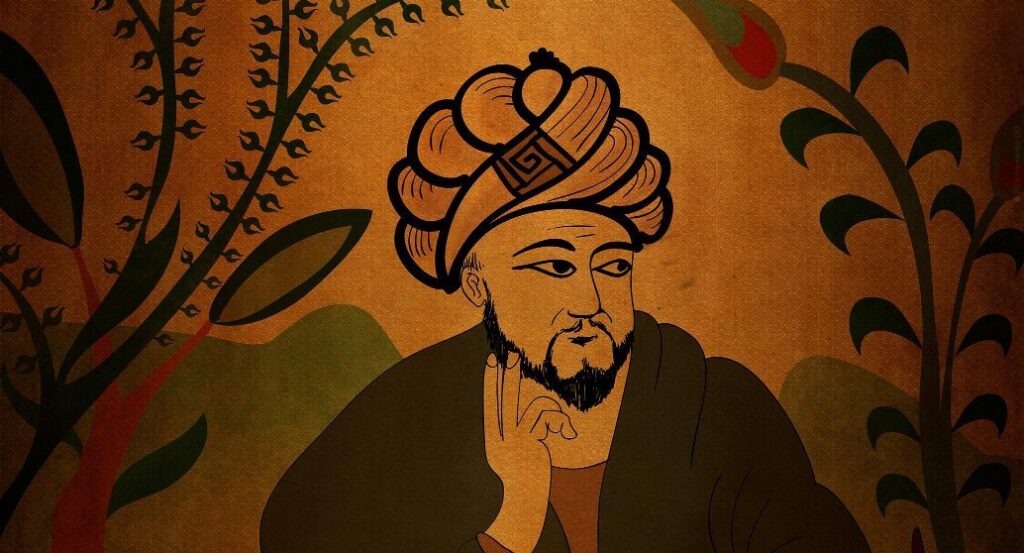
By Ustad Soroush Mahallati – Translated by Sayyid Ali Imran
These are translations of classes delivered by Ustad Soroush Mahallati during the summer vacation on political philosophy and political jurisprudence. In this post, I have translated the ninth lesson below.
The Successors of the First Ruler and the Craft of Jurisprudence
In the name of God, the Most Compassionate, the Most Merciful
All praise is due to God, Lord of the worlds, and may peace and blessings be upon our Master and Prophet Muḥammad (p) and his pure family.
I extend my greetings and salutations to our dear friends and companions.
In this chapter of Kitāb al-Millah, Fārābī raises the subject of the successor (khalīfah) of the First Ruler (al-raʾīs al-awwal). The First Ruler had direct access to revelation (waḥy), but what characteristics must his successor have? Here Fārābī raises two needs and two necessities that must be met by the successor. The first need and necessity is that it is possible that part of the prescription of actions (taqdīr al-afʿāl), and the statement of the qualifications and conditions that are necessary in rulings, may not have been carried out by the First Ruler and Prophet; completing these prescriptions is the responsibility of the successor. He explained here what causes and factors may prevent the prescription of all actions from being completed. We discussed this argument of Fārābī in the previous session and read Fārābī’s text on this matter.
The Difference Between the Shīʿī and Sunnī Foundations Regarding the Role of the Imam and the Nature of the Imamate and the Caliphate
Here it is appropriate for me to point out that this argument of Fārābī is precisely the argument that the Imāmī theologians have regarding the necessity of the Imam. Of course, in Shīʿī theology (kalām) there are various arguments about the Imamate, but one of these arguments is the very one Fārābī has raised here. And this argument, from a foundational and fundamental standpoint, differs in general from the view the Sunnīs have of the caliphate and the Imamate. For here there is a premise that both the Sunnīs and the Shīʿah generally accept; it is a shared premise, and that shared premise is that not all the specifics of the rulings were stated in detail by the Noble Prophet (p) for the general public. Nearly everyone accepts this premise. But the conclusion the ʿĀmmah (the Sunnīs) draw from this premise is one conclusion, and the conclusion the Imāmiyyah draw is another.
The conclusion the ʿĀmmah draw is that since the Messenger of God (p) did not state all the specifics of the rulings, after the death of the Messenger of God (p), the qualifications and conditions of the rulings must be stated by… after the death of the Messenger, it becomes the turn of the ijtihād of the mujtahids. That is, whatever we do not have from the Prophet, we repair and complete through ijtihād. The Imāmiyyah, however, draw from that premise the conclusion that, for the completion of the divine sharīʿah, there must be a divine successor who has access to the entire prescription of actions, and who completes the work that the Noble Prophet (p) carried out in the prescription of actions. Hence, the role of the Imam from the Sunnī point of view is completely different from the role of the Imam from the Shīʿī point of view. From the Sunnī point of view, the Imam has no distinction over the rest of the people in prescribing actions and stating rulings. The door of prescribing actions on the basis of revelation and the real divine rulings was closed after the Noble Prophet (p); everyone is a mujtahid, and the mujtahid, too, carries out a speculative (ẓannī) process, and it is not known whether what he states regarding the rulings corresponds to reality or not—and here disagreement arises. Whereas, on the foundation of the Imāmiyyah, whatever details and specifics of the rulings the Noble Prophet (p) did not state are stated by the successor and his successors, and this statement is not even based on ijtihād; rather, it is based on knowledge and awareness of the real rulings (aḥkām wāqiʿiyyah). Here, the interpretation of the Imamate fundamentally changes—it is not merely that there is a disagreement over who the instance (miṣdāq) of the Imam and the caliph is; that disagreement is secondary. There is also this disagreement regarding the very nature of the Imamate and the caliphate.
Fārābī’s Argument as Indicative of His Shīʿism
In this disagreement, which has existed since the early period of Islam and still continues, Fārābī presents an argument that favors this second view. For in this argument he states: there are causes and factors due to which the prescription of actions by the First Ruler, that is, the Prophet, may remain deficient and incomplete; the successor who is needed is one who «هو مثله في جميع الأحوال» “is like him in all states.” The successor is such a personality, and he states the specifics of the prescription of actions. This was Fārābī’s argument, and it is the very argument that the Imāmiyyah hold.
Now, those who consider Fārābī, in terms of his school (madhhab), to be among the Imāmiyyah have extracted evidence for this from Fārābī’s words, and I have a list of that evidence as well. But there is no need for us here to address this discussion, which is tangential, and inevitably, if that evidence were raised, it might also be met with critique and objection. But the discussion Fārābī raises here, and the argument he presents, is an argument that indicates his alignment with the Imāmiyyah. Now, to clarify this matter and so that this similarity becomes clear, I will read you a passage from ʿAllāmah Ḥillī.
A Similar Argument from ʿAllāmah Ḥillī (r)
In the discussion of the Imamate, ʿAllāmah Ḥillī is practically counted as the foremost figure in the school, especially through the authorship of books such as al-Alfayn, in which he presented two thousand proofs on the Imamate. In this book, on page 336,1 ʿAllāmah has exactly the same discussion that Fārābī raised. ʿAllāmah says: our intellect is not sufficient for extracting all the rulings that are in the Book and the Sunnah. This is the first premise—not that the intellect has no effect, role, or efficacy at all, but rather that the intellect is not sufficient for extracting all the rulings: «إنّ عقولنا لا تستقل باستخراج جميع الأحكام الواقعة في كلّ زمان من الكتاب و السنّة» “Our intellects are not independently capable of extracting all the rulings that arise in every age from the Book and the Sunnah.” Not all the rulings in all ages can be understood and grasped by way of the intellect. «فهو ظاهر» “This is evident.” This is the first premise, and its evidentness is due to the fact that we see there are many disagreements in the rational understanding of human beings, which, regarding the rulings, is generally a speculative understanding: «للاختلاف الواقع» “due to the disagreement that occurs.”
«و لأن أكثر النظر فيها لاستخراج الأحكام يفيد الظنّ» “And because most reasoning in them for the extraction of rulings yields only conjecture.” And most individuals who undertake extraction—their rulings have a speculative character. Now, what must be done? «فلا بدّ و أن يكون شخص ذو نفس قدسيّة و قوّة إلهية يعلّمه النبي طريقاً باستخراج الأحكام من الكتاب و السنّة يقيناً» “So there must necessarily be a person with a sacred soul and a divine power, whom the Prophet teaches a way of extracting the rulings from the Book and the Sunnah with certainty.” So there must be someone possessing a sacred soul whom the Prophet has taught the way of extracting these rulings from these sources, and who can extract the rulings—not a speculative extraction like that of the mujtahids, but a certain and real extraction. «و يقرّر عنده قوانين كليّة تفيده العلم القطعي بتفاصيل الأحكام» “And he establishes with him universal laws that yield him definitive knowledge of the details of the rulings.” The Prophet places certain universal laws at his disposal so that he can attain definitive knowledge of the details of the rulings. Our mujtahids also make use of principles, but in applying these principles they encounter so much doubt and hesitation that the results of extraction from principles are usually speculative. But principles are placed at the disposal of the successor and executor (waṣī) on the basis of which he will have definitive knowledge of the details of the rulings: «و يقرّر عنده قوانين كليّة» “and he establishes with him universal laws”—universal laws must be placed with him, such that «تفيده العلم القطعي بتفاصيل الأحكام» “they yield him definitive knowledge of the details of the rulings.” Establishing the Imam is on account of the fact that it is the Imam who can possess the details of the rulings, or the prescription of actions, in all their specifics and in all ages. This is the very argument of Fārābī, and I wanted to point out that what Fārābī has here is similar to that very argument the Imāmī theologians have presented.
The Sunnī Foundation Regarding the Role of the Imam and the Nature of Succession and the Caliphate
But the Sunnīs did not accept the first premise. They do not want to say that the Prophet stated all the specifics of the rulings; rather, they say that after the Prophet, the time for the ijtihād of the mujtahids arrives. In Sharḥ al-Mawāqif, volume 8, page 359,2 it says the following: «أنّه صلى الله عليه و آله لم ينص على كثير من الأحكام الشرعية» “That he (may God bless him and his family) did not explicitly specify many of the legal rulings.” They too accept that the Prophet did not explicitly specify many of the rulings of the sharīʿah. When he did not specify them, the conclusion is that «بل أوكلها إلى آراء المجتهدين» “rather, he entrusted them to the opinions of the mujtahids.” Rather, he left these rulings, whose details were not stated, to the views of the mujtahids. With the death of the Prophet, the era of ijtihād arrives.
The result of this discussion is that, from the viewpoint of the Imāmī scholars and also Fārābī, the matter of the prescription of actions and the detailed statement of rulings has three stages here. The first stage takes place through the Noble Prophet (p), which is beyond ijtihād and is the statement of the real rulings. The second stage takes place through the successor and the successors of the Prophet, which, again, consists of certain, real, divine rulings. And in the third stage, it becomes the turn of the ijtihād of the mujtahids. On this basis, in our view there are three stages, but according to the viewpoint of the ʿĀmmah and the Sunnīs there are two stages: the first stage is the presence of the Prophet and the prescription of actions, whose prescription is not complete in its details and particulars, and the second stage is that the mujtahids enter this domain. This was a clarification regarding the previous discussion.
The Imam and the Changing of Rulings
The Imam and the Responsibility of Changing Rulings
But the point that Fārābī adds here is a point that has received less attention, and once again it is among the insights of Fārābī’s critical mind. Although Fārābī’s specialty is philosophy and wisdom (ḥikmah), when he enters discussions of religious studies, he also shows attention and sensitivity to subtle points. Our scholars usually raise two points concerning the role of the Imam in the prescription of actions and the explanation of rulings. One point was the one I just mentioned: that the Imam completes the details of the rulings, which Fārābī also holds. Another point, which has not come up here but appears elsewhere and to which we will refer later, is that the Imam also has the responsibility of implementing the rulings; sometimes this is expressed by saying that the Imam is the guardian (ḥāfiẓ) of the rulings. These are two points.
But Fārābī raises a third matter, and that is that the Imam or successor of the Prophet is also necessary because he has the responsibility of changing rulings; change is his responsibility. But is change in rulings possible at all? Among the past prophets, the matter of abrogation (naskh) occurred: a prophet would come after the previous prophet, and a new prescription of actions and rulings could take place, and a sharīʿah would be abrogated. But in the final sharīʿah, does this possibility exist or not? Is Fārābī here once again raising a hypothetical discussion that has no connection whatsoever to us and our generation, and that pertains to the period before Islam and to a prophet whose successor could himself also be a prophet—for example, Prophet Mūsā is a prophet who has a successor who is himself also a prophet (Hārūn)? One prophet comes after another prophet, and changes occur in the sharīʿah. With respect to Islam, does this matter even have a scenario in which we would say that change in the rulings will occur? Or is Fārābī saying in general that the successor may also be in the position of changing rulings, but this scenario does not occur in our time—why? Because we live in the era of finality (khātamiyyah), and there is no possibility of changing the rulings?
I do not agree with such an interpretation of Fārābī’s words. Fārābī is raising the matter of changing rulings even in the final sharīʿah, and he raises this subject as a universal rule. First, Fārābī explains that what is meant by this change is not that the successor comes, identifies an error of the First Ruler, and therefore corrects the First Ruler’s prescription. By change, he does not mean correction. Why? Because the assumption is that the First Ruler was infallible (maʿṣūm), and the expressions Fārābī uses regarding the First Ruler, which I will point to later, God willing, seem to indicate this very infallibility and inerrancy. So if the first prescription by the First Ruler was correct, how is it possible to change it? Here Fārābī points out that some changes are changes in accordance with conditions and interests (maṣāliḥ). In other words, that first prescription and that first ruling were correct and fitting under their own conditions, and now, with the change of conditions, there is a need for another prescription and another ruling to be stated.
Fārābī says: insofar as, had the First Ruler been alive, he himself would have changed the first prescription, that same authority (ikhtiyār) that the First Ruler had in changing rulings also belongs to his successor in changing rulings. Thus, the existence of a successor and executor—and in our terminology, the Imam—is necessary so that he may show which of these rulings are based on permanent interests and will not change, and which of these rulings are based on variable interests and must now change. This is a matter Fārābī raises here concerning the changing of rulings, and of course it is an important and fundamental matter that received less attention in past centuries, especially in the discussions of the Imamate in kalām, and also in the discussions of fiqh and uṣūl al-fiqh. Eleven or twelve centuries ago, for example, Fārābī opened this door here. That is, if we want to find a background and precedent for the division of rulings into fixed and variable, we must go to Fārābī’s discussion, since he opened this door: that some rulings are changeable, and their criterion is that these rulings are based on specific interests and are suited to a specific time and specific conditions, and with the change of time these rulings change, and the Imam shows this.
Now, of course, we have many examples in these areas, and one of these examples is the case in Nahj al-Balāghah where the Commander of the Faithful ʿAlī (a) was asked: why do you not dye your hair and beard and conceal the traces of white hair, whereas the Noble Prophet (p) said «غَيِّرُوا الشَّيْبَ» “Change [the color of] white hair”—meaning, do not allow old age to become apparent—yet you have allowed old age to become apparent? There, it was the instruction and prescription of the Prophet, but the Commander of the Faithful showed that this prescription had changed. The prescription regarding dyeing the hair had changed; it changed according to time. That instruction of the Prophet was related to the specific temporal conditions of the early period of Islam, when the Muslims were a minority and in a state of weakness, and the Messenger of God (p) wanted, by this means, to display vigor among them and in the face of their enemies. But today, when Islam has become widespread, there is no need for this method to be used, and anyone may act in this matter according to his own preference. The expression of the Commander of the Faithful in this regard is: «ذَلِكَ وَالدِّينُ قُلٌّ، فَأَمَّا الْآنَ وَقَدِ اتَّسَعَ نِطَاقُهُ» “That was when the religion was small [in number]; but now that its belt has widened…”
We have many such examples, where, if we had only the text—that is, the text of the prescription of the act by the Prophet—we would have to preserve that text forever; that is, we would have to remain committed to that prescription. But the Imam explains to us the relationship between that prescription and time, and shows that its time has come to an end. This is one of the matters that must be carried out by the Imam, that is, by the successor of the Prophet. And Fārābī’s perspective presents us with this division here.
Now, of course, this discussion can be pursued further: after the era of the Imam’s presence, in the era of occultation (ghaybah), or at a time when ijtihād becomes the basis for deriving rulings and extracting the prescriptions of actions, is discovering such a change in the subjects of rulings and in conditions possible for the jurist (faqīh) and the mujtahid or not? This is a discussion to which, if appropriate, we will refer later. For now, the essence of the matter must be attended to here: that the matter of change in the rulings exists, and what rationale this change has.
Before I read the passage for you, let me add this point as well: just as the very prescription is based on the source of revelation, takes place by way of revelation, and is not an arbitrary matter on the part of the First Ruler, likewise, change is not an arbitrary matter either. That is, it is not the case that the First Ruler himself or his successor is permitted to change any ruling he wishes. This change is a change that he discovers. In reality, the very prescription of an act and its ruling comes from God, but the Prophet understands that this ruling which God prescribed was dependent upon certain conditions, and today those conditions have changed; therefore, the ruling has changed. He does not change the ruling; he discovers that the ruling has changed.
Pay attention to this point once more! The Prophet or the successor of the Prophet does not change the ruling. The ruling, at the level of reality, is a performative (inshāʾī) matter that has a divine origin—a divine enactment (jaʿl). And a human being cannot change a divine enactment; the human being discovers within what limits and bounds that divine ruling stood, in what domain, and under what conditions. When the conditions that continually formed that first ruling—and in reality, the subject of that first ruling—change, the Prophet or the successor of the Prophet becomes aware that that divine ruling, at the level of reality—or, if you like, in the Preserved Tablet (al-lawḥ al-maḥfūẓ)—has changed. He comes to know of the change; but the change has a level of established reality (thubūt) that is not in the hands of the person of the Prophet or in the hands of the executor. At the level of proof (ithbāt), yes, he states that this change has occurred. That is why, in the words of the sages (ḥukamāʾ), they pay particular attention to this subject. For this issue of changing rulings is fundamentally an issue related to uṣūl al-fiqh, where the discussion of abrogation and the discussion of specification (takhṣīṣ) are raised in uṣūl al-fiqh. But the philosophers and sages also addressed this issue from one angle, namely that of change in the divine ruling and the divine decree (qaḍāʾ)—does it change or not? The discussion of badāʾ is also seen in philosophical books.
Thus, Khwājah [Naṣīr al-Dīn al-Ṭūsī] has this expression in Talkhīṣ al-Muḥaṣṣal, in that very discussion of abrogation, on page 457.3 He says: «تغيير الأحكام الشرعية من الله جائز» “The changing of legal rulings by God is permissible.” The changing of rulings does take place on the part of God, and of course this is permissible, and its reason is clear, especially on our foundation. For rulings are based on real interests and harms (maṣāliḥ wa mafāsid wāqiʿiyyah). First, interests and harms may change according to the conditions of time and place; second, with the change of interests and harms, which are counted as the causes (ʿilal) of the rulings, the rulings themselves will inevitably be changeable as well. Of course, other foundations could also be raised here, which are outside the scope of our discussion.
The Text of Kitāb al-Millah on the Successor’s Authority to Change Rulings
Text of Kitāb al-Millah
«فإذا خلفه بعد وفاته من هو مثله في جميع الأحوال كان الذي يخلفه هو الذي يقدّر ما لم يقدّره الأوّل، و ليس هذا فقط، بل و له أيضا أن يغيّر كثيرا ممّا شرّعه الأوّل، فيقدّره غير ذلك التقدير إذا علم أنّ ذلك هو الأصلح في زمانه، لا لأنّ الأوّل أخطأ، لكنّ الأوّل قدّره بما هو الأصلح في زمانه، و قدّر هذا بما هو الأصلح بعد زمان الأوّل، و يكون ذلك ممّا لو شاهده الأوّل لغيّره أيضا. و كذلك إذا خلف الثاني ثالث مثل الثاني في جميع أحواله، و الثالث رابع، فإنّ للتالي أن يقدّر من تلقاء نفسه ما لا يجده مقدّرا، و له أن يغيّر ما قدّره من قبله، لأنّ الذي قبله لو بقي لغيّر أيضا ذلك الذي غيّره الذي بعده»
“So when he is succeeded after his death by one who is like him in all states, the one who succeeds him is the one who prescribes what the first did not prescribe. And not only this; rather, he also has the right to change much of what the first legislated, and to prescribe it differently from that prescription, if he knows that this is what is most beneficial in his time—not because the first erred, but because the first prescribed it according to what was most beneficial in his time, while this one prescribes according to what is most beneficial after the time of the first; and it is such that, had the first witnessed it, he too would have changed it. Likewise, when a third, who is like the second in all his states, succeeds the second, and a fourth succeeds the third, the one who follows may prescribe on his own what he does not find prescribed, and he may change what the one before him prescribed, because the one before him, had he remained, would also have changed that which the one after him changed.” (Kitāb al-Millah, pp. 49–50)
Explanation and Analysis of the Text
Let us return to the text of the book. We had read one or two lines of this section on page 49, but let us start again from the beginning. «فإذا خلفه بعد وفاته من هو مثله في جميع الأحوال» “So when he is succeeded after his death by one who is like him in all states”—that is, if after the death of the First Ruler someone else becomes his successor and replacement, but on the condition that he is like him, and «في جميع الأحوال» “in all states,” and not merely that he has seized power. It makes no difference whether he took power through a coup or took it through the vote of the people; that relates to the form of the political system, which is outside our discussion. For now, our discussion is that the prescription of actions must take place through an authority, and this authority must be like the Prophet in all states. Then «كان الذي يخلفه هو الذي يقدّر ما لم يقدّره الأوّل» “the one who succeeds him is the one who prescribes what the first did not prescribe.” The one who becomes the successor and replacement prescribes what the First Ruler did not prescribe. That is, the successor and executor supplies those details that he did not specify in the rulings. This is one task. But it is not only and solely that he does the prescribing in the cases that have not been prescribed; rather, in addition to this, «و ليس هذا فقط» “and not only this”—it is not only prescription. «بل و له أيضاً» “rather, he also has”—rather, this successor also has this permission, this right: «أن يغيّر كثيراً ممّا شرّعه الأوّل» “to change much of what the first legislated.” He is permitted to change much of what the First Ruler legislated, prescribed, and stated. He is permitted to make this change. «فيقدّره غير ذلك التقدير» “And to prescribe it differently from that prescription”—this successor prescribes that act, that is, he specifies rulings for it, «غير ذلك التقدير» “other than that prescription,” other than the earlier prescription carried out by the First Ruler. Rulings other than the ones it previously had: it was previously obligatory, and now its obligation is lifted; it was previously forbidden, and now its prohibition is lifted. So this successor «يقدّر» “prescribes” that act—but what prescription? «غير ذلك التقدير» “other than that prescription,” the prescription that existed previously.
In what situation does this change take place? That is, are all the prescriptions of the First Ruler, which were based on revelation, suddenly changeable on their own and arbitrarily? No. «إذا علم» “If he knows”—in the case that the successor knows «أنّ ذلك هو الأصلح في زمانه» “that this is what is most beneficial in his time”—that is, knows that this change is what is most beneficial in his time. So here Fārābī also raises this point: that rulings correspond to interests, and a change of interests causes a change of rulings. This foundation, too, is once again among our foundations, and of course the Muʿtazilah also accept this foundation, that rulings follow interests. If the interests change over time, the ruling also changes. And from here it becomes known that if a change occurs, it does not mean that the first prescription was an error: «لا لأنّ الأوّل أخطأ» “not because the first erred.” It is not because the First Ruler made an error and now the successor discovers his error and corrects his prescription. No, it was not an error; in its own time it was correct: «لكنّ الأوّل قدّره بما هو الأصلح في زمانه» “but the first prescribed it according to what was most beneficial in his time.” The first prescription—the first ruling, which was specified through the Prophet, for example—was what was most beneficial in its own time. «و قدّر هذا بما هو الأصلح بعد زمان الأوّل» “while this one prescribes according to what is most beneficial after the time of the first.” The time of the first has passed, and now this honorable successor specifies and prescribes what is most beneficial after the time of the first.
In the example of dyeing [the hair], I mentioned different interests. Likewise, sometimes there is war, sometimes peace, and various other interests, the scope of which, of course, can be very, very wide and broad. Or, for example, the Noble Prophet’s (p) prescription of zakāt on nine things: afterwards, the Commander of the Faithful ʿAlī (a) determines that, for example, zakāt should also be established for horses, or determines that something should be removed from those nine things. All of these are possible. «لا لأنّ الأوّل أخطأ، لكنّ الأوّل قدّره» “Not because the first erred, but the first prescribed it”—the First Ruler had that first prescription «بما هو الأصلح في زمانه» “according to what was most beneficial in his time,” on the basis of what was most beneficial in his time. The second also comes and says what is most beneficial in my time: «و قدّر هذا بما هو الأصلح بعد زمان الأوّل» “while this one prescribes according to what is most beneficial after the time of the first”—and in such a way that, if the First Ruler were present in the second time, and his life had continued, and he had determined that what is most beneficial had changed in the second time, he himself would have accepted the change of the ruling. «و يكون ذلك ممّا لو شاهده الأوّل لغيّره أيضاً» “And it is such that, had the first witnessed it, he too would have changed it.” He takes what is most beneficial in the later time as the basis, in such a way that if the First Ruler himself had also witnessed the time, and the change in interests, and the change in conditions, «لغيّره أيضاً» “he too would have changed it”—he himself would also have changed it. So, in reality, this is a task that continues the work the First Ruler carried out, and if he himself were present, he would also do this work. This pertains to the First Ruler and his successor.
Now, it is possible that the successor also has a successor. Then the second successor, in place of the first successor, carries out these same changes. It is possible that the second successor also has a third successor; again, the changes that the second successor made in his own time may require another change. «و كذلك إذا خلف الثاني ثالث» “Likewise, when a third succeeds the second”—if a third successor takes the place of the second successor, this third successor will also be like the second successor in all his states. «و الثالث رابع» “And a fourth the third”—and likewise, a fourth successor takes the place of the third successor. «فإنّ للتالي أن يقدّر من تلقاء نفسه ما لا يجده مقدّراً» “The one who follows may prescribe on his own what he does not find prescribed.” In any case, second, third, or fourth successor—it makes no difference—every one who follows (tālī) and comes after another has two authorities. The first authority is that he can, on his own part, prescribe whatever has no prescription. This is the first. «للتالي أن يقدّر من تلقاء نفسه ما لا يجده مقدّراً، و له أن يغيّر ما قدّره من قبله» “The one who follows may prescribe on his own what he does not find prescribed, and he may change what the one before him prescribed.” And the second authority is that he can change the prescriptions that the previous ruler made. «و له أن يغيّر ما قدّره من قبله، لأنّ الذي قبله لو بقي لغيّر أيضاً ذلك الذي غيّره الذي بعده» “And he may change what the one before him prescribed, because the one before him, had he remained, would also have changed that which the one after him changed.” By the same logic by which prescription takes place in the first, prescription takes place in the second too. What was that logic? Observing interests according to conditions.
The one who was the previous ruler, had he himself remained, would have made changes according to the change of conditions; therefore, the one who comes after him also carries out this change: «و له أن يغيّر ما قدّره من قبله، لأنّ الذي قبله لو بقي لغيّر أيضاً ذلك الذي غيّره الذي بعده» “And he may change what the one before him prescribed, because the one before him, had he remained, would also have changed that which the one after him changed.” This is a matter that the honorable Fārābī raised here on the basis of the discussion of the caliphate.
Fārābī’s Attention to Change Over Time and Place
Fārābī and Attention to Change and Transformation Based on Time and Place
Now, it is appropriate for me to mention, as a complement for our dear friends, one point that was present in Fārābī’s words here. That point is that among the valuable matters in Fārābī’s works is the attention and interesting sensitivity Fārābī showed to the matter of changes over time. We come to terms with the subject of change very late, because our view is either a philosophical view or a religious view. The philosopher, since he analyzes issues on the basis of fixed rational principles, does not readily accept change and transformation; that is, the philosopher’s mind is more familiar and comfortable with fixed matters—this is how the mental mold of philosophers is. On the other hand, the mental mold of the religious is like this as well, because the religious matter is received as a fixed matter coming from God the Exalted, legislated for different times and for all time, and this legislation is an eternal legislation. But since Fārābī is a philosopher on the one hand, and on the other hand wants to explain governance in society on the basis of religious foundations and to sketch his virtuous society, he at the same time has attention and sensitivity to the changes that occur in society—and the effect of these changes on decisions and on governance is very great. That is, since Fārābī had a serious concern with political affairs and reflected and thought a great deal about political affairs, his mind acquired this capacity: even when he enters religious matters, he sees a portion of religious rulings as variable, and he correctly perceives the effect of time and place on this change and transformation.
In Fārābī’s various works, this attention to time and the effect of time is very prominent. Now, it is not specific to the discussion of religion either; in the discussion of politics, too, he has this attention: that, in any case, a statesman who wants to determine policy must pay full attention to the changes that occur over time.
Now, for example, in the book Fuṣūl Muntazaʿah, on page 93,4 Fārābī has a chapter about these changes: «إن حال السياسات و نسبتها إلى الأنفس كحال الأزمان و نسبتها إلى الأبدان ذوات الأمزجة المختلفة» “The state of policies and their relation to souls is like the state of the seasons and their relation to bodies of differing temperaments.” He says that policies, in relation to human beings, are diverse and manifold; it resembles the way human beings, physically and bodily, are placed in different conditions in different seasons. The requirements of the human body are one way in spring, for example, another way in summer, another way in autumn, and another way in winter; the temperament of human beings differs across the seasons. He makes this a likeness for the fact that policies are changeable in different periods according to the requirements of different societies. «إن حال السياسات و نسبتها إلى الأنفس كحال الأزمان و نسبتها إلى الأبدان ذوات الأمزجة المختلفة و كما أنّ بعض الأبدان يصلح في مزاجه و حاله في زمان الخريف» “The state of policies and their relation to souls is like the state of the seasons and their relation to bodies of differing temperaments; and just as some bodies are sound in their temperament and state in the season of autumn.” There are some people who, for example, are in good health in autumn, are lively, and illness visits them less. «و بعضها يصلح في زمان الصيف» “And some are sound in the season of summer”—and there are some who are not; their temperament is in a better condition in summer. «و بعضها يوجد الأصلح له و الأوفق في زمان الشتاء» “And for some, what is most beneficial and most suitable for it is found in the season of winter”—for some, what is more suitable and more fitting for them is in the winter season. «و بعضها يصلح جداً في زمان الربيع» “And some are very sound in the season of spring.” Just as bodies and physiques undergo these changes and transformations, «كذلك حال الأنفس و نسبتها إلى السياسات» “so too is the state of souls and their relation to policies”—human beings, too, have such differences in the relations they have with policies. Then, of course, he points out that not everything changes and differs, but many things can be subject to change and difference. In any case, Fārābī—in his politics, in his religiosity, in his philosophy—pays great attention to this: that changes must be seen, that one must not be heedless of the effect of time, and that in good and evil, too, one must pay attention to it in order to recognize good and evil.
Again, in the same book, Fuṣūl al-Muntazaʿah, on page 88,5 he has a chapter pointing to how conditions can turn a good act into an evil act, and how one must take care lest we become heedless, with respect to an act we considered good, of a corruption that may result from it at another time: «أيّ فاعل شيء ما» “Any doer of something”—anyone who does an act, in any case, «علم أنّ فعله ذلك الشيء في وقت ما أصلح أو خير أو فعل ذلك الشيء ليس بأصلح أو شرّ» “knows that his doing that thing at some time is most beneficial or good, or that doing that thing is not most beneficial, or is evil.” In any case, anyone who does an act pays attention to the fact that something at a certain time—an act under certain conditions—is most beneficial or good, and that the same act at another time is not most beneficial, or is evil. When a person becomes aware that this act is evil at this time, he inevitably postpones it: «فإنما يؤخّر فعل ذلك لعائق له عن فعل ذلك الشيء، فإنّ الفساد الذي يراه و يعلمه أنه يعرض لذلك الشيء إن فعله في ذلك الوقت هو العائق له» “He only postpones doing that because of something impeding him from doing that thing; for the corruption that he sees and knows would befall that thing if he did it at that time is what impedes him.” This very awareness he acquires—that if I do this today, it is not an appropriate time, and corruption will result from it—becomes an impediment to his doing that act today, and he defers it to its proper time and to a future time. So all of us must know what time an act has, what conditions it has, what context (ẓarf) it has—where it becomes a source of good, and where it becomes a source of evil.
«فينبغي أن يعلم ما سبب الفساد في ذلك الوقت و ما سبب الصلاح في ذلك» “So one ought to know what the cause of corruption is at that time and what the cause of soundness is in that.” This change and transformation, and the fact that the mind is not dogmatic and allows these changes of conditions to sometimes result in changes in good and evil—now, Fārābī here does not intend to say that all goods change or that all evils change, but the very principle that these changes were attended to and noticed is very prominent in Fārābī’s works. And for someone whose work is philosophical, or whose work is religious studies, it is difficult to readily accept this change and transformation. For philosophers on the one hand, and jurists on the other, usually focus on universal rulings, and their minds are on universal rulings—whether universal rulings based on rational principles in philosophy, or legal rulings related to fiqh—and the particulars, which are constantly fluctuating, receive less attention. And it is for this very reason that Ibn Khaldūn says in his book, al-Muqaddimah, that the class most remote from politics and the governance of society is these very jurists, because they perceive the changes of time less, and their minds are tied to fixed and universal matters. But Fārābī, by opening this discussion here, has shown that he has a comprehensive and complete view. This was the first part of Fārābī’s words.
The Third Stage: The Righteous Imams and the Jurists
After Fārābī brings the discussion of the successor of the First Ruler to an end, he enters the third stage. The third stage is authority (marjaʿiyyah) for the prescription of actions after the First Ruler and after the successor of the First Ruler.
Continuation of the Text of Kitāb al-Millah
«و أمّا إذا مضى واحد من هؤلاء الأئمّة الأبرار الذين هم الملوك في الحقيقة و لم يخلفه من هو مثله في جميع الأحوال احتيج في كلّ ما يعمل في المدن التي تحت رئاسة من تقدّم إلى أن يحتذي في التقدير حذو من تقدّم و لا يخالف و لا يغيّر بل يبقي كلّ ما قدّره المتقدّم على حاله، و ينظر إلى كلّ ما يحتاج إلى تقدير ممّا لم يصرّح به من تقدّم فيستنبط و يستخرج عن الأشياء التي صرّح الأوّل بتقديرها، فيضطرّ حينئذ إلى صناعة الفقه، و هي التي يقتدر الإنسان بها على أن يستخرج و يستنبط صحّة تقدير شيء شيء ممّا لم يصرّح واضع الشريعة بتحديده عن الأشياء التي صرّح ⟨فيها⟩ بالتقدير، و تصحيح ذلك بحسب غرض واضع الشريعة بالملّة [باسرها] ⟨التي شرّعها⟩ في الأمّة التي لهم شرّعت. و ليس يمكن هذا التصحيح أو يكون صحيح الاعتقاد لآراء تلك الملّة فاضلا بالفضائل التي هي في تلك الملّة فضائل. فمن كان هكذا فهو فقيه.»
“But when one of these righteous Imams, who are the kings in truth, passes away, and he is not succeeded by one who is like him in all states, there will be a need, in everything that is done in the cities under the leadership of those who preceded, to follow in prescription the example of those who preceded—neither contradicting nor changing, but rather keeping everything that the predecessor prescribed as it was—and to look at everything that needs prescription among what the predecessor did not state explicitly, and to derive and extract it from the things whose prescription the first stated explicitly. At that point, one is compelled to resort to the craft of jurisprudence (ṣināʿat al-fiqh), which is that by which a human being is able to extract and derive the correct prescription of each and every thing whose delimitation the Lawgiver did not state explicitly, from the things in which he explicitly stated the prescription, and to correct that according to the purpose of the Lawgiver with the millah [in its entirety] that he legislated in the nation for whom it was legislated. And this correction is not possible unless one has correct belief in the doctrines of that millah and is virtuous in the virtues that are virtues in that millah. Whoever is like this is a jurist (faqīh).” (Kitāb al-Millah, p. 50)
Explanation and Analysis of the Text
In entering this third stage, he uses a special expression. The content of this expression is that if the successor or successors of the Noble Prophet (p) are also not present in society, then, given the need for the prescription of actions, by whom must it be carried out? The special expression that he used here, in the first sentence, which serves as the entrance to the third stage of this discussion, is as follows (page fifty, the continuation of the previous passage): «و أمّا إذا مضى واحد من هؤلاء الأئمّة الأبرار الذين هم الملوك في الحقيقة و لم يخلفه من هو مثله في جميع الأحوال احتيج في كلّ ما يعمل في المدن التي تحت رئاسة من تقدّم إلى أن يحتذي في التقدير حذو من تقدّم» “But when one of these righteous Imams, who are the kings in truth, passes away, and he is not succeeded by one who is like him in all states, there will be a need, in everything that is done in the cities under the leadership of those who preceded, to follow in prescription the example of those who preceded.” In this first line, regarding the successors of the First Ruler—that is, the successors of the Noble Prophet (p)—he used two expressions, both of which carry a very important semantic weight.
The first expression is that, for those successors of the First Ruler, who are the successors of the Prophet, he used the expression “al-aʿimmah al-abrār” (the righteous Imams): «إذا مضى واحد من هؤلاء الأئمّة الأبرار» “when one of these righteous Imams passes away,” and someone who is like him no longer succeeds and replaces him. Al-aʿimmah al-abrār! This is not a common expression in philosophical books, even after Fārābī. If you think it is a common expression, you can refer to the books after Fārābī as well, search, and see whether this is a common expression or not. This expression is one that is common specifically in Shīʿī literature, and the expression al-aʿimmah al-abrār has even appeared in some of the ziyārah texts in our narrations as an expression for the infallible leaders, such as at the end of Ziyārat al-Jāmiʿah. His use of this expression here—an expression that has no precedent in Sunnī literature either—and more importantly, when he refers to these righteous Imams, who have the aspect of being the successors of the Noble Prophet (p) and are the successors of the Messenger of God (p) and the First Ruler, he explains: «الذين هم الملوك في الحقيقة» “who are the kings in truth.” He explicitly states the ruling dimension of the righteous Imams, that is, their political role in the virtuous city (al-madīnah al-fāḍilah)—not solely the spiritual and inward role of the Imams in stating rulings, in deriving rulings, and in explaining rulings. No. Up to here—in the line before, and before, and before that—Fārābī was explaining the matter of the prescription of actions, which in reality is one aspect of the Imamate. And here Fārābī makes clear: I do not want to limit and confine the Imamate and the caliphate to that aspect of the prescription of actions. No, rulership also belongs to these righteous Imams. And within this rulership, of course, there is also one aspect: the rulings that exist—the specifics of these rulings must be specified, such that for every act, in terms of being permissible or impermissible, binding or non-binding, conditional or absolute, its status must be specified by these Imams. And this shows that Fārābī counts the matter of the prescription of actions, or the statement of rulings, as one of the aspects of the Imamate. So «من هؤلاء الأئمّة الأبرار الذين هم الملوك في الحقيقة» “of these righteous Imams, who are the kings in truth”—the real rulers are these; real rulership belongs to them. Even if outwardly they are not kings, in reality they are kings.
Now, if «مضى واحد من هؤلاء الأئمّة الأبرار» “one of these righteous Imams passes away”—who are kings—and there is no one else who is their successor, and this successor must be like him in all states: just as the successor, in relation to the First Ruler, had to be like him in all states, now if the Imam also departs from the world, the void must be filled by someone who is like him in all states, that is, the next Imam and the next Imam. But if there is none, then we come to need to make use of the scholars and the jurists. The answer to this “but” will come in what follows.
The Distinction Between the Views of Fārābī and Ibn Sīnā on the Imamate
In this passage of Fārābī there were subtle points in this respect. To make clear the importance of this matter—what Fārābī is saying here, and what foundations, in terms of faith and in terms of belief, he explains and makes firm in this philosophical discussion—it would not be a bad idea for you to compare this very section concerning the successor, these few lines we read, and the line we just added—just these few lines, not Fārābī’s other books and Fārābī’s other discussions, just this—with a discussion found in the work of someone who came some time after Fārābī: the great Peripatetic (mashshāʾī) philosopher, who was himself, in any case, among those who grew up in the school of Fārābī and, through Fārābī, was able to enter Greek wisdom and come to know Aristotle—the honorable Shaykh al-Raʾīs [Ibn Sīnā].
Toward the end of the Ilāhiyyāt of al-Shifāʾ, in the fifth chapter of the tenth treatise,6 the Shaykh al-Raʾīs titles his discussion as follows: «في الخليفة و الإمام و وجوب طاعتهما» “On the caliph and the Imam and the obligation of obeying them.” There he discusses the caliph and the Imam, and the fact that obedience to the caliph and the Imam is obligatory. There he says that the prophet who presents the sharīʿah and founds the Islamic society is obligated to make obedience to his successor binding as well. «ثم يجب أن يفرض السان طاعة من يخلفه» “Then the lawgiver must make obedience to the one who succeeds him obligatory.” Well, now, this one who succeeds him—that successor and replacement—who must specify him? «و أن لا يكون الاستخلاف إلا من جهته أو بإجماع من أهل السابقة» “And that succession not be except from his side or by the consensus of the people of precedence.” The successor is specified either by that lawgiver himself, who is the Prophet and founder, or by way of the consensus of the people of precedence, «على من يصححون علانية عند الجمهور أنّه» “upon one of whom they publicly affirm before the populace that he…”—the people of precedence reach a consensus; that is, those who are forerunners in Islam and in the early history of Islam come and determine who is worthy, and they endorse him. In what respect should he be worthy? In that «أنّه مستقل بالسياسة» “he is independently capable in politics”—he should be someone who has a correct understanding of politics and an independent grasp of it; this is one characteristic. «و أنّه أصيل العقل» “And that he is of sound intellect”—someone who has a genuine and deep intellect: «و أنه أصيل العقل حاصل عنده الأخلاق الشريفة من الشجاعة و العفة» “and that he is of sound intellect, having attained the noble character traits of courage and chastity”—someone possessing noble character, such as courage and chastity; «و حسن التدبير، و أنه عارف بالشريعة حتى لا أعرف منه» “and good management, and that he is knowledgeable of the sharīʿah such that there is none more knowledgeable than him”—and someone who is also the most knowledgeable person regarding the sharīʿah. These are characteristics he enumerates for that successor.
These are all relative, in the sense that, among the people who exist, we want to find a person with these conditions: someone who knows the sharīʿah better than everyone, possesses better character, has courage, and the like. These are the words of Ibn Sīnā. But Fārābī’s words were something else. What Fārābī raises is that we want a successor who is «في جميع الأحوال» “in all states” at the level of the First Ruler himself; he must be at his level. Whereas here the expression in the Ilāhiyyāt of al-Shifāʾ is that this person should be knowledgeable of the sharīʿah, aware of the sharīʿah, or even «لا أعرف منه» “none more knowledgeable than him,” or, going further, let us say the most aware individual regarding the sharīʿah. Whereas what Fārābī raises here is something much higher. What Fārābī raises is that the successor must be someone who, like the Prophet, has a hand in heaven and can receive the prescription of actions from above. The expression Ibn Sīnā uses may be applicable to many of the caliphs who claimed knowledge and character, but with the expression Fārābī uses, there is no longer any dispute that it is not applicable to the claimants of the caliphate. For Fārābī is discussing this at a very, very much higher level. And that is why Fārābī here does not go after those other attributes—what the successor must be like in terms of character, what he must be like in terms of management. Fārābī enumerated all of these at the beginning for the First Ruler, and then added that the successor is like the First Ruler himself and at the same level, and this difference is seen here. So for Ibn Sīnā this matter is conceivable—in the continuation of the passage, he also says: now, if one person is foremost in politics and another is foremost in knowledge, what must we do? He considers this reasonable and possible—basically like the scene that occurred in the caliphate after the Messenger of God (p)—and such a separation, that one person is more politically capable and another is more knowledgeable; and he says that the one who is more politically capable takes precedence and takes power, and also makes use of the one who is knowledgeable. That is, his conception of the Imamate and caliphate is one in which these can be separated from each other. Whereas Fārābī presents a person who is of the stature of the Prophet and like the Prophet, in that he has all those characteristics and perfections—to the extent that, like the Prophet, he can carry out the prescription of actions. The very level of the discussion and the orientation of the discussion are entirely different. Ibn Sīnā’s words here are ordinary and conventional words that are compatible with many of the theological foundations of other schools, whereas the discussion Fārābī raises here is a discussion based on the very specific theological foundations of the Imāmiyyah. That is why he used the expression al-aʿimmah al-abrār, and also used the expression “who are the kings.”
The Authority and Status of Fiqh and the Jurists After the Imams (a)
Let us return to the continuation of the discussion. Fārābī says: when the righteous Imams, who are the real rulers of society, are not present in society, and no one is at their level, «احتيج في كلّ ما يعمل في المدن» “there will be a need, in everything that is done in the cities”—we will need, for all the affairs of a city that was under the leadership of that previous leader, someone to come and continue along that same line. We no longer say that he himself directly and independently has a prescription in actions. No; he must follow the same prescription that the First Ruler and his successor had, and not oppose it, nor bring about change with respect to it either, but rather follow behind him and continue his path. This role is one that belongs to the third stage; this is the role that the rulers of the third stage have.
He says that the need arises «في كلّ ما يعمل في المدن التي تحت رئاسة من تقدّم» “in everything that is done in the cities under the leadership of those who preceded”—for that city that was under the leadership of the predecessor, and his successor, the Prophet’s own successor, is no longer present: for the affairs that must be carried out, we need «إلى» “to”… we need «إلى أن يحتذي في التقدير حذو من تقدّم» “to follow in prescription the example of those who preceded.” We need someone who, in the prescriptions he makes, in the statements he makes, in the halal and haram he presents, follows that predecessor exactly; the musts and must-nots must follow that predecessor exactly. Who was that predecessor? That successor. «و لا يخالف» “And not contradict”—the one who comes today should not oppose that predecessor (that is, the righteous Imams). «و لا يغيّر» “And not change”—he should not bring about change either; he must be completely submissive; those authorities do not belong to him. «بل يُبقي كلّ ما قدّره المتقدّم على حاله» “But rather keep everything that the predecessor prescribed as it was.” Rather, this successor must preserve and maintain everything that the predecessor—that is, the righteous Imams and the First Ruler—prescribed, determined, and established, all of it as it was. He can neither oppose it nor change it.
Here, it is possible that this person who takes power today, and does not have those authorities to prescribe on his own, may encounter new subjects whose ruling has not been specified in the prescriptions of actions by the successor, and the subject is a new subject. In human society today, for example, the subject of insurance has arisen—a subject for which, in the time of the successor, no such contract existed. Now what must be done? Here he says: the person who takes on this role and is placed in this position must have the capacity for derivation (istinbāṭ) and extraction (istikhrāj). That is, the work the faqīh does is precisely this: extracting the issues he encounters for which there was no ruling or prescription in the era of the successor. And the craft of fiqh is the craft that answers such questions. This third stage—after the righteous Imams, it becomes the turn of the jurists.
And he says that they should not change: «بل يُبقي كلّ ما قدّره المتقدّم على حاله، و ينظر» “but rather keep everything that the predecessor prescribed as it was, and look.” Everything that already exists—that is, the capital that exists in the prescription of actions and the statement of rulings—he preserves all of it, does not tamper with it, and does not change it. «و ينظر إلى كل ما يحتاج إلى تقدير ممّا لم يصرّح به من تقدّم» “And look at everything that needs prescription among what the predecessor did not state explicitly.” And he looks and reflects on whatever today needs prescription but which the predecessor, who was the successor, and the First Ruler, who came before him, did not state explicitly. Today we want to know the ruling of an issue, and we need a prescription to specify whether it is halal, haram, permissible, disliked—what this issue is, whether it is valid or invalid—from among the things «لم يصرّح به من تقدّم» “that the predecessor did not state explicitly,” for which those righteous Imams who preceded gave no explanation and made no explicit statement. What must be done? «ينظر… فيستنبط و يستخرج» “He looks… and derives and extracts.” He must derive, extract, and perform ijtihād. From what? «عن الأشياء التي صرّح الأوّل بتقديرها» “From the things whose prescription the first stated explicitly.” He goes after the foundations, he goes after the principles, he goes after the rules (qawāʿid) that those former leaders—who were those righteous Imams—stated explicitly. He finds those prescriptions, he finds those criteria; when he finds the criteria and rules that exist, for example, regarding transactions, contracts, and obligations, then, based on the study of those rules, he says what ruling, for example, the insurance contract has today. He extracts «عن الأشياء التي» “from the things that”—that is, those same rulings, prescriptions, and rules that «صرّح الأوّل بتقديرها» “the first stated the prescription of explicitly,” whose prescription that earlier leader specified.
If someone must refer to these rules, then the knowledge that teaches a person how to go after the rules, and how to extract the ruling of novel and emerging cases and new events from those earlier rules—this knowledge is called fiqh, and this is the craft of fiqh. «فيضطرّ حينئذ إلى صناعة الفقه» “At that point, one is compelled to resort to the craft of jurisprudence.” This person is compelled to possess the craft of fiqh, to be someone who knows how to refer to the rules and is able to derive. What is the craft of fiqh? The craft of fiqh has two functions; it gives a human being an ability that has two functions: «و هي التي» “And it is that which”—the craft of fiqh is something «يقتدر الإنسان بها على أن يستخرج و يستنبط صحّة تقدير شيء شيء ممّا لم يصرّح واضع الشريعة بتحديده» “by which a human being is able to extract and derive the correct prescription of each and every thing whose delimitation the Lawgiver did not state explicitly.” Through fiqh, a human being gains an ability; the craft of fiqh gives a human being the power to extract and derive the prescription for each and every thing—that is, for the individual particulars, «ممّا لم يصرّح واضع الشريعة بتحديده» “whose delimitation the Lawgiver did not state explicitly,” among the cases for which the Lawgiver—meaning that First Ruler and his successor, who is the Lawgiver—has given no specific delimitation and no specific prescription.
From where should he extract and derive these? This fiqh gives a human being the ability to «يستخرج و يستنبط» “extract and derive.” These unstated cases—«عن الأشياء» “from the things”—this «عن الأشياء» is connected to «يستخرج» “extract.” He extracts these rulings that have not been explicitly stated «عن الأشياء التي صرّح فيها بالتقدير» “from the things in which he explicitly stated the prescription.” He makes use of the universal rules that have been specified, prescribed, and determined, and he explains the cases that are not specified and have arisen today; this is the craft of fiqh. So the essential nature of the craft of fiqh is an ability to derive in the domain of new events and new subjects, or emerging subjects; this is derivation. But the issues that the First Ruler himself and the Lawgiver have stated and prescribed do not fall within the domain of ijtihād, and no longer need ijtihād.
Ijtihād, the Correction of Derivation, and the Definition of the Faqīh
Fārābī’s Distinct View of Ijtihād and Fiqāhah
Here again we encounter an astonishing point from the honorable Fārābī the philosopher, in which we see that Fārābī’s view of fiqāhah (juristic expertise) and ijtihād is distinctive. What are fiqāhah and ijtihād? These very points are the ones that influenced some of our great thinkers, such as Ayatullah Muṭahharī. Ijtihād is not at all that a person becomes a scholar and repeats issues that are explicitly stated in the texts (manṣūṣ) once, twice, three times, and a hundred times over the course of a thousand years, and does not step beyond the domain of explicitly stated matters whose ruling the Lawgiver himself has stated. Fārābī says that this is not ijtihād; this is not fiqāhah—that this is neither ijtihād nor fiqāhah.
Fārābī’s interpretation of ijtihād—or, in his expression, of derivation and the craft of fiqh—is that the faqīh has the power, from the rules that have been stated in the past and the rulings that have been stated, to state and discover the ruling of novel, emerging issues. The skill of the faqīh does not show itself in repeating rulings that have been stated thousands of times, and, in the expression of that great figure [Ayatullah Muṭahharī], where “the more cautious (aḥwaṭ) becomes the stronger (aqwā), and the stronger becomes the more cautious”! The skill of the faqīh is where a new issue has just arisen—one that is not even explicitly stated in the texts and has no precedent—and he can skillfully go to the sources and derive the ruling of the issue on the basis of the rules. This is the clear statement of Fārābī.
And I think that this very point is what led Ibn Sīnā, too, to have such a view of ijtihād. The essence of the matter, as Fārābī raised it, is that if the basis is simply that those very past rulings which the Lawgiver stated are to be repeated over and over, what need is there for ijtihād?! ﴾إِذَا قُمْتُمْ إِلَى الصَّلَاةِ فَاغْسِلُوا وُجُوهَكُمْ وَأَيْدِيَكُمْ إِلَى الْمَرَافِقِ﴿ “When you rise for prayer, wash your faces and your hands up to the elbows”7—this has come in the Noble Qur’an. ﴾كُتِبَ عَلَيْكُمُ الصِّيَامُ كَمَا كُتِبَ عَلَى الَّذِينَ مِن قَبْلِكُمْ﴿ “Fasting has been prescribed for you as it was prescribed for those before you”8—its duty has been specified. Or the matter of the waiting period (ʿiddah) for women has come in the Noble Qur’an, and its status has been specified—and thousands of other issues whose obligation has been specified. What needs ijtihād are the issues whose obligation has not been specified in the texts. Fārābī’s expression just now was this: he extracts what? «تقدير شيء شيء ممّا لم يصرّح واضع الشريعة بتحديده» “The prescription of each and every thing whose delimitation the Lawgiver did not state explicitly”—things for which we have no explicit statement from the Lawgiver. Now a new issue has arisen; he derives and extracts these «عن الأشياء التي صرّح فيها بالتقدير» “from the things in which he explicitly stated the prescription”—from the foundations that the Lawgiver has and the prescriptions he has made.
Now it is good to also make use of this expression of Ibn Sīnā’s and see that if, at times, we see that fiqh has received a jolt—that, in one respect, a jolt has taken place from the standpoint of ijtihād and derivation, and a faqīh dares to face new issues and to distance himself somewhat from the framework of repeating past rulings—these are due to these sparks that, now and then, have entered fiqh and the jurists from outside of fiqh. At the very end of that same fifth chapter of the tenth treatise of the Ilāhiyyāt of al-Shifāʾ that we read, Ibn Sīnā has a passage in which he says: «و يجب أن يفوّض كثير من الأحوال خصوصاً في المعاملات إلى الاجتهاد» “And many matters, especially in transactions, must be entrusted to ijtihād.” He says: it is necessary that there be ijtihād in religion. Basically, a religion without ijtihād is a deficient religion. It is necessary that ijtihād take place in many cases, especially in the domain of transactions. Now, in the domain of acts of worship (ʿibādāt), the issues are often fixed and uniform, but in the domain of transactions, social relations, and the connections of human beings with one another, social transformations occur very rapidly. And this was at a time more than a thousand years ago, as Ibn Sīnā sees it—Ibn Sīnā did not see our era and time, and the changes in Ibn Sīnā’s era were, like his era itself, very, very slow. Yet at the same time, Ibn Sīnā says it is necessary, especially in transactions, that in many cases the matter be entrusted and left to ijtihād. Why? Look at his reasoning! «فإنّ للأوقات أحكاماً لا يمكن أن تنضبط» “For times have rulings that cannot be fixed in advance.” Because era and time have such an effect on rulings that it is not possible to fix and delimit these in advance for all time and to specify them beforehand—that is, the events that are bound to occur. Different currents are bound to arise; subjects come up, new subjects; time passes, events come up, new subjects come up, and all of these cannot be determined and specified in advance. Rather, with the passing of time, the ruling of novel issues must gradually be specified by means of ijtihād. This is a necessity—that is, the necessity of the influence of time on ijtihād. If we ignore the element of time, remove change from human life, and stop in the domain of those same rulings of 1,400 years ago, why is ijtihād needed at all? Well, then we would follow (taqlīd)—whom? Shaykh Ṭūsī, Shaykh Mufīd. If the element of social change is ignored in favor of fixed rulings, why must so much effort be spent and invested? And basically, why must the seminary circles be formed? And these human resources and financial resources—what are they for? Ibn Sīnā says: these are for the sake of ijtihād. And ijtihād exists because time passes, and the passing of time brings about changes in the rulings. «فإن للأوقات أحكاماً» “For times have rulings.” Well, then state these in advance and specify them! He says this cannot be done; there is so much diversity and multiplicity in eras and times, and in events, that these cannot be codified in advance from the past, such that a person could then, by referring to those criteria, foresee all changes for all time: «لا يمكن أن تنضبط» “they cannot be fixed in advance.” Therefore, every faqīh, in his own era and time, must recognize the subjects, recognize the events, and diagnose the events, so that ijtihād in its real sense can take place. This is the very point that, in my view, Ibn Sīnā was inspired by from here and from passages like it.
So the first task is that the craft of fiqh gives a human being an ability—a capacity for extraction and derivation from the foundations, from those principles, and from those rules that the Lawgiver has placed at our disposal—so that we can derive the cases whose ruling we do not know on the basis of those foundations and rules of derivation. «يقتدر الإنسان بها على أن يستخرج و يستنبط» “By which a human being is able to extract and derive”—this is one. Conjoined to it is: «و تصحيح ذلك بحسب غرض واضع الشريعة» “and to correct that according to the purpose of the Lawgiver.” The craft of fiqh gives us another ability. Is there any need for another ability after derivation? Is it not the case that derivation is the final stage of the work the mujtahid does, and that through derivation he reaches the stage of extracting the ruling, and the work is complete?
Correcting Derivation (Taṣḥīḥ al-Istinbāṭ)
Here Fārābī again raises a new point, and says: 1. extraction; 2. correction of derivation. What does correction of derivation mean? Once one has derived, in the second stage a review must take place regarding this ijtihād and derivation. In what sense? In the sense that this ijtihād and derivation must be measured against one set of criteria.
It is a very beautiful and subtle point. In the first stage, you referred to the Book and the Sunnah, found rules, and, on the basis of those rules, derived the ruling of a new subject. He says: this work is deficient and incomplete. The second stage is that you review the result of this extraction and derivation and see whether it is correct or not. How? That is, do I return again to the same rules from which I derived it? No. To diagnose correctly, you need a secondary criterion, and that secondary criterion is that you must examine the result of the derivations against the purpose and intent of the Lawgiver, to see whether it is compatible within the sharīʿah. Look at whether this derivation is compatible with the totality of the sharīʿah and the purposes the Lawgiver has. And this is that second stage which is usually missing in our ijtihād: there is derivation in referring to the sources, but this derivation’s compatibility with the purposes and objectives (maqāṣid) of the sharīʿah is missing. And it is astonishing that Fārābī raises these two together here. For there are some who want to put attention to the purposes of the sharīʿah in place of the rules of derivation, and this is a deviation: the purposes themselves take the place of the sources. That is, derivation based on the rules found in the Book and the Sunnah does not happen; one takes the purpose itself and derives the ruling from it. This causes all the rulings that the sharīʿah has put forward to be entirely exposed to harm and danger! But Fārābī does not say this.
On the other hand, Fārābī does not say that it is sufficient to be content with the texts found in the sharīʿah, and that this suffices for derivation. For in this, too, there is the danger of a deviation, and that danger is that sometimes we make a derivation that is incompatible with the purposes and objectives that the sharīʿah has. For example, suppose we make a derivation that brings hardship (ḥaraj) into people’s lives, whereas the holy Lawgiver has said: ﴾مَا جَعَلَ عَلَيْكُمْ فِي الدِّينِ مِنْ حَرَجٍ﴿ “He has not placed upon you any hardship in religion.”9 We make a derivation whose result is that human life, in terms of growth and development, suffers stagnation and comes to a halt. Is this compatible with the purposes the sharīʿah has for human life, or is it incompatible? Here there is a third way: not only purposes, and not only the texts of the rulings, but rather derivation from the texts with attention to the purposes. It is astonishing! Fārābī raises astonishing statements, the like of which we have never seen in our books of fiqh and uṣūl over the course of a thousand years.
He says: 1. the faqīh must have the power of derivation and extraction; «2. و تصحيح ذلك» “2. and correcting that”—he must have the ability to correct this derivation, to review it, and to assess whether it is right or not. How? «بحسب غرض واضع الشريعة» “According to the purpose of the Lawgiver.” He must take this ijtihād and derivation, and the result he has obtained and the ruling he has derived, and look at them in light of the purposes of the Lawgiver: is it compatible or not? Once again, underline this word “purpose” (gharaḍ)—the purpose of the Lawgiver! Commit it to your minds; it is very, very important: attention to the purpose of the Lawgiver! Well, «واضع الشريعة بالملّة باسرها التي شرّعها في الأمّة التي لهم شرّعت» “the Lawgiver, with the millah in its entirety which he legislated in the nation for whom it was legislated”—what purpose did he have with respect to the religion and way of life he legislated for the people? There must be a harmony and compatibility between these derivations and those goals and purposes of the religion. It should not be that we suddenly come across a ruling that has been derived for the needs of the age and time, and for new phenomena and old ones alike, while it has no connection at all to the purposes that the religion introduces—the purposes the Lawgiver has, which the Noble Qur’an has stated: “I want to bring you to that point”—and no proportion or affinity can be seen here. This second task is what the craft of fiqh must carry out.
Of course, someone who wants to attain such success—that is, to possess that extraction and derivation, and also to carry out this correction of derivation in the second stage—must have a power of derivation, and of course, on the one hand, must have correct religious beliefs, and on the other hand, must be adorned with the ornament of ethics as well—the ethics that have been accepted in this religion and way of life. Such a faqīh becomes a true faqīh. «و ليس يمكن هذا التصحيح أو يكون صحيح الاعتقاد» “And this correction is not possible unless he has correct belief.” In the expressions of the ancients, such as this very book and the works of the honorable Fārābī and Ibn Sīnā, the expression “aw” (or) has been used a great deal in the sense of “illā” (except), and here too it is like this. «و ليس يمكن هذا التصحيح» “And this correction is not possible”—this correction we spoke of, and also the extraction we spoke of, is not possible «أو يكون صحيح الاعتقاد» “unless he has correct belief”—unless this person possesses correct beliefs. We interpret it in this way: «إلا أن يكون صحيح الاعتقاد لآراء تلك الملّة» “unless he has correct belief in the doctrines of that millah.” This one wants to state the obligations of actions—so that it becomes known that this act is obligatory, forbidden, recommended, a must, a must-not, valid, or invalid—he wants to state the prescription of actions. The honorable Fārābī says: does this faqīh, with respect to the stage preceding the actions, which was the stage of doctrines (ārāʾ)—the stage of beliefs, the stage of worldview—basically have a correct understanding of the Islamic worldview, such that he can then enter into fiqh? He wants to say: someone who does not have a correct view of the foundational discussions and the universals of beliefs and worldview—that same discussion we raised earlier; that is, someone who does not know theoretical wisdom and does not understand it—cannot, in the work of derivation, and especially in that second stage where he wants to make corrections, assess whether this derivation and this ruling I am stating is compatible with the foundation of the religion or not. Or whether, instead of reforming something, it destroys it. He must have correct belief in the doctrines of that millah. Additionally, besides having correct belief regarding the beliefs of this religion, «فاضلاً بالفضائل» “virtuous in the virtues”—this person must be adorned with the virtues that exist in this millah. Which virtues? «التي هي في تلك الملّة فضائل» “which are virtues in that millah”—whatever in this millah is called a virtue and is recognized as a virtue.
So for this person who is a faqīh, on the one hand it must be known what worldview he has, what beliefs he has, and what ontological foundations he has; and on the other hand, to what extent he is characterized by ethics. All of these have an effect on his ability to correctly determine how a ruling stands according to the craft of fiqh. Otherwise, someone who has neither a correct understanding of the system of existence nor ethical qualifications—his expressions of opinion in the prescription of actions are also, in the view of the honorable Fārābī, without validity. Then he says: «فمن كان هكذا فهو فقيه» “Whoever is like this is a faqīh”—if a person is like this, then he becomes a faqīh.
Now time has come to an end. The discussion has become somewhat lengthy, and we cannot continue, but we have reached a good place: «فمن كان هكذا فهو فقيه» “Whoever is like this is a faqīh.” The definition of the faqīh from the honorable Fārābī’s point of view is this: ethical qualifications, and a correct understanding of realities and of the system of existence, so that this derivation can be a correct derivation.
Now there is a question here which you should reflect upon, and which, God willing, we will address in later sessions. It is this: with this order and arrangement—first the First Ruler, then the successor, then the faqīh—is Fārābī establishing the political and social authorities of the First Ruler and his successor for the jurists as well? That is, is he establishing wilāyat al-faqīh (the guardianship of the jurist) here or not? Such an ordering is suggestive of such a point, because he has raised this discussion in the context of rulership and leadership, not merely in a discussion of fiqh and uṣūl. Reflect on it! God willing, in one or two upcoming sessions, as this discussion continues, we will address this point, God willing.
I apologize for prolonging the discussion!
And may God bless our master Muḥammad and his pure family.