

A key verse setting out the prohibition on hunting during the Hajj and its attendant penalty is given below:
يَا أَيُّهَا الَّذِينَ آمَنُوا لَا تَقْتُلُوا الصَّيْدَ وَأَنتُمْ حُرُمٌ وَمَن قَتَلَهُ مِنكُم مُّتَعَمِّدًا فَجَزَاءٌ مِّثْلُ مَا قَتَلَ مِنَ النَّعَمِ يَحْكُمُ بِهِ ذَوَا عَدْلٍ مِّنكُمْ
O you who believe, do not kill game while you are in the consecrated state (of pilgrimage), and whoever among you kills it intentionally then the penalty is the equivalent of what he has killed of domestic animals, as ruled upon by two just men (Dhawâ Adl) among you … (5:95).
The classical interpretation of this verse understands it to be instructing a Muhrim (pilgrim) who kills game to make a sacrificial offering of a domestic animal equivalent to the game he has killed. It is the identity of this equivalent animal that is to be ruled upon by two just men. Two men are needed because this is a subjective decision and their agreement is weightier than the judgment of a single man.
Consider a much quoted statement attributed to Ibn Abbas (summarizing the majoritarian Sunni position on the issue):
يريد يحكم في الصيد بالجزاء رجلان صالحان منكم أي من أهل ملتكم ودينكم فقيهان عدلان فينظران إلى أشبه الأشياء به من النعم فيحكمان به
He (the Almighty) means: The ruling on the penalty for hunting is to be made by two righteous men among ‘you’, that is, those who are of your religion, (men) who are learned and just, so they both look for the most similar of things to it (the game killed) among domestic animals and rule thereby1.
A Unique Reading
The Imams of Ahl al-Bayt seem to have recited Q. 5:95 in a way which is different to what we have in the Uthmani Mushaf today.
Consider the following pieces of evidence as recorded by Kulayni (d. 329):
محمد بن يحيى، عن أحمد بن محمد، عن ابن فضال، عن ابن بكير، عن زرارة قال: سألت أبا جعفرعليه السلام عن قول الله عزوجل يَحْكُمُ بِهِ ذَوَا عَدْلٍ مِّنكُمْ قال: العدل رسول الله صلى الله عليه وآله والامام من بعده ثم قال: هذا مما أخطأت به الكتاب
1. Muhammad Yahya from Ahmad b. Muhammad from Ibn Fadhal from Ibn Bukayr from Zurara who said:
I asked Aba Ja’far عليه السلام about the words of Allah Mighty and Majestic: “as ruled upon by two just men among you” (5:95).
He (al-Baqir said): The just man is the Messenger of Allah صلى الله عليه وآله and the Imam after him. Then he said: This is among that which the scribes made a mistake in2.
علي بن إبراهيم، عن أبيه، عن حماد بن عيسى، عن إبراهيم بن عمر اليماني عن أبي عبدالله عليه السلام قال: سألته عن قول الله عزوجل ذَوَا عَدْلٍ مِّنكُمْ قال: العدل رسول الله صلى الله عليه وآله والامام من بعده ثم قال: هذا مما أخطأت به الكتاب
2. Ali Ibrahim from his father from Hammad b. Isa from Ibrahim b. Umar al-Yamani from Abi Abdillah عليه السلام
He (Ibrahim) said: I asked him (i.e. the Imam) about the words of Allah Mighty and Majestic: “two just men among you” (5:95).
He (al-Sadiq) said: The just man is the Messenger of Allah صلى الله عليه وآله and the Imam after him. Then he said: This is among that which the scribes made a mistake in3.
What Mistake?
These two reports require clarification. Specifically, what is this mistake of the scribes that the Imams are referring to?
This can be identified from the report below:
علي بن إبراهيم، عن أبيه، عن ابن أبي عمير، عن حماد بن عثمان قال: تلوت عند أبي عبدالله ذَوَا عَدْلٍ مِّنكُمْ فقال: ذُو عَدْلٍ مِّنكُمْ هذا مما أخطأت فيه الكتاب
Ali b. Ibrahim from his father from Ibn Abi Umayr from Hammad b. Uthman who said:
I recited in the presence of Abi Abdillah عليه السلام “two just men among you” (5:95). So he said (it should be): “a just man among you”. This is among that which the scribes made a mistake in4.
What becomes apparent from this is that al-Baqir and al-Sadiq recited the verse as يحكم به ذو عدل منكم ‘Yahkum bihi Dhû Adl Minkum’ and not يحكم به ذوا عدل منكم ‘Yahkum bihi Dhawâ Adl Minkum’.
That is to say, the Qira’a (reading) of the Ahl al-Bayt is in the singular mode (ذو) while the famous Qira’a (found in all the copies of the Qur’an today) has it in the dual mode (ذوا). In other words, the Imams believed a single ‘just man’ is sufficient to rule on this as per the Qur’an.
The Evidence in the Sunni Tradition
This Qira’a is solely attributed to the Imams of Ahl al-Bayt in Sunni Tafasir and other related works. Consider the summation below from a modern work by Dr. Abd al-Latif al-Khatib on variant readings:

The Jama’a (all seven reciters) recite it as ‘Dhawâ Adl’ with an Alif after the Wâw in dual mode.
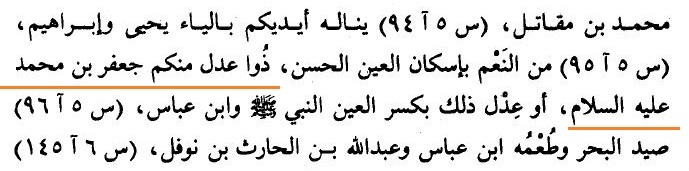
But Muhammad b. Ali al-Baqir and Ja’far b. Muhammad al-Sadiq recited it as ‘Dhû Adl’ in singular mode5.
The earliest Sunni authority to attribute this reading to the Sadiqayn (al-Baqir and al-Sadiq) as per my research was Ibn Khalawayh (d. 370) – a student of the famed Ibn Mujahid credited for standardizing the ‘seven readings’ – in his Mukhtasar fi Shawadh al-Qur’an6:
Two Just Men or A Single Just Man?
That this was the reading of the Sadiqayn is further corroborated by another early authority, the grammarian Ibn Jinni (d. 392), who was renowned for his expertise in the Qur’anic sciences as well as Arabic poetry. He says in his al-Muhtasab fi Tabyin Wujuh Shawadh al-Qira’at wa-l Iydhah Anha:

Among that (i.e. readings which are Shaadh) is the Qira’a of Muhammad b. Ali and Ja’far b. Muhammad ‘Yahkum Bihi Dhû Adl Minkum’7.
However, the motivation of these scholars who investigated the Shawadh (irregular) readings was to show how the latter can be reconciled with the Mashhur (standard) reading without a change in meaning. It is towards this end Ibn Jinni comments as follows:

Abu al-Fath (i.e. Ibn Jinni) said: He (i.e. the one who recited it this way) did not make Dhû singular (instead of the dual Dhawâ) because one individual is sufficient in ruling, rather, he intended (by using Dhû) the meaning of Man (من).
That is, rules on it ‘who’ does justice (i.e. referring to the attribute required of the candidate and not the number), and Man is used for two like it is used for one (subject).
The way he (the poet) said:
We shall become – O Wolf – like who (Man) are two associates8
As can be seen from the above, Ibn Jinni makes Ta’wil (non-apparent interpretation) of Dhû Adl, ignoring the outward meaning of Dhû (which connotes singularity), and contends that it is being used here in place of Man (in its connotation of type), which while normally used for ‘one’ can also be used for ‘two’ as in the line of poetry he quotes9.
A very important comment by the famous exegete al-Zamakhshari (d. 538) summarizes the two alternative interpretations of ‘Dhû Adl’ and reveals that the Sunni tradition was aware of the identification of the single ‘just man’ with the Imam.

Muhammad b. Ja’far (sic.) read it as ‘Dhû Adl Minkum’ intending ‘as ruled by who is just among you’ and did not intend oneness (in number), and it is (alternatively) said: He meant the Imam10.
It is because the apparent meaning is being ignored that al-Tabrisi (d. 548) responds as follows:

This explanation that was given by Ibn Jinni is far-fetched and not understandable. I have found in the Tafsir of the Ahl al-Bayt quoted on the authority of the two Sayyids (i.e. al-Baqir and al-Sadiq) that the meaning of ‘Dhi Adl’ (possessor of Adl i.e. one who is just) is the Messenger of Allah and the Ulil Amr after him. And it is more expected for the Sahib al-Qira’a (i.e. the promulgator of a certain reading) to have knowledge of the meaning of his Qira’a (than someone else)!11
The Imam is the Single Just Man
al-Tabrisi alludes to the presence of an explanation from the Imams themselves about their Qira’a. This is most likely the report recorded by al-Tusi (d. 460) in his Tahdhib:
باسناده عن الصفار عن محمد بن الحسين بن ابي الخطاب عن أحمد بن محمد بن ابي نصر عن حماد بن عثمان عن زرارة عن ابي جعفر عليه السلام في قوله عزوجل يَحْكُمُ بِهِ ذَوَا عَدْلٍ مِّنكُمْ فالعدل رسول الله صلى الله عليه وآله والامام من بعده يحكم به وهو ذو عدل فاذا علمت ما حكم به رسول الله صلى الله عليه وآله والامام فحسبك ولا تسأل عنه
Via his chain to al-Saffar from Muhammad b. al-Husayn b. Abi al-Khattab from Ahmad b. Muhammad b. Abi Nasr from Hammad b. Uthman from Zurara from Abi Ja’far عليه السلام in regards His words Mighty and Majestic: “as ruled by two just men among you” (5:95).
(al-Baqir said:) The just man (Note: sing.) is the Messenger of Allah صلى الله عليه وآله and the Imam after him. He (the Messenger or the Imam) rules on it whilst being just. So if you know how the Messenger of Allah صلى الله عليه وآله ruled and the Imam then it is sufficient for you and do not inquire about it12.
Faydh al-Kashani (d. 1091) comments on this report:
يعنى ان الرسم الالف في ذوا عدل من تصرف النساخ والصواب محوها لانها تفيد أن الحاكم اثنان والحال أنه واحد اذ المراد به الرسول في زمانه ثم كل امام في زمانه على سبيل البدل
Meaning that the writing down of Alif in ذوا عدل is among the arbitrary additions of the copyists. To delete it is more appropriate, because if left it would imply that the rulers are two, when in reality he is only one, for it (i.e. the phrase) refers to either the Messenger in his age, or every Imam in his age, by way of replacing one another13.
Allama Majlisi (d. 1110) comments on it as follows:
وقد اشتهر بين المفسرين أن قراءة أهل البيت عليهمالسلام بلفظ المفرد والمعنى على هذه القراءة أنه يحكم بالمماثلة النبي والإمام الموصوفان بالعدل والاستقامة في جميع الأقوال والأفعال وقد حكموا بما ورد في أخبارهم من بيان المماثلة
It has become well known among the Mufasirin (commentators) that the Qira’a of the Ahl al-Bayt is in singular mode.
The meaning (of the verse) based on this Qira’a is that the equivalence is ruled upon by the prophet and the Imam (each in his respective age), (for) they (are the ones) who are characterized by justice and steadfastness in all their speech and acts.
And they have indeed (already) done so as per what has come in their reports outlining the equivalence14.
In another place he expands:
اعلم أن في القراءات المشهورة ذَوا عَدْلٍ بلفظ التثنية، و المشهور بين المفسرين أن العدلين يحكمان في المماثلة و قرئ في الشواذ ذو عدل بصيغة المفرد، و نسب إلى أهل البيت عليهم السلام و هذا الخبر مبني عليه و هذا أظهر مع قطع النظر عن الخبر لأن المماثلة الظاهرة التي يفهمها الناس ليست في كثير منها كالحمامة و الشاة، و أيضا بينوا لنا ذلك في الأخبار و لم يكلوه إلى أفهامنا فالظاهر أن المراد حكم الوالي و الإمام الذي يعلم الأحكام بالوحي و الإلهام، و عن القراءة المشهورة أيضا يمكن المراد بالعدلين النبي و الإمام فإن حكم كل منهما حكم الآخر و لا اختلاف بينهما
Know that the famous readings have it as Dhawâ Adl in dual mode. What is also preponderant among the commentators is that the two just men will rule in (identifying) equivalence (i.e. to what animal the killed game most resembles).
It has also been read in the Shawadh as Dhû Adhl in singular mode. This has been attributed to the Ahl al-Bayt عليهم السلام and this report (i.e. on which he is commenting) also assumes the same. (The validity of) this (latter) is more evident, even if we were to set this report aside, for the apparent equivalence as understand by most people (i.e. biological similarity) is not to be found in a lot of them (cases), such as the equivalence of the pigeon and the sheep (i.e. the equivalence as set by the Imams are not intuitive).
Furthermore, they (i.e. the Imams) outlined that (i.e. the corresponding animal that should be offered for each infraction) in the reports (on their authority) and did not leave it to our understanding.
Thus it is evident that what is meant (in the verse) is the ruling of the (single) Wali (guardian leader) or the Imam who knows the rulings by way of revelation and inspiration15.
The Manuscriptal Evidence
A study of the orthography of Q. 5:95 in early manuscripts reveals that all instances have the same spelling i.e. Dhâl-Wâw-Alif (ذوا). Consider the three examples below:
- Manuscript A (Wetzstein II 1913)

A magnification of the Dhâl-Wâw-Alif in ذوا can be seen below:

- Manuscript B (Bibliothèque nationale de France: Arabe 339)
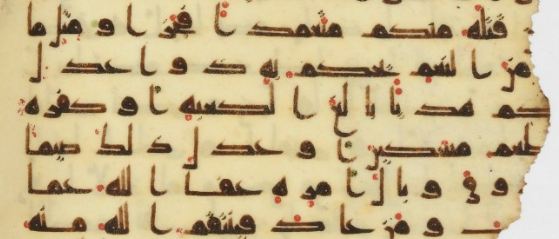
A magnification of the Dhâl-Wâw-Alif in ذوا can be seen below:

- Manuscript C (Rampur Raza Library – No. 1, Korankodex -ʿAlī b. Abī Ṭālib Zugeschrieben)
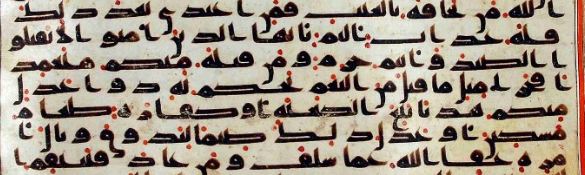
A magnification of the Dhâl-Wâw-Alif in ذوا can be seen below:
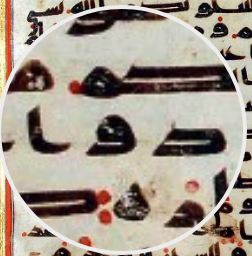
In fact, all the evidence available to us in the early manuscripts point to a uniform spelling of Dhâl-Wâw-Alif16. Such being the case, why is there no single attestation of the Imami Qira’a in the early manuscripts? Doesn’t this weaken the Imami position?
Or should we postulate that the mistaken transformation happened before the Uthmanic canonization (to which all the manuscripts available to us go back to)17?
If so, how exactly did the mistake the Imams refer to enter the tradition?
A simple answer would be to postulate a mistaken addition of Alif in the Uthmanic standard or during the later Umayyad reform18?
But are both these postulations credible?
How Did the Mistake Occur?
The answers to these questions can only be formulated in light of this surprising fact: The primitive nature of the script meant that both Dhû and Dhawâ were spelt identically in early Quranic manuscripts i.e. both were spelt Dhâl–Wâw–Alif. The superior oral tradition (for which the written script was sometimes seen as merely a mnemonic aid) was supposed to govern what was actually recited in these instances. It is only later that the two were distinguished by the deletion of the Alif al-Ziyada (additional Alif) in Dhû19.
This means that the Imams’ Qira’a makes perfect sense and is totally consistent with the evidence in these early manuscripts which do not support one Qira’a over another.
I propose the following example to substantiate this claim using the same three manuscripts as above. Consider the spelling of the phrase Dhû Fadhl (ذو فضل) in Q. 3:174 which cannot take the alternative reading (i.e. it cannot be read as Dhawâ Fadhl whatever the spelling).
We look into the two later manuscripts B and C (dating from the mid 3rd Islamic century) first, before looking into manuscript A, which is an earlier manuscript (dating to the first, maybe beginning of second century).
- Manuscript B (Bibliothèque nationale de France: Arabe 339)

That Dhû is spelt Dhâl–Wâw can be seen clearly in the magnification below:

- Manuscript C (Rampur Raza Library – No. 1, Korankodex -ʿAlī b. Abī Ṭālib Zugeschrieben)
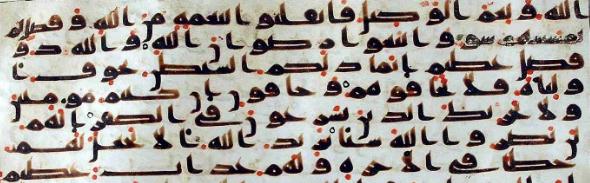
That Dhû is spelt Dhâl–Wâw can be seen clearly in the magnification below:

- Manuscript A (Wetzstein II 1913)
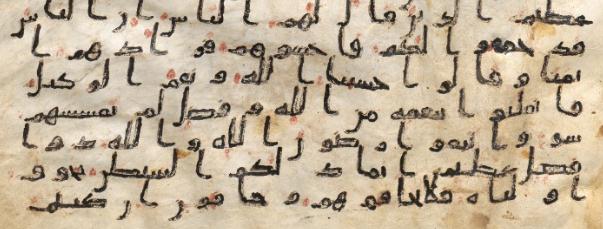
That Dhû is being spelt Dhâl–Wâw–Alif can be seen clearly in the magnification below:

It is evident that the later manuscripts have advanced enough to distinguish the two by dropping the additional Alif when it is Dhû, while the earliest manuscript (Wetzstein II 1913, which has been radio carbon-dated to 662-765 with a 95.4% confidence level) spells Dhû and Dhawâ in the same way.
Based on this, the postulation that a scribe might have mistakenly added an Alif where he should not have in Q. 5:95 cannot be correct. Rather, the readings may have differed because the oral tradition was divergent from the very beginning, and the confusion would not have been helped by both words being spelt in the same way in the early manuscripts.
We can then interpret the Imams’ statement هذا مما أخطأت به الكتاب ‘this is among that which the scribes made a mistake in’ to mean that they were alluding to the inherent defect in scribes’ conventions (script/spelling) in not being able to distinguish between the two instances.
Alternatively, it is possible that the Imams were referring to later (near-contemporary) scribes who were leaving the Alif (based on a preponderant but corrupted reading) when they should be effacing it.
Consider the example of a later hand that effaces the additional Alif in the phrase Dhû Maghfira (ذو مغفرة) in Q. 41:43 per the manuscript below (Saray Medina 1a):

As can be seen in the magnification below, the additional Alif after Dhû has been effaced, and there is only a shadow tracing of what was there at first:

Conclusion
This example demonstrates the remarkable integrity of the Shia Hadith tradition in that it has preserved the words of the Imams that can also be attested to in other totally unrelated genres (i.e. Sunni Tafasir and Qira’at).
It also reveals the need for a multi-disciplinary approach when interpreting the reports of the Imams (i.e. widening the sources we make reference to). Otherwise, if we had not looked into the manuscriptal evidence then the meaning of the words of the Imams would have remained obscure.
As for the question of how a Shi’i should recite the verse today (according to the famous Qira’a) or how the Imams would have recited the verse, then we leave this question to a more involved treatment in the future – God willing.
Appendix: Examples of the Additional Alif in ذو Early Manuscripts
(a) Kairo, Nationalbibliothek: qāf 47
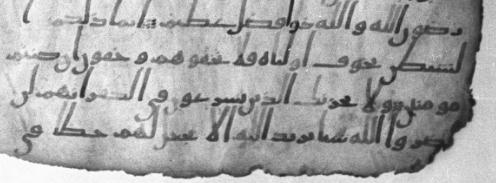
Additional Alif in Q. 3:173 (Dhû Fadhl)

(b) Bibliothèque nationale de France: Arabe 328 a

Additional Alif in Q. 3:173 (Dhû Fadhl)
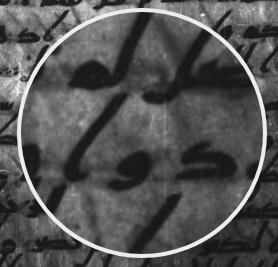
(c) Bibliothèque nationale de France: Arabe 335

Additional Alif in Q. 41:43 (Dhû Maghfira)

Footnotes
- Tafsir al-Wahidi: Vol. 2, Pg. 229. For example, if an ostrich has been killed then the two just men will have to come to a decision as to which domestic animal is equivalent to it e.g. a camel. A minority position attributed to Ibrahim al-Nakhai, the Faqih of Kufa, is that the verse directs two just men to judge the worth of the game killed and set an equivalent price for it, the offender then sacrifices domestic animals worth that price.
- Al-Kafi: Kitab al-Hajj, Abwab al-Sayd, Bab al-Nawadir, Hadith No. 3 (Vol. 4, Pg. 396). The chain is reliable.
- Al-Kafi: Kitab al-Hajj, Abwab al-Sayd, Bab al-Nawadir, Hadith No. 5 (Vol. 4, Pg. 397). The chain is reliable (as per Najashi’s Tawthiq of Ibrahim b. Umar).
- Al-Kafi: Kitab al-Rawdha, Hadith No. 247 (Vol. 8, Pg. 205). The chain is reliable.
- Mu’jam al-Qira’at: Vol. 2, Pg. 341. See also: Mu’jam al-Qira’at al-Qur’aniyya by Drs. Abd al-Al Salim Makram & Ahmad Mukhtar Umar: Vol. 2, Pg. 238.
- Mukhtasar fi Shawadh al-Qur’an: Pg. 41 (ed. Bergsträsser).
- al-Muhtasab: Vol. 1, Pg. 219.
-
This is Farazdaq (d. 114) in his poem on a nightly encounter with a wolf (See the Diwan, Pg. 870, ed. al-Sawi). The previous line is:
تعش فإن عاهدتني لا تخونني
Come sup – but if you have made a pact with me then do not betray me
-
The more developed grammatical Ta’wil trying to reconcile between the Shaadh (irregular) reading with the Mashhur (standard) reading is to consider what has been affixed to ذو that is عدل to be an Ism al-Jins (collective noun), which may be interpreted as singular or plural (two or more) depending on the context. In this instance the two witnesses are a collective plural being treated as singular. But there are issues with this since the verse fixes the number of witnesses at two and did not leave it unbound.
See for this: al-Tibyan fi I’rab al-Qur’an of al-Ukbari (d. 616), Pg. 461; Imla Ma Manna bihi al-Rahman of al-Ukbari (d. 616), Vol. 1, Pg. 226; I’rab al-Qira’at al-Shawadh of al-Ukbari (d. 616), Vol. 1, Pg. 457; Tafsir al-Baydhawi of al-Baydhawi (d. 691), Vol. 2, Pg. 144; Bahr al-Muhit of Abu Hayyan al-Andalusi (d. 745), Vol. 4, Pg. 23; Hashiya al-Shihab ala Tafsir al-Baydhawi of Shihab al-Diin al-Khafaji (d. 1069), Vol. 3, Pg. 283; Hashiya al-Qunawi ala Tafsir al-Baydhawi of Ismail al-Qunawi (d. 1195), Vol. 7, Pg. 566 and Ruh al-Ma’ani of al-Alusi (d. 1270), Vol. 7, Pg. 26.
- al-Kashshaf: Vol. 2, Pg. 295.
- Majma al-Bayan: Vol. 3, Pg. 341.
- Tahdhib al-Ahkam: Kitab al-Qadhaya wa al-Ahkam, Bab min al-Ziyadat fi al-Qadhaya wa al-Ahkam, Hadith No. 74 (Vol. 6, Pg. 314). The chain is reliable.
- Al-Wafi: Vol. 13, Pgs. 790-791.
- Mir’at al-Uqul: Vol. 26, Pg. 119.
- Mir’at al-Uqul: Vol. 17, Pgs. 393-394.
- I personally consulted a total of 6 early manuscripts (including the 3 whose images have been included). This has been made possible by the impressive digitization work at Corpus Coranicum. See: https://corpuscoranicum.de/handschriften/index/sure/5/vers/95?handschrift=163
- The standard narrative holds that Uthman destroyed all the Masahif beyond the single chosen Harf (lection). This means that all the manuscripts we have (with the lower writing of the Sanaa palimpsest being an arguable exception) go back to this Uthmanic Rasm (non-consonantal skeleton) limiting the range of readings.
- An example of this reform to the script is found in the report of Yazid al-Farisi, the scribe of al-Hajjaj’s predecessor i.e. Ubaydallah b. Ziyad (d. 67), which credits the latter as introducing ‘two thousand additional letters’ in the Mushaf. This was by way of adding the double Alif in words like قالوا and كانوا which are said to have been previously spelt Qaf-Lam-Wâw (قلو) and Kaf–Nun–Wâw (قنو). [See the Kitab al-Masahif of Ibn Abi Dawud al-Sijistani (d. 316), ed. Arthur Jeffrey, Pg. 117].
- I thank the ever helpful Dr. Marijn van Putten (Researcher at the University of Leiden) for confirming this fact for me in our email correspondence.