
Jurisprudence of Artificial Intelligence — Summary of the Series
Prepared by Sayyid Ali Imran
A Note Before Reading
The class Fiqh-e Hūsh-e Maṣnūʿī runs to fifty-two sessions. They go into a great deal of detail and take many tangents, and a number of those discussions deserve a hearing of their own; in the future I hope to share some of them as separately published posts and case studies. What follows, however, is a summary of the entire three years of discussion, which I prepared with the help of AI. I present it here on IqraOnline to show the kind of conversations taking place in certain circles of the seminary.
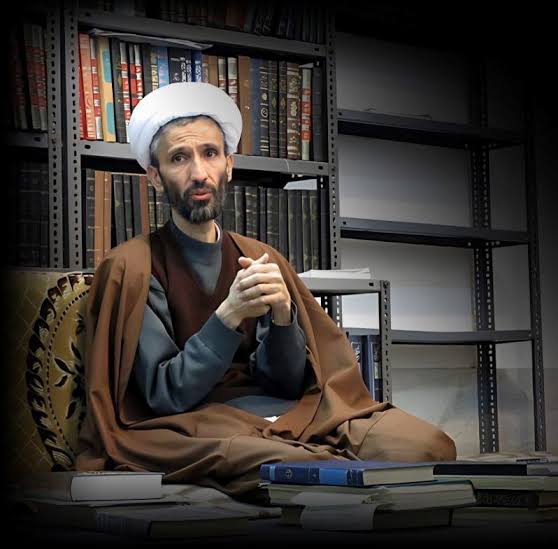
I never personally attended any class of Shaykh Mufidi Yazdi during my time in Qom. I did, however, have the honour of studying for over two years with two of his students: one in uṣūl al-fiqh, and the other in a private class on al-Mughnī, based on the foundations of ʿAllama Mustafawi’s al-Taḥqīq. Through them, I was exposed to some of Shaykh Mufidi’s ideas, and also through work published on a private forum for his students. Over the years I have read many of his transcripts, especially on tafsīr and his discussions of the qirāʾāt of the Qur’an. Many years ago, I published one of his articles in Iqra titled: How to Develop Affinity with Hadith.
Shaykh Mufidi is not a very public figure. He keeps a close circle of students, and those who attend his classes are usually carefully selected.
1. Overview
Fiqh-e Hūsh-e Maṣnūʿī (The Jurisprudence of Artificial Intelligence) is a seminary discussion class (mubāḥatha) of fifty-two sessions, held over three academic years: Sessions 1–17 from September 2023 to February 2024, Sessions 18–45 from April 2024 to February 2025, and Sessions 46–52 from April to May 2025. The teacher, Ayatullah Mufidi Yazdi, is a seminarian and therefore presents his role as merely “cranking the starting handle” of a car: he does not claim to drive the subject to its destination, but to start an engine that younger scholars, with the right technical training, can take further. He repeatedly labels his claims as hypotheses, possibilities or a “general view” still to be refined and documented, and he urges his students to learn programming, linear algebra and the basics of machine learning.
About Ayatullah Husayn Mufidi Yazdi: He is a scholar from Yazd and one of the prominent teachers of ethics, ʿirfān and advanced (khārij) studies at the seminary of Qom. He studied in Qom under Ayatullah Bahjat and Ayatullah Hasanzadeh Amuli, among others, and both appear often in the anecdotes and rulings cited in the course. His teaching spans Qurʾanic recitation, mathematics, astronomy, exegesis and fiqh, including the fiqh of artificial intelligence and new technologies, and he is known for his strength and distinctive views in the Qurʾanic sciences. He leads the maghrib and ʿisha prayers at the Fatimiyya Mosque in Qom, formerly Ayatullah Bahjat’s mosque.
The series begins from a single, concrete juristic problem. A robot or self-driving car, trained by machine learning rather than programmed for the act, kills a human being and steals his car, in a way its engineers never intended or foresaw. Who is liable? Is it a deliberate killing, subject to retaliation (qiṣāṣ), or a case for blood money (diya), or neither? And, by extension: can such a machine stand in for a human in acts of worship, slaughter an animal lawfully, conclude a valid contract, own property, act as an agent, or pay zakāt on someone’s behalf?
Shaykh Mufidi’s view is that these questions cannot be answered by jumping straight to the proof-texts, nor by importing the debates of Western philosophy of mind wholesale. The fiqh ruling depends on its subject (mawḍūʿ), and the subject here is badly understood. Many rulings turn on intention, awareness or the grasp of meaning; so before ruling, one must know precisely what an AI is and does, and in what sense, if any, it intends, is aware, or grasps meaning.
His central thesis is a distinction he coins himself. Intelligence, awareness, intention and the grasp of meaning come in two kinds:
- Substrate-based (pāye-maḥwar; rendered “base-centred”): something that appears in, or emerges from, an intricately arranged substrate, as the nature of water appears when two hydrogens and an oxygen are arranged as H₂O.
- Illumination-based (ishrāq-maḥwar): something that shines into a receptive substrate from an immaterial source outside it — the spirit, the intellect, the higher world — as a radio’s voice comes from a transmitter outside the set.
Human beings have both. Machines can have only the first. Everything in the series follows from this: what a machine can do is substrate-based, and the fiqh question in each case becomes whether the ruling in question requires the illumination-based kind (as worship does) or can be satisfied by the substrate-based kind (as contracts and liability can).
The series is therefore three things at once: a work of theology and philosophy (showing what is distinctively human), a technical inquiry (understanding what AI actually does, from transistors to large language models), and a work of applied fiqh (stating the rulings). By the end, Shaykh Mufidi himself organizes all fifty-two sessions under these three headings, and he asks that any summary of the series follow them.
2. The Architecture of the Argument
The three parts
The series begins with a case, and wandered — through Turing and Searle, through the history of physicalism, through the digits of π and the narrations on the spirit, through bits, bytes and Boolean algebra, through the chapters of fiqh on slaves, animals and usurped property. Later on, the discussion gradually came to have three important parts:
- Part One — the theological part. Distinguish illumination-based from substrate-based intelligence, and present (not merely prove) this distinction so clearly that all humanity, “from a primary-school child upward,” can see with the eye of the intellect what belongs to the human being alone.
- Part Two — the subject-identification part. Analyze substrate-based intelligence precisely: what it does, where meaning and something like intention or awareness “appear” in it, and where they do not. This is the refining of the subject (tanqīḥ al-mawḍūʿ) that must precede any ruling.
- Part Three — the juristic part. With the subject understood, return to the sharʿī proofs and ask, ruling by ruling, which subjects are realized in substrate-based intelligence and which are not; and build an account of liability adequate to machines that act without anyone having intended their acts.
Shaykh Mufidi stresses that the parts serve one another. Part One is not idle theology: if one cannot say clearly what a machine lacks, jurists will either deny it everything (invalidating all its transactions) or grant it everything (letting it stand in for humans in worship). Part Two is not idle technology: a jurist who does not know what a neural network or a language model does cannot know whether “intention” or “awareness” applies to it. And Part Three is the purpose of the whole.
How the three years of classes unfold
Year 1 (Sessions 1–17) sets the problem and the method, and builds most of Part One.
- It opens with the killer robot and with a ten-point outline of liability, establishing that in fiqh liability (ḍamān) rests on attribution, not on intention or fault.
- It identifies intention as the point of doubt, which leads to Searle’s Chinese Room, Turing, and the question of whether a machine can intend.
- It sets out the method: do not philosophize, show; and start from the bare hardware and climb upward.
- It coins the substrate-based / illumination-based distinction and supports it from scripture, the narrations on the spirit, Nasir al-Din Tusi’s notion of “structure” (binya), and the Platonism of mathematics (√2 and π).
- It works out what a substrate needs for awareness to appear in it (time, an indivisible unit, a mutual co-dependence of parts, messages), and concludes that a machine can reach the “floor” of self-awareness but cannot grasp meaning in its essential sense.
Year 2 (Sessions 18–45) does two things. Its first phase (Sessions 18–35) is the core of Part Two: a careful climb from the bit to the Boolean bit, the byte, the object, the goal and a “substrate-based I”, producing the theses of “meaningfulness without perception of meaning” and observer-independent appearance. Its second phase (Sessions 36–45) builds the apparatus of Part Three: attribution, where liability settles, the “shortest route” to securing a right, rights attaching to the thing itself, the slave and animal chapters as models for the robot, conditions versus impediments, the independence of legal concepts from the human being, and AI as an agent that enacts contracts.
Year 3 (Sessions 46–52) returns to Part Two with the technology of the present: the generations of AI (symbolic, connectionist, deep learning, statistical large models), the black-box problem, vectors, tensors, embeddings and the processing of natural language. It adds new evidence for Part One (sleepless-night insights, telepathy, Gauss and Poincaré, Tegmark’s mathematical universe), argues that physics itself will one day reverse its paradigm and place information and the immaterial first, and closes with a proposal for continuing the juristic work.
The shape of the reasoning
The argument moves in a characteristic way. It begins with an obvious case at each end — a machine certainly cannot make the Hajj on someone’s behalf; a machine certainly can execute a transaction faster and more accurately than a person — and works inward toward the hard cases. It refuses to settle a question by appeal to philosophical schools, preferring examples that every school must grant (a child running his finger across a multiplication table; the digits of π; a painting that carries an idea). It reads the classical sources, from the Tajrīd to the Jawāhir, as already containing tools that fit the new problem, if they are read with “glasses of research” rather than “glasses of imposition”. And it insists on speaking “on all foundations”: a solution that works only if one adopts a single disputed principle (for example, that the Lawgiver endorses every customary contract) is not enough.
3. Part One: What Belongs to the Human Being Alone
The question behind the question
The series reaches the theology of the soul through fiqh, not the other way round. Several rulings require intention, awareness or the grasp of meaning. Strong-AI enthusiasts say machines already have these; Searle’s Chinese Room says digital machines have only the appearance of them. Shaykh Mufidi accepts the core of the Chinese Room — that at the level of hardware a computer is purely formal, manipulating symbols by rules with “not a pinpoint of meaning” — and recasts it in a homelier image that recurs for three years: a small child who knows no numbers, told to run his finger along a row and a column of a multiplication table, points to “56”. His act is meaningful; he grasps nothing. But the Shaykh does not stop at Searle. Searle, he says, remains a physicalist; his critique shows what a digital machine lacks, but not what a human being has.
The distinction
Against both strong-AI optimism and two-point substance dualism (he criticizes Brian Cutter’s “AI Ensoulment Hypothesis” on this score), the Shaykh proposes that human cognition has two kinds of source:
- Substrate-based phenomena appear in an arranged substrate. The paradigm is water: hydrogen and oxygen, arranged as H₂O, are the “seat” on which the “sultan” of water sits, with its own properties (freezing, melting, boiling) that are not the properties of its atoms. Break the arrangement and the water is gone. The classical counterpart is Tusi’s statement in the Tajrīd that life “is conditioned, in our case, on a balanced constitution, so a structure (binya) is necessary.”
- Illumination-based phenomena come into the substrate from outside it, from the immaterial soul through what the philosophers call its illuminative relation (iḍāfa ishrāqiyya). The paradigm is the radio. A man who opens a radio to find the speaker inside is wrong about where the speaker is, but right in his method: if he searches every wire exhaustively, he will reach the antenna and know for certain that the voice comes from outside.
The human being has both. God “proportioned” the body (taswiya, 38:72) as an intricate bed and then “breathed into it of My spirit”; the narrations say the soul’s effect is strong when the body’s constitution is refined. The body is not a container for the spirit but, in the phrase of Shaykh Mufidi’s own teacher, “the spirit descended”: “a single, connected existence from the earth to the Throne.” Even substrate-based capacities in the human exist to serve the illumination. A machine, by contrast, is like a tape recorder rather than a radio: everything it outputs was placed in it from inside.
The method of “presentation”
Shaykh Mufidi is emphatic that Part One should be done by presentation, not by demonstration. A proof convinces the mind; a presentation lets “the eye of the mind” see, as the eye of the head sees a stone. A sophist may argue that seeing a glass and imagining a glass are both “just images”; a teacher who picks up the glass and says “this glass exists” answers him for every ordinary person. The goal is a set of examples so clear, and so independent of philosophical schools, that once seen they cannot be unseen, as Platonist mathematicians “retreat to formalism” only when teased in a philosophy class and never while doing mathematics.
The evidence presented
Across three years the Shaykh gathers several families of evidence:
- Mathematical truths. The incommensurability of the side and diagonal of a square (√2), proved since Pythagoras; and above all π, whose infinitely many digits are determinate before anyone calculates them. We discover them; we do not posit them; that is why a miscalculation is a mistake. No physical bed, finite or otherwise, can hold infinitely many determinate digits; so the intellect that sees them is in contact with a world of mathematical truths outside the brain. Gödel’s remark that the mind’s eye perceives mathematical objects as the bodily eye perceives stones, Frege’s “Thought” as objective and “grasped”, Hilbert’s “paradise Cantor created”, and Tegmark’s Our Mathematical Universe (which makes mathematics the physical basis of the world) are cited as the trend of the field.
- Insight that comes “from outside”. Scientists’ “hunches of sleepless nights”: Yukawa’s meson, Poincaré watching ideas “collide until pairs interlocked”, Gauss’s riddle solved “by the grace of the Lord, like a sudden flash of lightning.” Sabzawawri’s verse states the principle: “the forms flow from the Holy [Intellect]; thought only prepares for it.” Some thinking is pre-linguistic, and so beyond what brain electrodes or language models can read.
- Dreams, unveilings and true dreams. Yusuf’s dream of seven years, dreams people say “were not dreams at all”, and the mature mystic’s ability to tell an imaginal unveiling from a real one.
- Telepathy and messages from outside. ʿAllama Jaʿfari’s son in Paris who felt his father strike his head on a bookcase in Tehran; the official in Yazd who “saw” a bottle break at home. A radio that only whistles receives a carrier wave; a radio that speaks receives a message, and a message points to a sender.
- Scripture and narration. The five spirits (the Holy Spirit and the spirit of faith as illumination-based; the spirit of the body, shared by believer and unbeliever, as substrate-based); the hadith of Kumayl on the soul; the record of deeds “like a mouse’s ear” between the eyes; “sight from the eye” as an emission. These are read as “codes” for how body and spirit relate.
The criterion
When pressed for a criterion, Shaykh Mufidi gives a procedural one. Take a substrate with all its features. Reduce to the components whatever can be reduced; explain as an emergent of the whole whatever cannot. If, after exhausting both, something is still received that is in neither the parts nor the whole — a missing link, like the particle Yukawa had to posit because two systems were connected with nothing to connect them — that is illumination-based. Physicalism keeps adding new physical links (photons, gravitons, strings in eleven dimensions); the teacher predicts it will keep running short.
The paradigm shift he expects
By Year 3 Shaykh Mufidi states a larger prediction. Physics currently takes matter as fundamental and tries to reduce everything else to it. But the solid, unbreakable atom of Democritus has already broken (radioactive transmutation; the wave); information theory (“it from bit”) and entanglement are pushing physicists toward treating information as primary and particles as its manifestation. Information is immaterial: a painting of a mother’s love can be pulverized or photographed five times, and the one idea is untouched, because its home is not in the pigment. When physics completes this reversal, the immateriality of the human soul will no longer seem an exotic claim but the natural reading of the evidence.
4. Part Two: What Substrate-Based Intelligence Is and Does
Method: from the hardware up, with “meaning-seeing glasses”
The usual approach looks at software first and asks whether it “thinks”. Shaykh Mufidi reverses this. He begins inside the bare hardware, emptied of software, and climbs one layer at a time, asking at each layer whether anything we could call meaning, awareness or intention has appeared. He calls this wearing “meaning-seeing glasses”.
Layer by layer
- The physical layer is purely formal. A pit or land on a CD, a magnetized point on a disk, an open or closed circuit in RAM: “a pit is a pit.” Two-state physical alternatives carry no information in themselves.
- The bit is software. It is the human mind that makes these two-state systems into an “or”, and assigns them 0 and 1. Zero and one as numbers already carry meaning; the same information copied across different media shows that the information is one while the hardware differs.
- Boolean algebra is the first turning point. The decisive step, for the Shaykh, was Shannon’s: giving 0 and 1 a logical meaning (false and true), not merely a numerical one. “True” has no identity of its own; it is a relation — correspondence with reality. Without two-valued algebra there would be no computer; a machine could not even judge that 7 + 2 = 9.
- Bytes, words and objects are indivisible units. Packaging bits into bytes (the smallest addressable unit), characters and objects means the system is “no longer just zeros and ones.” An object that represents a triangle is subject to trigonometry whether or not anyone is watching: “control slips out of our hands,” because it now answers to realities in themselves (nafs al-amr).
- Goals and the substrate-based “I”. What AI adds to ordinary programming is goal definition, rule discovery and inference. A weak system pursues a given goal by given rules and repeats a mistake it was given; a stronger one detects and does not repeat its own mistakes. At the top of this climb the teacher posits a substrate-based “I”: a region of memory that knows its inputs and outputs, distinguishes itself from what is other, records its own routines and grows through learning, so that each such robot becomes unique.
What a substrate needs for awareness to appear
Initially, Shaykh Mufidi worked out the conditions under which anything like awareness can appear in matter at all. Matter is pure mutual veiling: the two ends of a five-centimetre line cannot “know” each other. So awareness is impossible in one, two or three dimensions; it needs the fourth, time. In a very small packet of time, billions of message exchanges make the parts mutually “informed”, so that the packet acts as an indivisible unit (juzʾ lā yatajazzā) — as persistence of vision turns film frames into motion, or as the bricks of a vault hold one another up in mutual co-dependence (dawr maʿi). Messages, not just signals, must pass. On these conditions the Shaykh concludes that a machine can reach the floor of self-awareness: something like Avicenna’s “floating man” saying “I”, a robot able to say “I am doing this”. He later adds to this and says that this is “awareness” only as a quasi-metaphor, like calling an invalid prayer a prayer: in the human, the soul descends and acts; in the machine nothing descends.
Meaning: the appearance of meaning without the perception of meaning
The most original part of the analysis concerns meaning. The Shaykh distinguishes between a substrate in which meaning appears and a mind that perceives meaning. A painting of a mother’s love is a substrate in which an idea appears; the painting perceives nothing. He develops this into a typology:
- Kinds of composition. Some wholes are mere sums of similar parts (a heap of bolts); others are “third things” that emerge from dissimilar parts working together (a truck assembled from bolts and nuts; a water molecule; a society, following Tabataba’I on individual and society).
- Observer-dependent and observer-independent appearance. A painting or a film shows its meaning only to someone who looks. Water’s nature, causality between fire and burnt wood, and a child’s working out of a multiplication table are real whether or not anyone watches. Appearance is defined not as “appearing to someone” but as the descent of a meaning into a medium such that rulings hold and effects follow there.
- Action frees AI from the observer. A garden-watering robot keeps watering and learning if every human dies. Its operations are therefore meaningful in themselves, in the observer-independent sense.
Hence the central thesis is: AI performs meaningful operations without any perception of meaning. Through symbol-assignment, Boolean logic, data types and networks of symbols, meanings become active in memory; there is “substrate-based wisdom” — detecting a gap, setting a goal, organizing the means and reaching it. But there is no understanding.
The Shaykh also sketches a path by which a machine could carry meaning more fully: the pointer (ishāre-gar). Instead of bare symbols, a pointer points to a component of a network of symbols that itself has parts and is part of a network, so that pointing to “Zayd” also carries “human”, “capable of wonder”, “capable of writing”. This is a logic-based route, and he contrasts it sharply with the statistical route the industry has actually taken.
The generations of AI and the statistical turn
The discussions continue to insist that the engine of progress has been mathematical tools, not philosophical ideas:
- First generation: symbolic AI. Built on Boolean algebra; rule-based expert systems (an inheritance calculator that never forgets an heir). Its failure, partly on natural language, brought the “AI winters”.
- Second generation: connectionism. Neural networks imitating neurons; then deep learning, with many hidden layers — and with it the black-box problem. The engineers cannot trace why the system gave an output, or why it confidently “hallucinates”. The Shaykh compares it to Solomon’s hoopoe, which could see water under the ground without anyone, including the hoopoe, knowing how.
- Third generation: statistical, data-driven models. Large language models built on linear algebra: words broken into tokens, turned into high-dimensional vectors by counting co-occurrences in a vast corpus, weighted by norms, and placed in vector spaces where “distance” can mean any respect (as two stones can be near in space and far in price). The Shaykh’s example: the word ṭawāf turned into a vector of its frequencies across the books of the Jawāhir, ending close to saʿy and far from qiṣāṣ.
His verdict on the statistical turn is severe. A rule-based system, like the child at the multiplication table, at least behaves meaningfully; bare statistics is not even meaningful behaviour, only counting. Meaning comes closer only at later stages (embedding, morphology, syntax, pragmatics). The “large” in “large language model” names a method — begin from a mass of data, not from rules — and Chomsky’s objection that no child learns this way has not stopped the industry. The Shaykh expects humanity eventually to move beyond pure statistics toward reasoning, creativity and meaning; and he notes that in the brain, too, neurons merely aggregate signals until a subtler, holistic substrate (he mentions the claustrum as a candidate) lets meaning appear.
5. Part Three: The Rulings
The governing principle
With the subject analyzed, the juristic question in every case becomes: does this ruling require the illumination-based kind of intention or awareness, or can its subject be realized by the substrate-based kind? The answer differs from chapter to chapter, and the Shaykh treats the obvious cases first.
Two preliminary points frame all the rulings. First, AI is not legally responsible (mukallaf); it is a subject to which declaratory rulings (aḥkām waḍʿiyya), such as liability, can attach, as they attach to things. Second, the objection that the proofs are “directed to humans” (inṣirāf) does not by itself exclude machines: directedness that comes merely from the familiarity of human instances is not the speaker’s intent. Where the subject of a proof really is the human being with a spirit, the restriction holds — which is exactly why the substrate/illumination distinction is needed.
Worship and nearness to God: excluded
A robot cannot stand in for a person in the Hajj or tawaf, perform hired prayers or fasts, or be addressed by the command to pray. These require the intention of drawing near to God (qaṣd al-qurba), knowledge of God and obedience to His command, which belong to the illumination-based side. For the same reason, zakat paid by an AI agent lacks the required intention of nearness; whether the owner’s hypothetical intention suffices (as Ayatullah Bahjat allowed for a Hajj sacrifice made by an unappointed friend: “had he known, he would have appointed him”) is a separate question, and the Shaykh suggests such a payment might be rectified by other routes, such as a mutual set-off of liabilities.
Ijtihad: an assistant, not a mujtahid
AI can serve as a jurist’s secretary or expert system. It can never be a mujtahid in the full sense, because ijtihad is a holy faculty in which knowledge becomes the soul’s own sight. Whether a “soft” AI trained on the books of juristic argument could critique fatwas, test them, or even propose new lines of reasoning is left open as a research proposal.
Slaughter: depends on how the proof is read
Slaughter needs the name of God, not the intention of nearness. Whether a robot’s slaughter is lawful depends on whether being a Muslim is a condition of the slaughterer or being an unbeliever is an impediment. A robot is not a Muslim, but neither is it an unbeliever. The case is left as a clear illustration of why the condition/impediment distinction matters.
Contracts and transactions: the substrate-based intention
The Shaykh’s sustained effort is to show how AI’s transactions might be valid, without simply waving the problem away.
- What kind of intention a contract needs. Contracts do not require nearness to God. The intention to enact (qaṣd al-inshāʾ) is about engaging with social conventions; and the intention that the law cares about is “determining a result and determining a specific act to reach it” — weighing benefits and harms and choosing among routes. A trading AI does this, often better than a human. So substrate-based intention may satisfy it.
- Conditions or impediments. If maturity and intention are strict conditions of a valid contract, the default principle of invalidity would void every AI transaction. Shaykh Mufidi proposes reading them as impediments stated in the language of conditions: the texts exclude the insane, the minor, the coerced and the foolish. On that reading AI “is not a minor”, and an impediment is presumed absent unless shown.
- Legal concepts are independent of the human being. Ownership, contract and the like are legal constructs abstracted from particulars; humans are their most frequent instances, not their condition. Endowments, mosques, banks and the state already own. Conventions are freely posited, but wise positing is constrained by real if–then relations between value-carriers and aims, and those relations do not depend on humans.
- Ownership is not agency. A minor owns but cannot enact; a bank owns but acts through human agents whose intention and maturity fiqh can examine. The new difficulty with AI is that the agent is the machine. The real question is whether AI can be the one who takes charge of enacting a contract (mutawalli), for itself or on behalf of humans.
- No shortcut. The Shaykh refuses the argument that rational people already accept AI contracts and the Lawgiver endorses all customary contracts (“fulfil the contracts”, 5:1). Many jurists read that verse as covering only contracts known to the Lawgiver; and even on the broad reading it is restrained by the prohibition of hazardous uncertainty (gharar). The minor’s transactions are excluded precisely for gharar, and present AI, which can “blow your entire capital” on an algorithmic whim, may carry the same hazard. The work must be done “on all foundations”: one must show that the substrate-based intention is the intention the contracting party needs as a legal element.
Liability for harm done by AI
This was the starting question, and the Shaykh’s answer grew into a general theory of liability.
- Liability rests on attribution, not on fault or risk. Contemporary law offers two regimes, fault-based liability and risk-creation (strict) liability. Fiqh fits neither. There is liability without fault (the sleeper who breaks a dish; error killing), and there is creation of risk without liability (heavenly loss; harm that goes unrequited, hadar). The third basis is attribution (istinad): to whom is the destruction ascribed? Attribution can be direct or causal, shared among several parties in percentages, or passed along a chain; it needs an “atlas” and then an algorithm.
- Programmers usually escape attribution. When a self-taught system does what no one designed, and its code comes from libraries written by millions, rational custom does not attribute the act to any one programmer — as no one pursues the factory that made the knife, the inventor of the generator when someone is electrocuted, or the shooting instructor whose pupil later commits murder.
- Beyond attribution: where liability settles. In the chapter on successive hands over usurped property (taʿāqub al-aydī), every holder is liable and the owner may pursue any of them, even an ignorant holder with no fault, though liability finally settles (istiqrar) on the deceiver or usurper. The Shaykh’s proposed rationale is the Lawgiver’s “shortest route”: the safest and most fitting way to secure the owner’s right is to go where the item or its substitute is.
- Rights attaching to the thing itself. The same rationale explains why khums and zakat attach to the property, why a pledge secures a debt, and why a slave’s offence attaches to his own person (raqaba): in deliberate killing the victim’s heir may retaliate or take the slave, and the master steps aside; in error the master chooses to pay or surrender him.
- The robot as the slave of fiqh. The word “robot” itself means a forced labourer. The Shaykh’s working hypothesis is that, by refining the criterion (and provided this is not mere analogy, qiyas), the right arising from a robot’s offence could attach to the robot itself rather than to its company: the heir could take it, or have it erased.
- Animals and the sanctum. The jurists hold an owner liable for an animal’s harm when the animal is vicious and the owner knew. The narrations add a criterion: in Imam Ali’s (a) judgment on the bull that killed a donkey, liability turns on whether the bull entered the donkey’s resting place or the reverse. The Shaykh draws from this the idea of a sanctum (harīm): liability arises when the destroying thing violates the protected domain of what it destroys, independently of fault and intent — a promising criterion for machines.
- Deliberate killing by a robot. The intention fiqh requires for deliberate killing (keeping a goal in view, weighing, choosing a route) is less demanding than the intention of worship, and AI does it. Whether retaliation nonetheless requires an intent rooted in life and spirit is left open; the Shaykh notes that if AI were made self-interested, retaliation would deter, which is the Qurʾanic rationale of qiṣāṣ (2:179).
The proposed next step
In the final few sessions, the Shaykh proposes the concrete continuation: compile a new “book” of fiqh, Kitāb al-Ḍamān al-Ḥukmī (the Book of Liability by Ruling), gathering every case scattered across the classical chapters in which the Lawgiver imposes responsibility, beginning from the opening of the Book of Retaliation in the Jawāhir and extending to blood money, usurpation and commerce. Fiqh has hundreds of such unwritten “books” (the foetus, the insane, the child of zina); this one is what AI now demands.
6. Key Concepts of the Series
The series coins or repurposes a number of terms. The most important, in the sense the Shaykh gives them:
- Substrate-based intelligence, awareness, intention. What appears in or emerges from an arranged substrate, without a soul. The Shaykh’s own term. Realizable in machines “at a very high level”. Also rendered as “base-centered” in some of the lessons.
- Illumination-based (ishrāq-maḥwar). What shines into a receptive substrate from an immaterial source outside it. Belongs to the human being (and in degrees to animals); impossible in a machine.
- Substrate (pāye). Any arrangement that lets a nature, meaning or property appear: a molecule, a neuron, a byte, an object, a society, a language. The paradigm is H₂O. Substrates come in infinitely many degrees (“infinitism of substrates”), not just the two points of body and soul.
- Weak, strong and general intelligence. Weak AI pursues given goals by given rules and repeats its errors; strong AI detects and corrects its own errors and has a substrate-based “I”. “General intelligence” (indistinguishable from a human, passing the Turing test) is achievable; illumination-based intelligence is not.
- Indivisible unit (juzʾ lā yatajazzā). A composite that can be split, but only by destroying what has appeared in it: the water molecule, the byte, the object, the time packet.
- Time packaging and mutual co-dependence. The conditions for awareness in matter: a tiny packet of time in which billions of exchanges make the parts mutually informed, like the bricks of a vault.
- The floor of self-awareness. A substrate-based “I” at the level of Avicenna’s floating man: achievable by a machine, but “awareness” only in a quasi-metaphorical sense.
- Appearance (ẓuhūr). Not “appearing to someone” but the descent of a meaning or nature into a medium such that rulings hold and effects follow there.
- Observer-dependent and observer-independent. A painting shows its idea only to a viewer; water, causality and a process like multiplication are real without one. AI’s operations, because they act, are observer-independent.
- Meaningfulness without perception of meaning. The core thesis of some of the discussions was: AI performs meaningful operations, but grasps no meaning.
- Pointer (ishāre-gar). A proposed alternative to “reference”: a symbol that points into a network of symbols so that its referent carries its properties with it. The Shaykh’s logic-based route to meaning, as against the statistical route.
- Kinds of meaning in a sign. Essential, natural and conventional (assigned) meaning; the best formal symbol has none of its own (a letter rather than a numeral).
- Nafs al-amr is wider than existence. The real order of things includes relations, entailments and mathematical truths that are not “existents” in the classical sense, yet are fixed and discovered, not made.
- Conventions and the system of aims and values. Legal and social concepts are constructed conventions (iʿtibārī) to reach aims through value-carriers; constructing is easy, but wise positing is constrained by real if–then relations, which is what makes legal elements independent of the human being.
- Presentation (irāʾa) versus proof. Letting the eye of the intellect see, rather than compelling assent by argument.
- Attribution (istinād). The third basis of liability beside fault and risk: graded, shareable and transmissible along chains.
- Where liability settles (qarār / istiqrār al-ḍamān) and the shortest route. The first point of recourse, the final bearer, and the rationale that the Lawgiver secures a right by the safest, most fitting route.
- Right attaching to the thing or person. Khums, zakat, pledge, and the slave’s offence attaching to his own person — the model proposed for a robot’s offence.
- Sanctum (ḥarīm). Liability for violating the protected domain of the thing destroyed, independent of fault and intent.
- Condition versus impediment. A condition must be established; an impediment is presumed absent. Maturity and intention may be impediments framed as conditions, so that AI “is not a minor”.
- Glasses of research versus glasses of imposition. Reading the classical sources for what they can yield on a new question, rather than forcing a new question into an old category.
7. Conclusions: What the Series Says About AI
The overall point
The series is, at bottom, an argument that the jurist must neither fear nor flatter artificial intelligence, but understand it — and that understanding it requires a clear view of what the human being is. Its answer can be stated in one sentence: AI is a substrate-based intelligence of great and growing power, which performs meaningful operations, pursues goals and can even form a functional “I”, but which has no perception of meaning, no illumination from beyond itself, and no spirit; and the sharʿi rulings apply to it exactly to the extent that their subjects can be realized by a substrate.
Conclusions about AI itself
- Behaviour is not the measure. A machine can pass the Turing test, converse fluently and outperform humans in many tasks, as animals outperform humans in some worldly senses without being nobler. Intelligent behaviour, even general intelligence, is achievable; the question is what lies behind it.
- At the level of hardware, a computer is purely formal. Searle was right about digital machines: symbols manipulated by rules, with no meaning in the manipulation.
- Yet meaning genuinely appears in AI’s operations. Through logical (Boolean) meaning, symbol-assignment, objects, goals and networks of symbols, AI’s operations are meaningful in an observer-independent way, like a child’s correct use of a multiplication table. This is “meaningfulness without perception of meaning” — the Shaykh’s answer to both Searle (there is more than bare manipulation) and to strong-AI enthusiasts (there is no understanding).
- A functional self is possible; a soul is not. A machine can reach the floor of self-awareness and a substrate-based “I” that learns, preserves itself and becomes unique. Calling this “awareness” is a quasi-metaphor. The illumination-based intelligence of the human being — grasping meaning as such, seeing mathematical truth, receiving insight “from outside” — cannot appear in a machine, because nothing descends into it. An “ensouled machine” would require humans to reproduce what God prepared over billions of years and the act of “I breathed”; the series excludes it.
- Today’s large language models are a step away from meaning, not toward it. Statistical models count; they do not even behave meaningfully until later stages of processing, and their black-box character makes them unexplainable and prone to confident error. Users should know what they do, so as neither to expect too much nor be deceived. Humanity will eventually seek reasoning and meaning again, and logic-based approaches have a future.
- AI’s progress came from mathematics, not philosophy. Binary numbers, Boolean algebra and linear algebra are what made the computer and the language model possible. Philosophy is unavoidable in the background, but it is not the engine; the jurist must therefore study the mathematics.
Conclusions about the human being
- The human being is a single existence “from the earth to the Throne”. The body is the spirit descended, prepared as a substrate so that illumination can act through it. Human beings have substrate-based capacities too, but they serve the spirit.
- This can be shown, not just proved. Mathematical truth (above all π), insight from outside, true dreams, telepathy and the narrations together form a body of evidence that, properly presented, lets anyone see what belongs to the human alone. As physics moves toward the primacy of information, the paradigm will reverse, and the immateriality of the soul will appear as the natural reading of the evidence.
Conclusions about fiqh
- Rulings that require nearness to God are closed to AI. Worship by proxy, hired worship, ijtihad in the full sense, and the intention of nearness in zakat cannot be performed by a machine.
- Rulings that require only substrate-based intention may be open to it. The intention to enact a contract, and possibly the intention relevant to deliberate killing, are “determining a result and a route to it”, which AI does. Maturity and intention as impediments rather than conditions, and recognizing that legal concepts such as ownership and agency are independent of the human being, opens the way to valid AI transactions — subject to the prohibition of gharar, which present AI may well trigger.
- Liability rests on attribution and on securing rights, not on fault or risk. Programmers are usually not the party to whom a self-taught machine’s acts are attributed. The tools for AI liability already exist in fiqh: where liability settles, the “shortest route”, rights attaching to the thing, the slave’s offence attaching to his person, and the sanctum (ḥarīm) of the narrations on animals. The robot may turn out to be fiqh’s new “slave”, with the right arising from its offence attaching to the robot itself.
- The classical framework of fiqh should be preserved, not overthrown. New questions should be answered within it, read with “glasses of research”, and on all foundations rather than by adopting one convenient principle.
What the series leaves open
Shaykh Mufidi is explicit that he has only started the engine. Among the questions he leaves to others:
- the ruling on the self-taught killer robot: whether retaliation applies, and who pays if no one is attributable (the public treasury, or some other route);
- whether the slave model is a valid refinement of the criterion or a forbidden analogy, and how to answer its counter-examples;
- the criteria of the “shortest route”, of attachment to the thing, and of when harm goes unrequited (hadar);
- whether substrate-based intention truly satisfies the jurists’ intention to enact, and where exactly “intention” sits in the architecture of a general-intelligence system (a question for engineers);
- whether a soft AI can perform juristic reasoning (istidlal), and the use of unsupervised learning for etymology (ishtiqaq kabir);
- liability for humans augmented by brain implants, and whose intention their acts express;
- whether the irreducibility of conscious states can be demonstrated, as opposed to presented.
Closing
The Shaykh ends the series by summarizing three years of discussion in three steps and asking his students to carry them forward: gather evidence for the difference between the illumination-based and the substrate-based, “which is among the lasting good deeds”; master the mathematics of the machine so that the subject of the ruling is truly known; and build, from the scattered chapters of fiqh, a Book of Liability by Ruling fit for an age in which things act. The underlying message is one of confidence rather than alarm: the tradition, read well, has the resources to meet AI; and AI, understood well, confirms rather than threatens what the tradition says about the human being.