
Previously, I shared the views of Ibn Abi al-Hadid on the narration of Ladud, where he recounts asking a very prominent scholar of his time, Abu Ja’far Yahya b. Abi Zayd al-Basri (d. 613 AH), about the narration of Ladud. The Hadith of Ladud is a Sunni report in which ‘A’ishah narrates that she and others forced medicine into the Prophet’s mouth during the last few days of his life. Abu Ja’far informed him that the hadith of ladud was fabricated by someone in order to gain proximity to certain people. It is possible that someone coined this report either to gain proximity to certain people or to portray ‘Abbas in a positive and elevated light, in order to legitimize the Abbasid government.
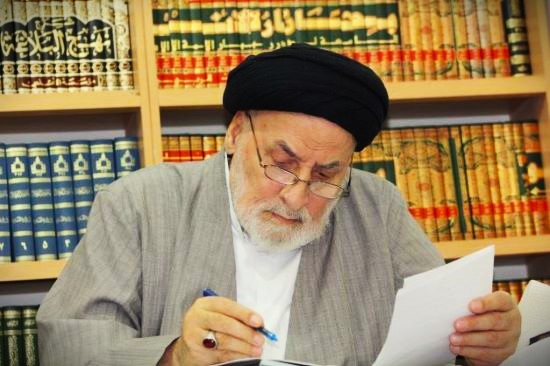
In this post, I will translate the discussion of the event of the Ladud as written by Sayyid Ja’far Murtada al-‘Amili. Sayyid Ja’far is known by many to be an extremely lenient historian; his student, Shaykh Rasul Ja’fariyan, describes him as a historian-theologian [mu’arrikh-mutakallim], often pushing and defending narratives in a polemical manner to support views popularly accepted within the Shi’a community.1 This passage is drawn from his 35-volume work titled al-Sahih min Sirat al-Nabi, specifically vol. 32, pp. 130-141.2
The Ladud narration has begun being used in the last few years by some Shi’i polemicists to suggest that the Prophet’s wives poisoned him, resulting in his death. While Sayyid Ja’far Murtada al-‘Amili would likely have had no issue defending such a view given his views and methodology, the theory is so implausible in light of what we have in our sources that he does not use this opportunity to defend it. Rather, his objections to the narrations of Ladud lie elsewhere, and he argues that they are a complete fabrication and a piece of superstition.
The Hadith of the Prophet’s (p) Being Dosed with Ladd [Forced Medicine]: A Superstition
It has been reported that the Prophet (p) was dosed with ladd3 during the illness of his death (that is, they treated him with al-ladud, a medicine given to the patient in one side of the mouth)4, on the day his condition grew heavy and what he was suffering intensified until he lost consciousness — and that was on a Sunday5, a single day before his death (p).
Among the texts and reports that relate this to us are the following:
1. What al-Bukhari and others narrated on the authority of ‘A’ishah, who said: We dosed him with ladd during his illness, whereupon he began gesturing to us not to give him the ladd. We said [to ourselves]: this is [merely] the sick person’s aversion to medicine. When he regained consciousness he said: “Did I not forbid you to give me ladd?” We said: “[We assumed it was only] the sick person’s aversion to medicine.” He said: “No one shall remain in the house without being dosed with ladd while I watch, except al-‘Abbas, for he did not witness you [doing this to me].6”
2. The wording of Muhammad ibn Sa’id: The Messenger of Allah (p) used to be seized by a pain in his side, and it intensified upon him until he lost consciousness, so we dosed him with ladd. When he regained consciousness he said: “This is the doing of women who have come from over there” — gesturing toward Abyssinia — “and if you suppose that Allah would give [the illness called] dhat al-janb [pleurisy] power over me, then Allah would never grant it any power over me. By Allah, no one shall remain in the house without being dosed with ladd.” So no one remained in the house without being dosed, and we dosed Maymunah even though she was fasting.7
3. And by the route of Abu Bakr ibn ‘Abd al-Rahman: that Umm Salamah and Asma’ bint ‘Umays were the ones who suggested that he be dosed with ladd.8
And in a narration reported by ‘Abd al-Razzaq with a sound chain of transmission: that the matter of the ladd took place in the house of Maymunah, and that his wives had consulted together about it. When he regained consciousness he said: “This is the doing of women who have come from over there” – gesturing toward Abyssinia.9
4. Al-Mu’tazili said: “The people of his household supposed that he had dhat al-janb [pleurisy], so they dosed him with ladd while he was unconscious – the Arabs used to treat dhat al-janb with al-ladud. When he regained consciousness, he realized that they had dosed him, so he said: ‘Allah would never give it power over me – dose everyone in the house.’ So they began dosing one another.”10
5, In a narration on the authority of al-‘Abbas: that he entered upon the Messenger of Allah (p) while his wives were present, and they veiled themselves from me except Maymunah, whereupon he said: “No one who has witnessed the ladd shall remain in the house without being dosed”, and so on.11
6. In a lengthy narration on the authority of ‘A’ishah, she said: The people rushed to him in alarm, so we supposed that he had dhat al-janb, and so we dosed him with ladd. Then the Messenger of Allah (p) was relieved [of his distress] and regained consciousness, and he realized that he had been dosed, and he found the trace of the ladud. He said: “Did you suppose that Allah, Mighty and Majestic, had given it power over me? Allah would never give it power over me. By the One in whose hand is my soul, no one shall remain in the house without being dosed, except my uncle.” So I watched them dosing them, man by man.
‘A’ishah said – and she recalled the merit of those who were in the house that day – so all the men were dosed, and then the ladud reached the wives of the Prophet (p), and they were dosed woman by woman, until the ladud reached one woman among us – Ibn Abi al-Zinad said: I know her to be none other than Maymunah, though he said some people say it was Umm Salamah – and she said: “By Allah, I am fasting.”
We said: “How ill you have thought of us, that we would leave you [undosed] when the Messenger of Allah (p) has sworn an oath.” So we dosed her, by Allah, O son of my sister, even though she was fasting.12
7. On the authority of Ibn ‘Abbas, who said: The Messenger of Allah (p) said: “Among the best things you may treat them with are sa’ut [nasal medicine], ladud, cupping, and walking.” Then, when the Messenger of Allah (p) fell ill, his Companions dosed him with ladd. When they had finished, he said: “Dose them [too].” So all of them were dosed, except al-‘Abbas.13
And also on his authority: that the Messenger of Allah (p) was dosed with ladd by al-‘Abbas and his Companions, whereupon the Messenger of Allah (p) said: “Who dosed me?”, and they all fell silent. So he said: “No one shall remain in the house without being dosed, except his uncle al-‘Abbas.”
Al-Tirmidhi said: this is a hasan gharib [sound but singular] hadith; we know it only through the hadith of ‘Abbad ibn Mansur.14
8. And finally, ‘A’ishah narrated, saying: The Messenger of Allah (p) lost consciousness while the house was full of women – Umm Salamah, Maymunah, and Asma’ bint ‘Umays – and his uncle al-‘Abbas ibn ‘Abd al-Muttalib was with us. They agreed to dose him with ladd, and al-‘Abbas said: “I shall not dose him”, [but the others] dosed him.
When he regained consciousness he said: “Who did this to me?” They said: “Your uncle.” He said to us: “This is a medicine that has come from the direction of this land” – gesturing toward the land of Abyssinia – and said: “Why did you do that?”
Al-‘Abbas said: “We feared, O Messenger of Allah, that you had dhat al-janb.” He said: “That is an illness which Allah would never afflict me with — no one shall remain in the house without being dosed, except my uncle.” She said: So Maymunah was dosed even though she was fasting, on account of the oath of the Messenger of Allah (p) — as a punishment for what they had done.15
For our part, we do not credit these narrations, for the following reasons:
Firstly: Setting aside any discussion of their chains of transmission, these narrations contain contradiction and disagreement. We shall confine ourselves to mentioning five instances of these contradictions, leaving the rest to the reader’s own consideration and observation. We say:
1. One narration states that al-‘Abbas dosed him. Another says that he refused to dose him, and merely gestured toward doing so. And a third says that he took part neither in dosing him nor in the consultation about it.16
2. One narration states that his Companions were dosed man by man, until the ladud reached his wives (p). Another states that the ladd was for the women only. And a third states that the ladd was for his Companions, without any mention of the women at all.
3. Then there is the disagreement over who it was that was dosed while fasting; was it Asma’ bint ‘Umays, or was it Maymunah?
4. One narration states that he (p) did not know he had been dosed until he regained consciousness and found its trace in his mouth, while another states that he had explicitly, or by gesture, forbidden them from doing so, but they did not comply, considering this to be merely the sick person’s aversion to medicine.
5. One narration states that the ladud was a medicine that had come to them from Abyssinia, while another says: “The Arabs used to treat dhat al-janb with al-ladud.”
Unless one were to say: there is no contradiction between the two, for perhaps it originated in Abyssinia, and the Arabs then obtained it and used it to treat their sick.
Secondly: The narration of al-Mu’tazili, al-Zamakhshari, and Ibn al-Athir17 states explicitly that the Messenger of Allah (p) intended to dose all of them as a punishment. But “there is difficulty in this, for not all of them took part in that act,”18 so why would those who were not the perpetrators be punished?
And even were it granted that they all deserved punishment for having failed to object to those who did it, especially given his (p) prohibition of them from doing so, the response to this is: if they had supposed that his prohibition was merely the sick person’s aversion to medicine, as is claimed, then they would be excused, since they were simply following their own interpretation and understanding.
All this, setting aside the fact that some narrations deny that he (p) had prohibited them from doing so at all, and state explicitly that he did not learn of the matter until after he regained consciousness from his fainting.
And even were this granted, in doing what they did, they believed they were acting kindly toward him (p), showing him devotion, and safeguarding him. Do they, in that case, deserve punishment or chastisement, as al-‘Asqalani claims?19 And would such treatment from him (p) toward them be anything but the reward of Sinimmar [i.e., repaying good with harm]?
Moreover, do they not themselves say that he (p) never sought vengeance for himself against anyone?20 Why, then, would he have departed from his own custom at this particular moment?
And even granting that they deserved punishment, would their punishment take this form? Does everyone who dosed a person against his will deserve to be dosed in return? And how is it that the punishment of the one who commits the act becomes identical to the punishment of one who merely approved of it? Must everyone who approves of a group’s action necessarily be subjected to the very same punishment they receive? If a man killed another man, and a third approved of it, would both the killer and the one who approved be killed alike? And so on with further questions requiring convincing and useful answers.
Thirdly: The narration states explicitly that Allah would never have afflicted him (p) with dhat al-janb. Yet Abu Ya’la related to us, with a chain containing Ibn Lahi’ah, on the authority of ‘A’ishah herself: that the Prophet (p) died of dhat al-janb.21
Al-Mu’tazili said: “Those who hold that his illness was dhat al-janb argue based on what is reported concerning his sitting upright and his inability to lie down or sleep. Salman al-Farsi said: I entered upon him on the morning before the day on which he died, and he said to me: ‘O Salman, will you not ask about the pain and sleeplessness that I and ‘Ali endured last night?’ I said: ‘O Messenger of Allah, shall I not keep watch tonight in his place?’ He said: ‘No, he has more right to that than you.'”22
And one who commented on the words of ‘Ali (a) in Nahj al-Balaghah, “and your soul flowed out between my neck and my chest”, said: “It is reported that he (p) expelled a small amount of blood at the time of his death, and those who hold this view claim that his illness was dhat al-janb, and that the ulcer which had formed in the membrane lining the ribs burst open at that moment, and his soul (p) departed with it.”23
Fourthly: Even were we to grant that he (p) did not die of dhat al-janb, but rather died of fever and acute sirsam [delirium/inflammation of the brain], we still could not accept that they supposed he had dhat al-janb, for al-Hakim relates in al-Mustadrak that: “Dhat al-janb is from Satan.”24
If it is from Satan, then it cannot be correct for them to have imagined that he had dhat al-janb, since Satan has no power over the righteous servants of Allah among the believers, how much less, then, over the master of the prophets and messengers? [Allah says]: “Indeed, over My servants there is for you no authority”25, and the Exalted says, narrating the speech of Satan: “I will surely mislead them all together, except, among them, Your sincere servants.”26
As for the statement of Ibn Hajar al-‘Asqalani, that dhat al-janb denotes two illnesses – the hot inflammation that afflicts the [pleural] membrane, and the other being trapped wind between the ribs – and that the first is what he (p) denied having27 does not resolve the difficulty. For if that were so, then he (p) would have needed to clarify which of the two he meant, in denial or affirmation, and it would have fallen to the scholars to record that clarification from him. Since this is the case, and no such clarification was given, his words must be taken according to their common usage, and any distinction drawn within his words requires evidence.
Moreover, how can this be what is denied in his statement, when it is precisely this same illness that they say he died of, as was quoted above from al-Mu’tazili?
Fifthly: If he (p) was unconscious when they dosed him, as the narration of al-Bukhari states, then what is the meaning of that very same narration’s explicit statement that he (p) gestured to us not to dose him? We said [to ourselves]: this is the sick person’s aversion to medicine.
Other narrations state explicitly that he (p) only learned that they had dosed him after he regained consciousness from his fainting, and this contradicts the narration of al-Bukhari, which states that he gestured to them not to dose him, whereupon they said: this is the sick person’s aversion to medicine.
Sixthly: The statement found in some narrations, that all the wives of the Prophet (p) veiled themselves from al-‘Abbas except Maymunah, is strange. For even though al-‘Abbas was the husband of Maymunah’s sister, this does not remove him from being, like any other unrelated man, a non-mahram to her. Why, then, would Maymunah, wife of the greatest Prophet (p), not veil herself from him?
And finally, al-Mu’tazili said: “I asked the naqib Abu Ja’far Yahya ibn Abi Zayd al-Basri about the hadith of the ladud, and I said: ‘Was ‘Ali ibn Abi Talib dosed with it that day?’ He said: ‘Allah forbid, had he been dosed, ‘A’ishah would have mentioned that among the things she recounts and holds against him.’
“He said: ‘And Fatimah was present in the house, along with her two sons, do you suppose that she, too, was dosed, and that al-Hasan and al-Husayn were dosed? Certainly not. This is a matter that never occurred; it is merely a report fabricated by whoever fabricated it, in order to bring himself closer to certain people'”, and so on.
He then states that the only ones who were dosed were Asma’ bint ‘Umays and Maymunah, and that the medicine was brought by Ja’far ibn Abi Talib from the land of Abyssinia.28
But how can this be, when we find Ibn Abi al-Hadid himself stating explicitly that the ladud was something the Arabs used for dhat al-janb,29 as noted above?
Thus it becomes clear that this narration cannot be sound, and that its appearance in Sahih al-Bukhari and elsewhere does not justify adhering to it or accepting it as true.
Perhaps the secret behind its fabrication is to lend an appearance of soundness to the attribution of delirious speech [hajr] to the Messenger of Allah (p) during his illness, and perhaps the naqib al-Mu’tazili is alluding to this in the passage quoted above.
How many, indeed, are the lies and fabrications directed against the Prophet of this greatest of nations (p)! May Allah turn the scheming of liars and deviants back upon their own necks, and may He preserve us from error in thought, in word, and in deed.
Footnotes
- See, for example, his defence of 9th Rabi’ al-Awwal as the day of the death of the second caliph.
- Source: https://lib.eshia.ir/27772/32/130
- Sharh al-Nahj by al-Mu’tazili, vol. 13, p. 31, and vol. 10, pp. 266–267; Dhakha’ir al-‘Uqba, p. 192; Tarikh al-Umam wa’l-Muluk, vol. 2, p. 438; Imta’ al-Asma’, vol. 14, p. 434; al-Sira al-Nabawiyyah by Ibn Hisham, vol. 4, p. 1065; ‘Umdat al-Qari, vol. 18, p. 73; Subul al-Huda wa’l-Rashad, vol. 12, p. 228; al-Bidayah wa’l-Nihayah, vol. 5, p. 245; Imta’ al-Asma’, vol. 10, p. 328, and vol. 14, p. 433; al-Sira al-Nabawiyyah by Ibn Kathir, vol. 4, p. 446.
- In Lisan al-‘Arab, vol. 3, p. 390, on the authority of al-Farra’: he said that al-ladd is when the tongue of the sick person is taken and pulled toward one of his lips, while the medicine is poured into the other side, into the cavity between the tongue and the cheek.
- Kanz al-‘Ummal, vol. 10, p. 573.
- Sahih al-Bukhari, vol. 3, p. 54 (Dar al-Fikr edition, vol. 5, p. 143; vol. 7, p. 17; vol. 8, pp. 40, 42); Sahih Muslim, vol. 7, p. 24; Sharh Muslim by al-Nawawi, vol. 14, p. 199; ‘Umdat al-Qari, vol. 18, p. 73, and vol. 21, pp. 248–249, and vol. 24, pp. 48, 57; Ta’liq al-Ta’liq, vol. 4, p. 164; Sahih Ibn Hibban, vol. 14, p. 554; Kitab al-Wafah by al-Nasa’i, p. 29; Tuhfat al-Ahwadhi, vol. 6, p. 170; al-Bidayah wa’l-Nihayah, vol. 5, p. 246; Tarikh al-Umam wa’l-Muluk, vol. 2, p. 437; Musnad Ibn Rahawayh, vol. 5, p. 42; al-Sunan al-Kubra by al-Nasa’i, vol. 4, pp. 255, 375; Sharh al-Nahj by al-Mu’tazili, vol. 13, p. 32; Musnad Ahmad, vol. 1, p. 53; al-Sira al-Nabawiyyah by Ibn Kathir, vol. 4, p. 449.
- Fath al-Bari, vol. 8, pp. 112–113; ‘Umdat al-Qari, vol. 18, p. 73; Subul al-Huda wa’l-Rashad, vol. 12, p. 228.
- See: Fath al-Bari, vol. 8, p. 113; and in al-Tabaqat al-Kubra by Ibn Sa’d, vol. 2, p. 236: that it was the two of them who dosed him.
- See: al-Musannaf by al-San’ani, vol. 5, p. 429; Musnad Ibn Rahawayh, vol. 5, p. 42; Mawarid al-Zam’an, vol. 7, p. 57; Kanz al-‘Ummal, vol. 7, p. 268; Tarikh Madinat Dimashq, vol. 26, p. 333; al-Thiqat by Ibn Hibban, vol. 2, p. 131; al-Mu’jam al-Kabir, vol. 24, p. 140; Fath al-Bari, vol. 8, p. 112; al-Mustadrak by al-Hakim, vol. 4, p. 202; Sahih Ibn Hibban, vol. 14, p. 553; Majma’ al-Zawa’id, vol. 9, p. 33; Musnad Ahmad, vol. 1, p. 438 — though in this last source, the one who accused the Abyssinian women is someone other than the Prophet (p).
- Sharh al-Nahj by al-Mu’tazili, vol. 10, p. 266; Musnad Abi Ya’la, vol. 12, p. 62; see also: al-Tabaqat al-Kubra by Ibn Sa’d, vol. 2, p. 236.
- Musnad Ahmad, vol. 1, p. 209; Tarikh Madinat Dimashq, vol. 26, p. 333; see also: Majma’ al-Zawa’id, vol. 5, p. 181; Musnad Abi Ya’la, vol. 12, p. 62; Subul al-Huda wa’l-Rashad, vol. 11, p. 252.
- Musnad Ahmad, vol. 6, p. 118; al-Mustadrak by al-Hakim, vol. 4, p. 203; Tarikh Madinat Dimashq, vol. 26, p. 332; Ta’liq al-Ta’liq, vol. 4, p. 166; Musnad Abi Ya’la, vol. 8, p. 354; Subul al-Huda wa’l-Rashad, vol. 12, p. 227.
- Sunan al-Tirmidhi, vol. 3, pp. 262, 264; al-Tibb al-Nabawi by Ibn Qayyim al-Jawziyyah, p. 41; al-‘Uhud al-Muhammadiyyah by al-Sha’rani, p. 586; al-Fa’iq, vol. 3, p. 313; al-Nihayah, vol. 4, p. 245 — with the addition that he did this to them as a punishment.
- Sunan al-Tirmidhi, vol. 3, p. 265.
- Sharh al-Nahj by al-Mu’tazili, vol. 13, pp. 31–32; Dhakha’ir al-‘Uqba, p. 192; Tarikh al-Umam wa’l-Muluk, vol. 2, p. 438; al-Sira al-Nabawiyyah by Ibn Hisham, vol. 4, p. 1065; al-Sira al-Halabiyyah (Dar al-Ma’rifah edition), vol. 3, p. 471; see also: Tarikh Madinat Dimashq, vol. 26, p. 333; al-Mu’jam al-Kabir, vol. 24, p. 140.
- See: Sharh al-Nahj by al-Mu’tazili, vol. 13, pp. 32–33; and see the sources cited in the preceding footnotes.
- al-Fa’iq, vol. 3, p. 313, and al-Nihayah, vol. 4, p. 245 — in both of which it states: he did this to them as a punishment, because they had dosed him without his permission. See also the sources in the preceding footnotes.
- Fath al-Bari, vol. 8, p. 112.
- Same source as above.
- Same source as above.
- Tahdhib al-Tahdhib, vol. 5, p. 331; Subul al-Huda wa’l-Rashad, vol. 12, p. 227; al-Mu’jam al-Awsat, vol. 9, p. 6; Fath al-Bari, vol. 8, p. 113; Sharh al-Nahj by al-Mu’tazili, vol. 10, p. 267; Musnad Abi Ya’la, vol. 8, p. 258; ‘Umdat al-Qari, vol. 21, p. 253; Majma’ al-Zawa’id, vol. 9, p. 34; al-Mustadrak by al-Hakim, vol. 4, p. 405.
- Sharh al-Nahj by al-Mu’tazili, vol. 10, pp. 267 and 266 respectively; see also: Kitab al-Arba’in by al-Shirazi, p. 129; Mustadrak Safinat al-Bihar, vol. 7, p. 381; Sharh Ihqaq al-Haqq (Appendices), vol. 6, p. 533.
- Sharh al-Nahj by al-Mu’tazili, vol. 10, pp. 267 and 266 respectively.
- al-Mustadrak, vol. 4, p. 405; Musnad Ibn Rahawayh, vol. 2, p. 577; Musnad Ahmad, vol. 6, p. 274; Fath al-Bari, vol. 8, p. 113; ‘Umdat al-Qari, vol. 21, p. 253; Subul al-Huda wa’l-Rashad, vol. 11, p. 459, and vol. 12, p. 228; Kanz al-‘Ummal, vol. 11, p. 469; Tarikh al-Umam wa’l-Muluk, vol. 2, p. 438; al-Bidayah wa’l-Nihayah, vol. 5, p. 245; Imta’ al-Asma’, vol. 10, p. 328, and vol. 11, p. 228; Imta’ al-Asma’, vol. 14, pp. 433, 435; al-Shifa bi-Ta’rif Huquq al-Mustafa by al-Qadi ‘Iyad, vol. 2, p. 120; al-Sira al-Nabawiyyah by Ibn Kathir, vol. 4, p. 446.
- Surah al-Hijr (15), verse 42.
- Surah Sad (38), verse 83; and Surah al-Hijr (15), verse 40.
- Fath al-Bari, vol. 8, p. 112, and vol. 10, p. 145; Subul al-Huda wa’l-Rashad, vol. 12, p. 228.
- Sharh al-Nahj by al-Mu’tazili, vol. 13, p. 32.
- Sharh al-Nahj by al-Mu’tazili, vol. 10, p. 266.