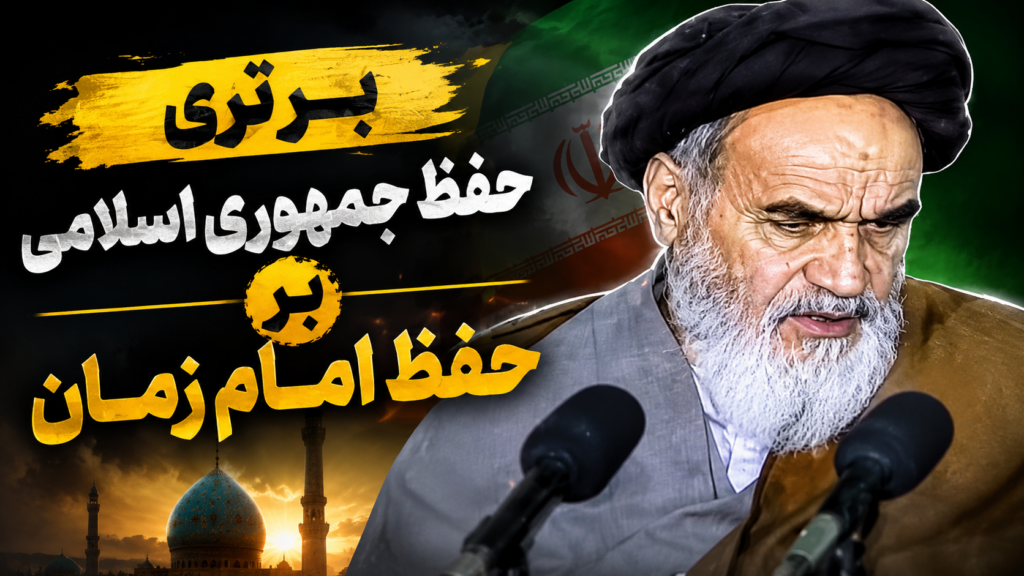
The basis that can be invoked here is the same principle of the more important and the important: the rule of ahamm wa muhimm. Preserving Islam has greater importance. Therefore, when there is a conflict between two duties, we set aside the important duty so that the more important duty can be fulfilled. Just as, by telling a lie, we may preserve the life of a human being because that life is of greater importance, the preservation of Islam is also treated as the more important duty. The argument, then, rests upon the principle of tazāhum and the priority of the more important over the important.
But where does this principle come from? It is a rational principle. The idea that the more important obligation must be given precedence is a judgment of reason. Duties are not all of one rank or on the same level. If we cannot fulfill multiple duties simultaneously, then naturally the duty with greater importance must be prioritized. This is something all rational people understand and act upon. And for a Muslim, of course, preserving the school of thought and preserving Islam is a weighty, fundamental, and important duty.
At first glance, this argument appears to have a justified foundation, and it seems fully understandable and acceptable to everyone. But one must pay attention to the fact that when the issue of tazāhum is raised in the sphere of religious or social affairs, diagnosis is not simple or easy. Yes, in the case where we tell one lie and thereby save the life of a human being, comparison, conclusion, and prioritization are not difficult. Reason easily permits it. But not all social matters are like this.
The consequences of an action must be weighed. When we want to permit a lie, we must ask: what consequences does it have? Sometimes the consequences of a single lie or deception become so weighty, and take on so many dimensions and layers, that it is no longer merely an important duty being set aside. Rather, the very thing being violated becomes itself the more important duty, and it prevents us from proceeding. On the other hand, when we say that lying is permissible for Islam, what exactly do we mean by Islam? Who represents Islam? What service can be rendered to Islam through lying? Can Islam truly be strengthened through lying, deceiving, breaking promises, or committing injustice? Does any real strengthening take place at all?
Who is supposed to determine that lying and deception will result in strengthening Islam? Who is the authority for making this determination? Do you hand this diagnosis over to individual people, so that each person, within the sphere of his own activities, may lie in order to serve Islam? Is that acceptable? Or do you give the authority of diagnosis to the government, such that if the government determines that lying and deception are in the interest of Islam, it may lie? Do you leave the hands of rulers open to deception and trickery so that the government may be strengthened under the title of strengthening Islam? Naturally, when such an issue is examined carefully, it may carry very heavy consequences.
For example, can those in authority present false statistics and fabricated reports to the people in order to show that religion is alive in society? Can they do this so that no one realizes that religious beliefs and religious practices have been damaged in society? Can they manipulate the figures related to corruption and moral decay in society in order to show that religion in our society remains strong? Because if we were to present the realities openly and transparently, religion in society might be harmed, religious people might be harmed, religious beliefs might be harmed, and religious government might be weakened.
Would you give such permission to rulers? If so, then a government that administers society on the basis of this premise and accepts this theory—how trustworthy can it remain? When officials come and present reports, if we have accepted that lying is permissible, then in effect we are destroying the credibility of the system, the officials of the system, and religious scholars. This itself is the greatest harm inflicted upon religion.
It is not important whether people discover the lie in every specific case or not. In many cases, the people may not have access to the real information, and they may not be able to know what the realities actually are. But in general, they will know that what is being presented to them, and what official media are saying, does not correspond to reality. Here, the greatest damage is inflicted upon the political system and upon the religion of the people, because they regard this system as a religious system, and they attribute the conduct of those in authority to the account of religion.
How, then, can we strengthen Islam through lying?
From another angle, if lying is accepted within a political system, even if we say that lower levels of government should not lie and that this matter should be entrusted only to the highest levels, so that they alone are permitted to lie to the people, what will happen? In that case, who will be answerable for wrongdoing? Who can be questioned: Why did you give a false report? Why did you provide false statistics? Why did you report that you had done something when you had not done it?
What exactly is to be investigated? Once this door is opened on the basis of the theory, then every person, in whatever position he occupies, up to the highest offices, will never be answerable before supervisory institutions. Even if it is discovered that this official lied, and even if it is proven that he lied, he is still not considered guilty. Why? Because you have accepted a theory according to which those in authority may lie for the sake of Islam or the Islamic system.
Who is then supposed to determine whether the case in which the lie was told was truly a legitimate case for lying or not? When the highest authority is, according to this theory, permitted to lie, then naturally no one can say to him: Why did you lie? There is no higher authority above him. You have entrusted the diagnosis to him personally. So how can he be questioned?
Even if all the documents are available to a supervisory institution showing that this person acted on the basis of lies and nothing more—entirely lies—still, these were lies that, according to his own diagnosis, he believed himself permitted to tell. He considered them to be in the interest of preservation, the preservation of Islam, and service to Islam. Even if all the evidence exists, he can still defend himself by saying: lying was necessary for preserving Islam, and I considered this to be an instance of preserving Islam. What can be done then?
Here we face a serious problem. The problem is this: when Hamid Algar came to Iran at the beginning of the victory of the Islamic Revolution and met and spoke with Imam Khomeini, the interview that was published—and is also found in Ṣaḥīfah-yi Imām—records Imam Khomeini saying that the leader who assumes guardianship, the ruler, if he says even one word of falsehood, or takes even one step contrary to justice, no longer possesses that guardianship.
This is very interesting: with the slightest deviation or error found in the Islamic ruler, he falls from guardianship. This is the statement Imam Khomeini made to Hamid Algar. In the realm of reality, this may be the case. But in the realm of proof, is there any way to establish that he lied and therefore fell from guardianship? The fact that he lied may be provable, but that he has fallen from guardianship cannot be proven. Why? Because he himself is the authority for determining permissible lying. When he says, “I lied because I considered it a permissible lie,” then no path remains.
It seems that this issue opens a path which, if opened, leaves us unable to accept its consequences. It produces very heavy repercussions. At this point, I recall the discussion that took place during the drafting of the Constitution in 1358. When the draft constitution stated that torture is absolutely prohibited, one of the jurists of the Assembly rose and said to Ayatullah Beheshti: “If the president and other officials are abducted, and we are forced to slap someone in order to save their lives, is this permissible or not?”
Apparently, the principle of tazāhum would say that preserving a human life takes precedence, and that slapping someone in order to save those individuals becomes permissible. But Shahid Beheshti did not accept this. His reasoning was that one must not compare a single slap with saving the life of a human being and then easily conclude that slapping is permissible because we are saving a person’s life.
Rather, he said, look at the fact that by doing this you are opening the path to slapping. Once this path is opened, and once torture becomes permissible even in a limited case, and once you place this permission in the hands of the government, the judiciary, and the security apparatus, then see what will happen after that. Look at all of these consequences together, and then compare them with the fact that a number of individuals may be exposed to danger. Beheshti said that even if those officials are in the hands of kidnappers and face danger, the system is healthier if it does not permit even one slap against anyone.
So the principle of ahamm wa muhimm is not being denied. The rule of the more important and the important has not been rejected. Rather, the crucial matter is diagnosing what is truly more important. What we may regard as small, because we see it within a limited scale, a personality like Beheshti sees on a larger scale and does not consider it secondary. Conversely, what we may see as more important, he may see as merely important.
In any case, this section, namely, the idea that we may lie for Islam, commit a wrongful act, or violate some human rights in order to serve Islam or the Islamic system, does not produce the result imagined, even though the general principle itself remains valid. Now let us set aside the issue of Islam and the preservation of Islam, and turn to the question of what importance the Islamic Republic itself possesses.
Here, I will read a statement from Imam Khomeini and then pause over it. In volume fifteen of Ṣaḥīfah-yi Imām, there is a section titled “The Importance of Preserving the Islamic Republic.” His discussion is more detailed, but this sentence appears there:
“Preserving the Islamic Republic is a divine duty for everyone, and it is among the most important duties God has placed upon us. This means that preserving the Islamic Republic is more important than preserving a single person, whoever that person may be, even if he is the Imam of the Age.”
Preserving the Islamic Republic is more important than preserving one individual, whoever that individual may be, even if he is the Imam of the Age. What is the basis for this? The principle is clear: when we compare a public matter with the matter of individuals, the public matter takes precedence over individuals and persons. This too follows from the principle of tazāhum, where the more important takes precedence over the important. A public matter, such as preserving the system, takes precedence over persons, whoever that person may be.
But here this rule is being applied to the Islamic Republic. Does the Islamic Republic truly possess such importance? On one side, the Islamic Republic is elevated higher and higher. On the other side, the person who is being sacrificed before it is also elevated to the highest degree—the highest personality in the order of creation, the Imam of the Age. This is the sentence of Imam Khomeini, and it is published officially in volume fifteen, page 365:
“Preserving the Islamic Republic is more important than preserving a single person, even if he is the Imam of the Age.”
This means we are considering the highest possible individual. Other individuals, then, either do not have such importance or do not possess importance to this degree. What is the issue here? How did he make this statement?
There are a few points I want to mention here so that the limits of this statement become somewhat clear. The point that must be considered is that Imam Khomeini saw the Islamic Republic, at the time it was established, around forty-five years ago, as inseparable from the fate of Islam. He did not imagine the Islamic Republic as something separate from Islam. The Islamic Republic was, in his view, the symbol of Islam in the world, the standard-bearer of Islam in the world. If the Islamic Republic fell, Islam had fallen.
So when he said that preserving the Islamic Republic is among the most important duties, what he meant in reality was that preserving Islam is above all other duties. He referred the matter back to that principle. In other words, he placed the Islamic Republic under Islam and then said: because Islam is an extremely important obligation and responsibility, preserving the Islamic Republic also becomes important.
This is not merely my interpretation. Look at his own words. In the same volume fifteen, page 385, where he raises the issue of the Imam of the Age and says that preserving the Islamic Republic is more important than preserving one individual, even if he is the Imam of the Age, he himself gives the reason. He says that the Imam of the Age himself would sacrifice himself for Islam.
Therefore, for him, the Islamic Republic means the embodiment of Islam. To be sacrificed for the Islamic Republic means to be sacrificed for Islam. He then says that the Imam too is devoted to Islam. He continues: all the prophets, from the beginning of the world until now, came and struggled for the word of truth and for the religion of God, and they sacrificed themselves. They bore all sacrifices and hardships for the preservation of Islam. Islam is a divine trust.
Notice the necessary connection and association he believed in at that time and under those conditions: if the Islamic Republic is harmed, Islam is harmed. And because preserving Islam has extraordinary importance, preserving the Islamic Republic also has extraordinary importance. Since all the divine authorities saw themselves as devoted to the true religion, and since it is assumed that the Islamic Republic is the symbol of that religion, the standard-bearer of that religion, and the embodiment of that school in this age, it therefore possesses importance.
You may dispute this application, whether regarding yesterday or today, whether in his era or in the present era. You may say that this is not the case and that such a necessary connection does not exist. Very well. But the statement itself is completely based on the premise that what has priority is Islam. Since Islam has priority, sacrifice for it is justified. There is no dispute about that.
In other places as well, the same reasoning exists, and through that reasoning the issue becomes clear. In volume nineteen, page 348, he says:
“Preserving the Islamic Republic is an individual obligation. It is the most important of matters and the most important of worldly obligations.” That is, it is more important than all obligations. It is more important than prayer.
Pay careful attention: preserving the Islamic Republic becomes more important than prayer. But what is the reason? When a jurist gives a juristic opinion, his words must be reasoned and must have a basis. What is the basis here?
He says preserving the Islamic Republic is more important than prayer because this is the preservation of Islam, while prayer is a branch of Islam. In other words, he treats the Islamic Republic as the very embodiment of Islam. Then he says prayer is from the branches, while preserving Islam belongs to the foundations and principles. Preserving the true religion is a duty upon everyone and stands at the head of obligations. Even a Muslim in Africa is obligated to preserve the Islamic Republic, because it is the preservation of religion.
In Imam Khomeini’s understanding at that time, the preservation of Islam was tied to the preservation of the Islamic Republic. That was his understanding. It was not that he regarded the preservation of the Islamic Republic as intrinsically valuable in itself. No. Whatever is valuable accidentally returns to what is valuable essentially. What mattered to him, and what had a reason behind it, was preserving the school of Islam. That is what has primary importance. But in those circumstances, there was an Islamic system, and that system was the symbol of that school. This was his argument.
He never treated the preservation of the Islamic Republic as having essential value in itself. Preserving the Islamic Republic is not like preserving justice, which has intrinsic value. It is not like preserving truth, which has intrinsic value. It is not like preserving Islam, which has intrinsic value. Its value is accidental.
What does accidental value mean? It means that if this system truly manifests the very reality of religion and shows the truth of Islam, then yes, preserving it is important. But if it does not manifest the reality of Islam, if this mirror does not show Islam, then what value does it have? The image it shows has value because it shows Islam, and only to the extent that it shows Islam. It is therefore restricted and conditional. It is not absolute.
The value possessed by realities such as the original school of Islam, justice, and the mission of the prophets is fixed, permanent, and enduring. But the value of a political system is not permanent. After the Prophet, look at the fluctuations that occurred in the caliphate. Can you apply one single ruling to a political system in all cases? All of them operated in the name of Islamic government, and all of them claimed to be the caliphate of the Prophet. But there were fluctuations, and the ruling was not one and the same. In different circumstances, the ruling changes.
The Islamic Republic is the same. Where Islam is present, it has value. Where Islam is absent, it has no value. Where truth is present, it has value. Where truth is absent, it has no value. Where justice is present, it has value. Where injustice is present, it has no value.
Imam Khomeini’s argument is this: he returns that which has accidental value to that which has essential value. It would be a mistake for us to treat what has accidental value as though it has essential value. If we say that Islam has value, truth has value, justice has value, and then alongside these there is another independent value called the Islamic Republic, that is incorrect. The Islamic Republic does not have value alongside those realities, nor does it possess independent originality. It has value only to the extent that it accompanies them, manifests them, and brings them into reality.
Therefore, the point I want to draw attention to is this: when he says the Islamic Republic is important, even supremely important, which Islamic Republic does he mean? A nominal Islamic Republic or a real Islamic Republic? Which one has value?
If you have placed it beneath Islam, then it means the Islamic Republic that manifests the truth of Islam. But a mere form? The Umayyad caliphate too, from the perspective of form, was Islamic. The Abbasid order too had an Islamic form and appearance. No, that cannot be the point.
This sentence appears in Imam Khomeini’s will, and it is appropriate on the anniversary of his passing to read it. In the second section of the will, he says:
“Islam and Islamic government are divine phenomena.” Then he reaches this point: “What is at issue in this Islamic government is Islam and the laws of Islam, and it is upon the nation, from this very beginning in Iran, to strive for the realization of its content in all its dimensions and for its preservation and protection, for the preservation of Islam stands at the head of obligations.”
Pay attention. The major premise, the foundational rule, is the preservation of Islam. Second, what is meant by preserving Islam is preserving the content that exists. Third, in the Islamic Republic, when that content is realized, then it has value: “the realization of its content in all its dimensions, and its preservation and protection.” The outward form and appearance do not have independent subjectivity.
Those who treat the shape and form of the system as possessing sanctity are mistaken. They then apply all of Imam Khomeini’s statements regarding the importance of preserving the system to the preservation of this form. But Imam Khomeini himself explained the matter. Again, in volume eight of Ṣaḥīfah, he says:
“I fear that factors may arise that cause you to be defeated, and that the defeat will come from yourselves, not from the enemy; that we may do things that are not in accordance with the content of the Islamic Republic.”
The discussion is about content. That defeat is not the defeat of a Muslim before an unbeliever. It is not the defeat of Sayyid al-Shuhada before Yazid. It is the defeat of Islam. The discussion is about content. Imam Khomeini’s understanding, of course, was that in the early years there were problems, but that the system was moving closer to that content and striving to reach it. But do these statements mean that Imam Khomeini guaranteed that this content would certainly be realized and secured in the coming decades? No.
The discussion is not about the government being free of all defects. Even in the government of Amir al-Mu’minin, it is possible for a corrupt governor somewhere to create corruption. The question is not whether the government is infallible. Rather, the question concerns the overall direction: where is society moving? What is the degree of justice being implemented in society, according to its proper indicators? That is what matters.
What mattered to Imam Khomeini was content, not shape and not form. He insisted on this point: when he says preserving the Islamic Republic is important or supremely important, he is speaking under specific conditions. That is, this is an external proposition, not a real universal proposition. He says in volume nineteen of Ṣaḥīfah:
“The issue of preserving the Islamic Republic – pay attention, preserving the Islamic Republic – in this age, and with the situation that is being seen in the world, and with the targeting that exists from the left and the right, from near and far, against this noble newborn, is among the most important rational and religious obligations.”
This must not be ignored. We must not attribute to him, without those conditions, the view that preserving the system is always among the most important obligations. He is speaking in those conditions, in that moment, in that age, with the situation being observed in the world, with left and right aligned against us. In that context, it is obligatory.
Again, in the same volume nineteen, he says:
“Now, the Islamic Republic means Islam. Now, it is a great trust that must be protected.” The qualifications must be seen. The reasons must be seen.
Yes, one does not expect those who sometimes comment in media spaces to observe such precision. They take a sentence whose beginning and end have been cut off, isolate it, and make it the basis of their judgments. But those who are careful and precise should not be influenced by this. The sources exist. The arguments exist. The evidence exists.
We should neither regard anyone as infallible and imagine that no error can occur, nor should we approach our great figures with stubbornness and set out merely to find faults. We should look with realism and truth-seeking. We should examine what the arguments are. Once the argument is clear, once the logic is clear, once we have studied the evidence, then we can sit and express an opinion and determine whether the claim is acceptable or not.
Of course, this discussion requires more time and a more comprehensive and complete examination. Our time has come to an end.
I thank all of you dear companions for joining. May God join the soul of this great man with His awliyā’, and may He grant us success in taking firm steps upon the path of that which brings His pleasure.
Peace be upon you, and the mercy of Allah and His blessings.