
By Ali-Ashraf Fathi1
On the occasion of the seventh day following the passing of Grand Ayatullah Shubayri Zanjani
Writing down and preserving the inspiring details of the lives of religious scholars and figures is a tradition that goes back centuries before Islam. Christian hagiography placed particular emphasis on recording the lives of Christian clergy, seeking to extend to them some of the sanctity and purity associated specifically with Jesus Christ. This style of historical and biographical writing also spread among Muslims, and stories of supernatural and extraordinary events in the lives of major religious figures and clerics became popular among Muslim authors as well. Even today, many books are written about the “karamat,” or extraordinary and supernatural acts and qualities, attributed to contemporary religious scholars and clergy, and such books continue to receive a positive reception. Even concerning the most politically involved contemporary cleric and jurist, the founder of the Islamic Republic, a book entitled Karamat-e Imam Khomeini (The Miracles of Imam Khomeini) was published in 1999 and was warmly received by some of his admirers.
I believe that our esteemed teacher, the late Grand Ayatullah Shubayri Zanjani, despite being extremely reluctant to become involved in political affairs and not considering himself an expert in that field, and therefore being someone about whom such stories could easily have been circulated, lived and conducted himself in such a way that his admirers came to know him for his scholarship and his concern for people. No supernatural visions or miraculous acts were attributed to him.
Several characteristics contributed to the formation of this kind of personality:
1️⃣ First, he was extremely accessible and easy to approach. The most ordinary members of society could speak with him every day and ask him questions. With generosity, kindness, patience, and courtesy, he would answer the questions of various people along his walking route to the shrine of Lady Fatima al-Ma’suma (s) and to his office. He continued this practice until only a few years ago, when, at around ninety years of age, walking became difficult for him and he began travelling to the shrine and his office by car.
2️⃣ Second, he strongly avoided promoting his own image. He had learned from his father, the late Grand Ayatullah Sayyid Ahmad Zanjani, not to take even a single step toward exaggerating his own importance or that of others, nor to cultivate a circle of devoted followers in a way that would compromise or restrict his spirit of independence.
The construction of a saintly image requires exaggerated and flattering promotion, and Aqa Shubayri had a profound dislike of exaggeration and flattery. This too made him a grounded religious scholar. He did not view religion and spirituality as a ladder for his own advancement or that of others.
When it came to stories of mystical visions or encounters with Imam al-Mahdi concerning various people, he was extremely cautious and often questioned such accounts with skepticism. He would say that serving religion does not require us to tell stories about mystical visions, encounters, or summoning jinn and spirits, whether concerning ourselves or others. It is enough to make a serious effort to present religion in a scholarly manner and to serve the believers.
3️⃣ The third important characteristic was that despite his extraordinary scholarly and social position, he had not the slightest fear of saying the words, “I don’t know.” If he did not know something, he would simply say that he did not know.
This too gave him a grounded and approachable character. It helped him remain eager to hear new ideas even as he approached one hundred years of age, including learning from young people.
During a meeting with a former president, when the president asked him to offer solutions to economic problems, he responded that he had no expertise in that area and that solutions should be sought from specialists.
4️⃣ The fourth characteristic, which helped strengthen his connection with contemporary society and deepen his understanding of people’s actual circumstances, was his interest in asking different people about the state of society.
At gatherings and meetings, he would ask people from different generations and various social backgrounds about the condition of society. He tried not to allow himself to become trapped in an information vacuum.
This characteristic also helped strengthen his connection with contemporary people and their actual circumstances, preventing him from becoming trapped in illusions and fantasies.
5️⃣ Fifth, his extensive historical reading had given him a realistic perspective and kept him away from two major dangers: excess and haste.
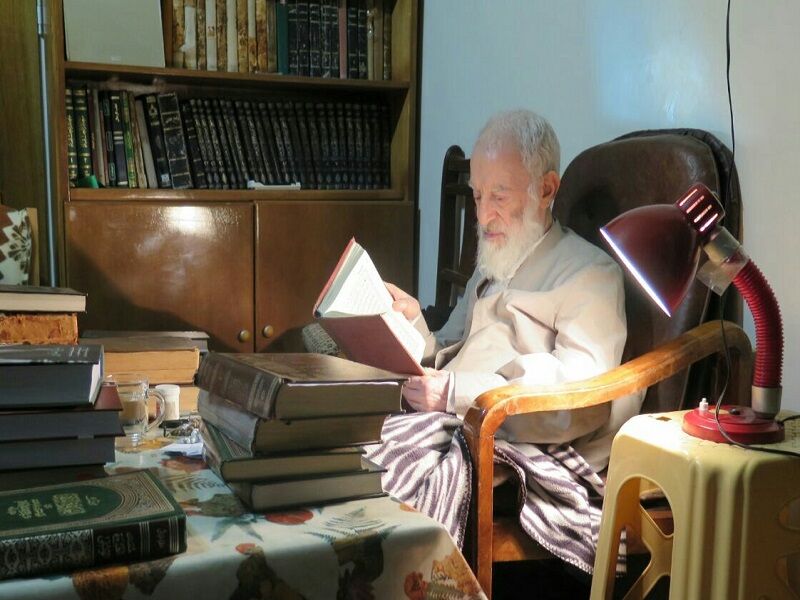
He would often remain occupied until late at night reading old and new books and articles. His surroundings were always filled with books that publishers and authors had given him, allowing him to remain familiar with the latest works.
Footnotes
- 🌐 This same article was also published by IRNA