
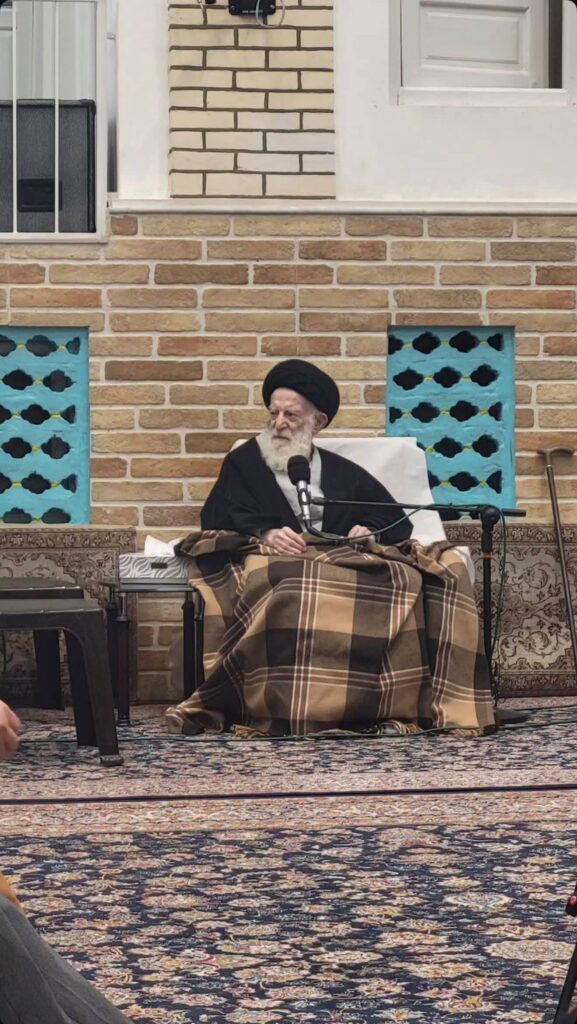
After translating and publishing the memories of the student of Ayatullah Sayyid Shubayri Zanjani regarding the daily gatherings that would be held in his office, and the features of these gatherings, I wanted to share some of my own memories and experiences from them as well.
I started attending his gatherings sometime in 2013; my colleague, Sayyid Hadi Rizvi, introduced me to him. In those days, we were heavily interested in Ilm al-Rijal and Hadith, and he informed me that this scholar was one of the top scholars in the field.
When I learned he was a top-tier marja’, it was an eye-opening experience for me, because I realized how unaware we were in the West of our scholars, besides two or three maraji’.
Tim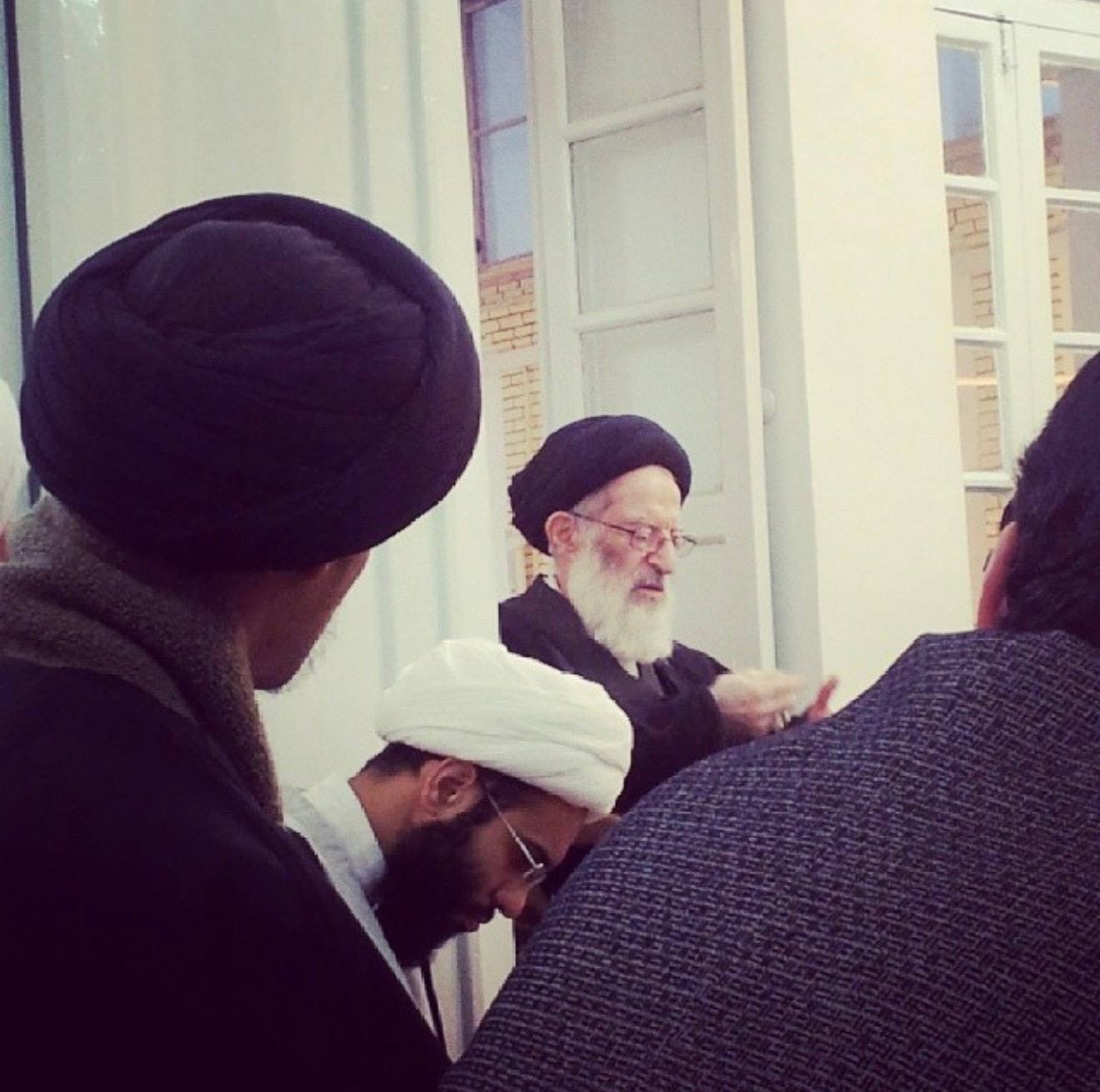 eline of My Attendance
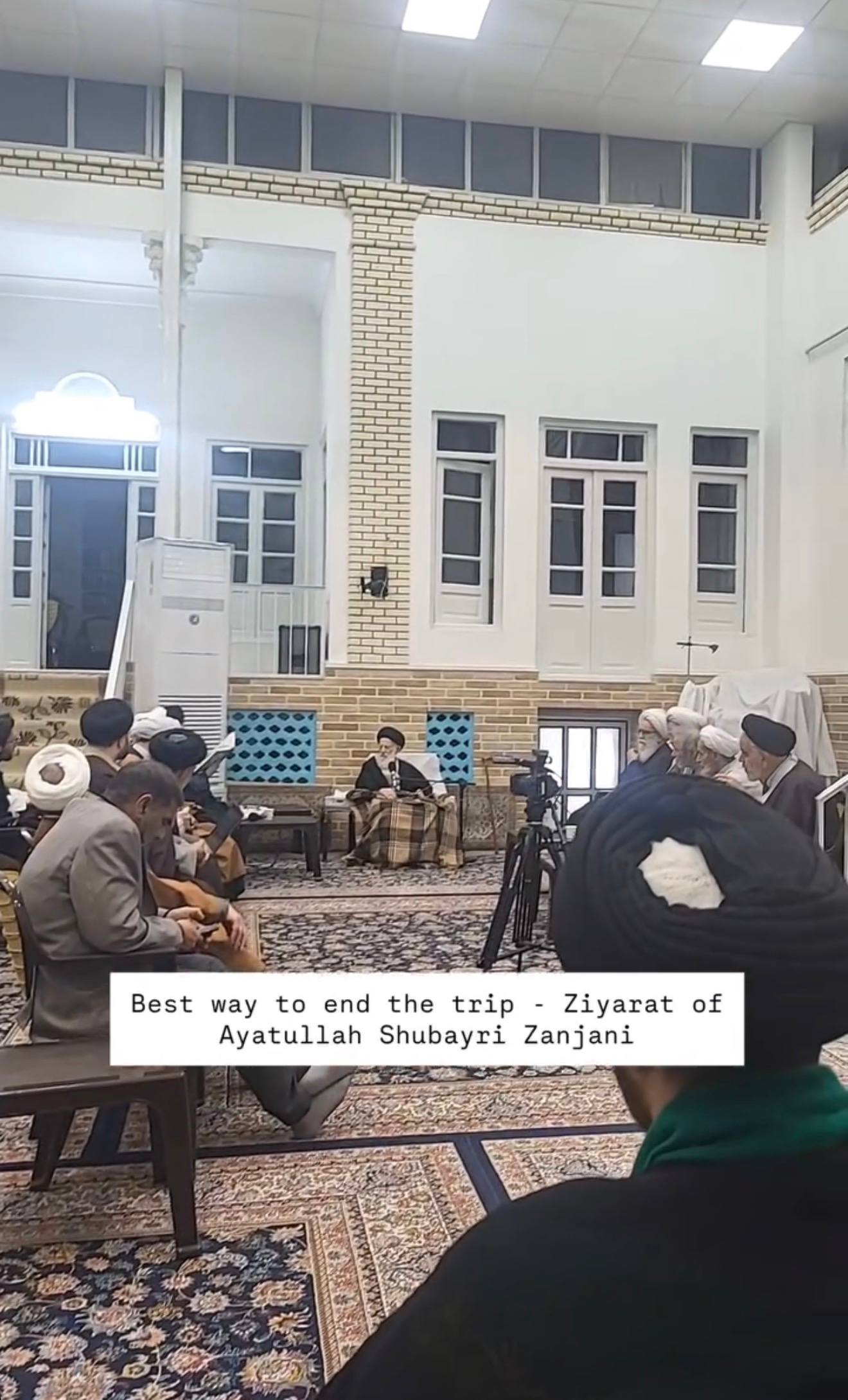
I attended occasionally from around 2013 until 2019, after which the sessions were paused during the early months of Covid. I visited few more times just before the summer of 2021, still during Covid, when the sessions had restarted but at a reduced frequency, and attendees were requested to wear masks; Sayyid Shubayri wore one as well and it was very difficult to understand him despite a mic. The last time I attended was in December 2025, during my visit to Iran — though he did not speak much on that occasion, and it was mostly his son who spoke. I wrote about that visit on my Telegram channel: https://t.me/IqraOnline/1180
The Nature of the Gatherings
The majority of the discussions in these gatherings were related to very particular and technical matters of Usul, Fiqh, and Rijal, as well as stories of scholars. Often, other senior scholars or people of high standing would attend, and the discussions would end up revolving around their field of work or interests.
Humility and Accessibility
One of the things that surprised me most about these gatherings was how openly a grand marja’ sat among the people, engaging in conversation. As a young and new seminary student, it truly felt like I was witnessing a real-life example of what I would read in the narrations from Imam al-Baqir (a) and al-Sadiq (a), where they would spend time with their companions and engage in conversations and these companions would accompany the Imams in different contexts of their lives. From what I observed during my time in Qom, most maraji’ — save for a handful — did not hold such gatherings; it was typically lower-tiered mujtahidin, or other researchers and teachers, who held them so frequently. But for a marja’ at the level of Sayyid Shubayri — considered by some to be the most learned of our time — this was truly unheard of.
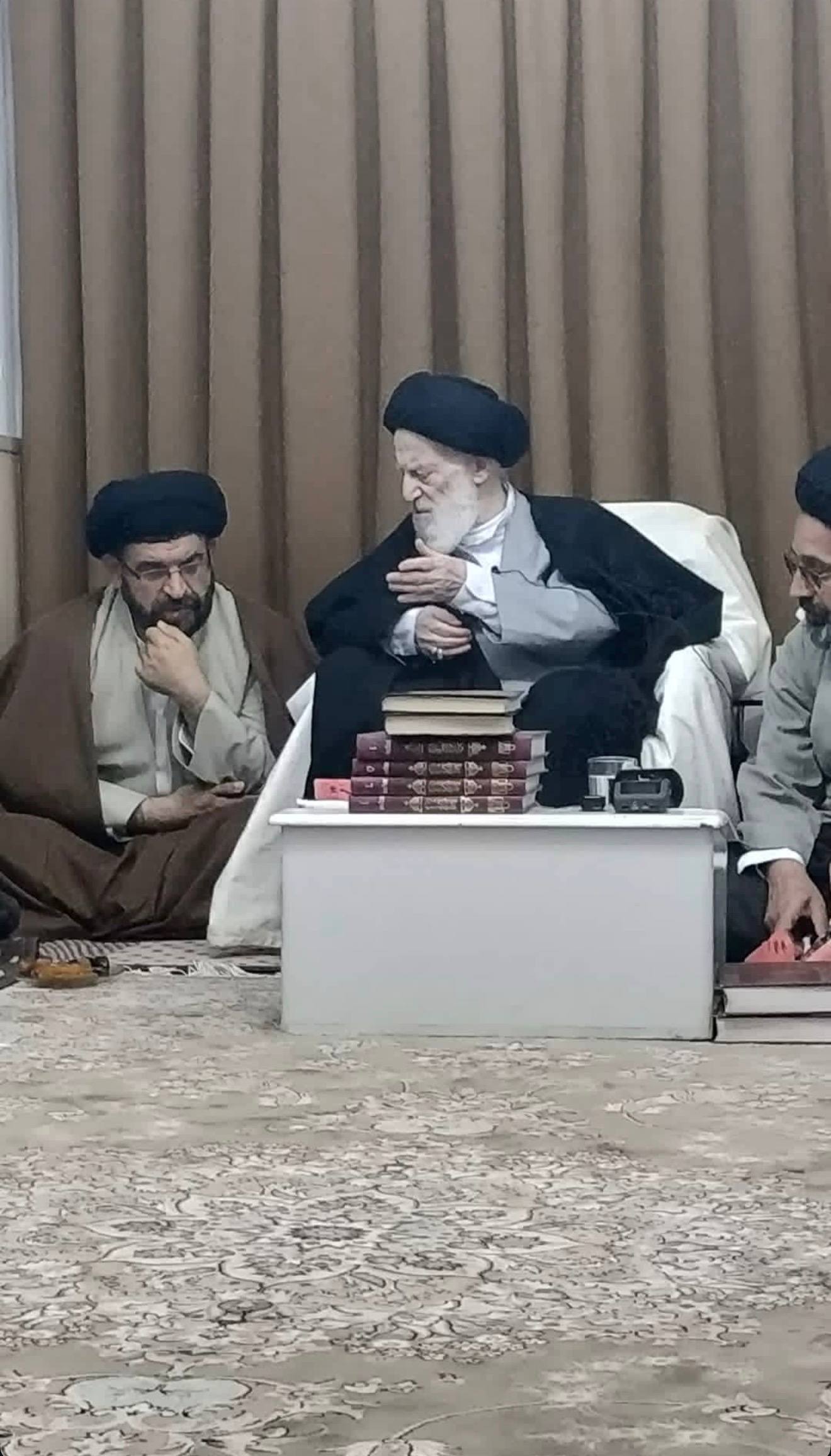 The first two or three times I attended, I was struck by the conduct of Sayyid Shubayri. There was no protocol required to attend his gatherings; anyone could walk in, regardless of what segment of society they came from. In those days, we would walk in wearing Western-style clothing — pants, shirts, even hoodies at times — with our bags slung over our shoulders, and he wouldn’t bat an eye. He would look at you as he would walk in and say Salam to everyone possible.
There was one elderly man who would come often, dressed in a suit and trousers, riding his bike, and sit right behind the Sayyid on the windowsill — yet he would quote passages from al-Kifayah and al-Rasa’il verbatim, engaging with the Sayyid directly. You can see him in some of the photos of these gatherings.
His conduct, demeanour, and way of speaking with students and attendees showed absolutely no sign of arrogance. Even when engaging with attendees over disputed matters, he would often phrase his comments as inquiries rather than blunt statements of fact.
During some of the Ramadan nights, when many students would be away for tabligh, there would be no more than three or four people at the gathering. One night when I was there, there were only four of us. I honestly thought the Sayyid would just cancel the gathering, assuming it wouldn’t be worth his time — but he came and sat through the entire session, just as he would any other evening.
Ethical Conduct and Character
One time during a heated intellectual discussion, some people from the office came in with a young man, and the office personnel began whispering something in the ear of Sayyid Zanjani, while the rest of the participants continued their discussion. I had no idea what was going on, or why there was a young man here in a suit, along with other members of his family. To my surprise, Sayyid Zanjani was handed some papers and began reciting the Nikah for the bride and groom. As soon as the Nikah was recited, everyone returned to the discussion, and the groom and his family walked out. It was the most nonchalant Nikah ceremony I have ever seen — and at the same time, they didn’t let it disrupt their intellectual discourse either! Such a simple, straightforward matter, yet we complicate it so much in our communities!
One of these sparsely attended evenings, a student entered the gathering and began complaining to the Sayyid about the poor hijab of women in the city — saying that just before entering, he had seen a woman outside the office and had performed Nahi ‘an al-Munkar by telling her to fix her hijab, and that she had cursed him and the scholars in response. When the Sayyid heard this, he was visibly upset and told the student that he had no right to call the woman out, since Nahi ‘an al-Munkar has conditions, and he had no way of knowing whether his words would have any effect on her at all.
One time we witnessed a dispute over a topic in the gathering, and everyone was arguing over it. Voices were raised, and the discussion grew very intense. At one point, a young student was making a point that Sayyid Shubayri believed was completely wrong and out of place, but he didn’t have it in him to tell the student so directly, in case he might feel belittled and his confidence shattered. However, you could tell Sayyid Shubayri had grown tired of the young student’s reasoning, so he looked at some of his senior students, expecting them to point out the student’s flaws and steer him away from pursuing this line of thinking. This was another example of his great manners and conduct.
Intellectual Honesty
One time we witnessed a discussion on a matter of Hajj. The Sayyid was considered by many to be the most learned jurist on the chapter of Hajj. As the discussion unfolded, he gave his opinion, and one of the younger students pulled out a reference from the Sayyid’s own work showing that he had taught something different in his classes years earlier. The Sayyid paused and said, “I don’t know how I arrived at that response; I will have to go think about it.” That admission of uncertainty — rather than telling the student he had misunderstood, or that the transcribers of the book must have erred — truly left me in awe.
Scholarly Rigour and Legacy
Almost every major mubahatha I had on fiqh, one of the core texts or transcripts we would use was of Sayyid Shubayri Zanjani. You would benefit immensely from his precision in Usul, Fiqh, and Rijali discussions. Kitab al-Sawm, Kitab al-Nikah, Kitab al-I’tikaf, and his discussions on the Hujjiyah of Khabar al-Wahid, among others, were all invaluable.
Fiqh and Rulings
One time I recall a group of scholars from a scientific institute coming to the Sayyid with research on DNA testing and whether it could verify Sayyid lineage. He said it depends on what the scientific community concludes about such tests, but added that he had never seen a shajarah (genealogical record) that was 100% authentic, and that there are discrepancies in almost every one. In his view, the best proof was simply shuhrah — the popular recognition of a group of people as Sayyids.
In one of the gatherings, he expressed his opinion on reciting Surah al-Qadr in Salat. He said he avoids reading it in congregational prayers because he is unsure about the nature of the waqf in the final verse (kulli amrin salam).
He held a unique ruling on the third testimony in the Adhan and Iqamah: his fatwa is that it cannot be recited in a way that would lead a listener to assume it is a juz’ (part) of the Adhan or Iqamah. There were many remarks that he would either not recite the third testimony in the Iqamah, or that he would say it in such a distinct way that his mic would be turned off for it — you would only hear his mic come on when he said “Hayya ‘ala al-Salah.” A few times I tried to pray as close as possible behind him in the shrine to hear his Iqamah myself, and indeed, on both occasions, I did not hear him recite the third testimony in its complete form as it is popularly recited today.
In one gathering, a discussion arose on whether one needs to be in a state of wudhu to touch the pronouns used to refer to the name of Allah. He argued that wudhu is required to touch those pronouns as well — though, if I recall correctly, this may have been given as a precautionary ruling (ihtiyat).
Sayyid Zanjani would often speak out against the expansion of religious rituals, especially those based on entirely baseless sources. One opinion he expressed in one of his classes concerned the fabricated dates surrounding the birth and death of Lady Fatima Ma’suma. He not only called out these dates as fabrications, but also stated that truth in our society should not be sacrificed for some false sense of expediency. I wrote about it on the Telegram Channel for IqraOnline in 2017: https://t.me/IqraOnline/150
Devotion and Personal Practice
In one of his gatherings, he spoke about the ta’qibat he often recites after Salat, which is also recorded in the book Jurayee Az Darya. I translated this specific ta’qibat on IqraOnline: https://iqraonline.net/supererogatory-acts-performed-by-ayatullah-zanjani/
Whenever I had the opportunity to follow him from his office to the Haram of Lady Ma’suma, where he would lead Maghrib Salat, I would try to do so — simply for the sake of being in his presence for as long as possible.
Community and Gatherings
I would try to bring many guests who were in town for Ziyarah to his gatherings, and would insist that they attend even if they did not know Farsi. This was so that these visitors and guests, whether family or friends, would have the opportunity to see a living marja’ and witness his conduct up close.
From time to time, you would also be introduced to many people at these gatherings, and you would find your network of students and scholars expanding. For example, it was in these gatherings that I learned about the gatherings of Ayatullah Sayyid Madadi, which took place on Wednesday evenings at his home.
As the Sayyid aged, he would speak less in these gatherings, and his son, Sayyid Muhammad Jawad, would attend more regularly and facilitate most of the discussions.
A Lesson on Avoiding Extremes
 Unfortunately, despite his seniority in knowledge, his ethical conduct, and his wisdom — and despite his close relationship with Sayyid Khamenei, who respected him greatly and believed that the Hawzah was in good hands with Sayyid Shubayri’s presence — some extremists still had the audacity to portray him as someone students should not get too close to, claiming he might make them apolitical or indifferent. Their opinions only made me more cautious of going to extremes on any matter, because here I was, witnessing how taking extreme positions can lead one to discredit and dismiss one of the most pious and knowledgeable people of our time.
A Personal Note
Although I received my amamah from our teacher, Ustad Rafipour, my initial intention was to receive it from Sayyid Shubayri. However, due to Covid, his office was not active, and all such ceremonies and events were suspended.
His Father’s Legacy
One of the pictures in the office where these gatherings took place was of Sayyid Ahmad Zanjani — the father of Sayyid Shubayri — and Imam Khomeini. It was clear that Sayyid Shubayri held great fondness for his father’s scholarship, as well as for the relationship his father had with Imam Khomeini. He would often mention his father and cite him, especially from his father’s unpublished papers, to which only Sayyid Shubayri had access. One of the books I heard him cite was called Jungle-e Mawla, a travelogue of Sayyid Ahmad’s journey from Zanjan to Qom, and another was Al-Kalam Yajurru al-Kalam — this second book is now published, and I have a copy of it.