
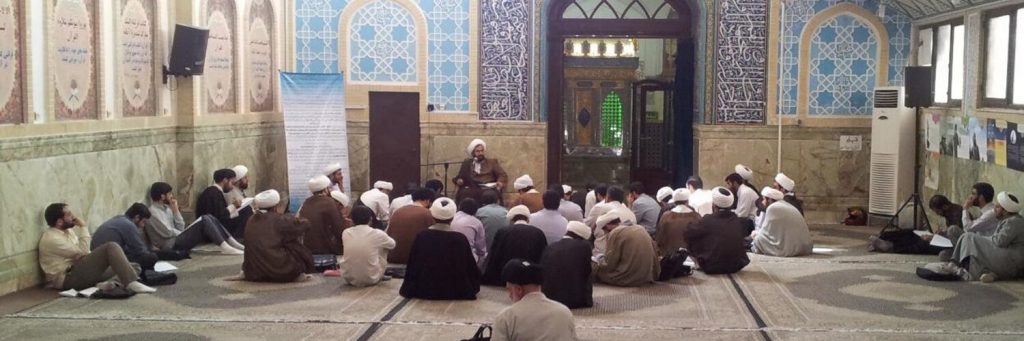
Jurisprudence (al-Fiqh)
As mentioned in the previous part, Uṣūl al-Fiqh and Fiqh are the bread and butter of the seminary. If Uṣūl al-Fiqh is the study of the tools and principles of deduction, Fiqh is where those tools are actually put to work. It is therefore important to begin by clarifying what Fiqh is, and just as importantly, what it is not.
In common usage, many people use the word fiqh to refer to the practical laws of Islam: how to pray, what breaks the fast, how khums is calculated. Strictly speaking, these are the aḥkām (sing. ḥukm), the rulings themselves. The aḥkām are the end product: rulings that have already been derived and are presented to the believer, usually without their proofs, in a practical treatise (risālah ‘amalīyyah) such as Tawḍīḥ al-Masā’il or Minhāj al-Ṣāliḥīn. A believer who follows a jurist (taqlīd) acts upon these rulings without needing to know how they were reached.
Fiqh, in its technical sense, is something else. The classical definition given by the jurists is al-‘ilm bi al-aḥkām al-shar‘īyyah al-far‘īyyah ‘an adillatihā al-tafṣīlīyyah: knowledge of the subsidiary legal rulings derived from their detailed proofs. The emphasis is on the phrase ‘an adillatihā (from their proofs). Fiqh is not the memorization of rulings; it is the technical, deductive process through which a ruling is derived (istinbāṭ), justified and defended. A person who knows a thousand rulings but cannot explain how any of them were reached has knowledge of aḥkām, not Fiqh.
It is worth noting that the word fiqh in the Qur’an and the narrations carries a broader meaning. The verse of nafr (9:122) speaks of a group who go forth li-yatafaqqahū fī al-dīn, to gain a deep understanding of the religion, which includes belief and ethics as well as law. Over time, the word came to be restricted to the legal sciences, and this is the sense in which it is used in the seminary.
In practical terms, Fiqh is essentially the application of Uṣūl al-Fiqh onto the sources of law. For the Shī‘ī jurists, these sources are generally four: the Qur’an (al-Kitāb), the Sunnah (in practice, the ḥadīth corpus), consensus (ijmā‘) and reason (‘aql). The jurist approaches a question, gathers the relevant verses and narrations, assesses the narrations through Rijāl and ḥadīth criticism, interprets them using the linguistic principles of Uṣūl, resolves contradictions between them, and where no proof is found, falls back on the practical principles (al-uṣūl al-‘amalīyyah). Every one of these steps is an Uṣūlī step. This is why it is said that Uṣūl without Fiqh is a tool without a use, and Fiqh without Uṣūl is a building without foundations.
Take a simple example of how an Uṣūlī distinction changes a Fiqhī outcome. Uṣūl discusses the difference between a general term that is majmū‘ī (collective) and one that is istighrāqī (distributive). In a collective general term, the ruling attaches to all the individuals taken together as one unit. For example, if it were said that eating honey together with pickles is forbidden, the prohibition attaches to the combination; eating either one alone is permissible. In a distributive general term, the ruling attaches to every single individual independently. When it is said akrim jamī‘ al-‘ulamā’ fī baladik (honor all the scholars in your city), each scholar is a separate object of the command: honoring nine out of ten is nine acts of obedience and one act of disobedience, not a total failure to comply. Whether a given text is read one way or the other is decided in Uṣūl, but its consequences only appear in Fiqh.
Traditionally, the jurists have divided Fiqh into four broad sections, a division made famous by Muḥaqqiq al-Ḥillī in Sharā’i‘ al-Islām: acts of worship (‘ibādāt), contracts (‘uqūd), unilateral acts (īqā‘āt, such as divorce) and general rulings (aḥkām, such as inheritance, judiciary and penal law). More broadly, students will often hear of a twofold division between ‘ibādāt and mu‘āmalāt (transactions). Alongside these, there is a body of general legal maxims that run across many chapters of Fiqh, known as al-qawā‘id al-fiqhīyyah, such as lā ḍarar, the principle of al-yad (possession), or qā‘idat al-farāgh wa al-tajāwuz. These maxims sit somewhere between Uṣūl and Fiqh, and are studied in their own works.
Main Works in this Science
The literature of Shī‘ī Fiqh is vast, spanning over a thousand years and thousands of volumes. A student cannot read all of it, nor should they try. However, they should know the landmark works, why they matter, and what shift each one represents. Many of the debates students encounter in baḥth al-khārij only make sense when one knows which jurist introduced a particular approach and who reacted against it. What follows is a brief map of these works, arranged roughly by period. All death dates are in hijrī years.
The Early Jurists: Text-Based Fiqh
The earliest Shī‘ī legal works after the minor occultation are, for the most part, close to the narrations themselves. The clearest example is al-Shaykh al-Ṣadūq (d. 381), whose al-Muqni‘ and al-Hidāyah present rulings largely in the very wording of the ḥadīths, with minimal reasoning and almost no extrapolation to new cases. This style is sometimes called al-fiqh al-manṣūṣ (text-bound Fiqh). His father, ‘Alī b. Bābawayh (d. 329), wrote a treatise in the same manner, and al-Ṣadūq’s own Man Lā Yaḥḍurhu al-Faqīh is in many ways a legal work as much as a ḥadīth collection, since he states in its introduction that he only includes what he gives fatwā by.
Alongside this current, two early jurists known together as al-Qadīmayn (the two ancients) represent a more reason-based approach: Ibn Abī ‘Aqīl al-‘Umānī and Ibn al-Junayd al-Iskāfī (d. 381). Their works are lost, but their opinions survive through quotations in later works, especially those of ‘Allāmah al-Ḥillī. Ibn al-Junayd in particular was criticized by his contemporaries for appearing to rely on qiyās (analogy).
Students should be familiar with these early approaches, not because they will study these books as textbooks, but because later jurists, most notably Ayatullah Burūjirdī, argued that the fatwās of the early jurists often reflect the content of narrations and transmitted practice that did not reach us in any other way. Knowing how al-Ṣadūq reasoned, or did not reason, is therefore part of knowing the history of a ruling.
The Systematizers: al-Mufīd, al-Murtaḍā and al-Ṭūsī
The Baghdad school of the 4th and 5th centuries is where Shī‘ī Fiqh became a systematic, deductive discipline. Al-Shaykh al-Mufīd (d. 413) wrote al-Muqni‘ah, a concise but comprehensive legal work, as well as al-Tadhkirah bi Uṣūl al-Fiqh, the earliest extant Shī‘ī treatise on legal theory. His student al-Sharīf al-Murtaḍā (d. 436) wrote al-Intiṣār, devoted to the rulings in which the Imāmīyyah were said to be unique, and al-Nāṣirīyyāt. Al-Murtaḍā famously rejected the probative value of solitary narrations, and as a result his Fiqh leans heavily on consensus and on proofs that, in his view, yield certainty.
The central figure of this period, and arguably of the entire tradition, is al-Shaykh al-Ṭūsī (d. 460). Every student should develop a real familiarity with his legal corpus, because in many ways Shī‘ī Fiqh as we know it is built on the frame he set. His key works are:
-
al-Nihāyah fī Mujarrad al-Fiqh wa al-Fatāwā: written largely in the text-bound style of earlier works, presenting rulings close to the wording of the narrations.
-
al-Mabsūṭ fī Fiqh al-Imāmīyyah: in its introduction, al-Ṭūsī mentions that their opponents belittled Imāmī Fiqh for having few derived branches (furū‘). Al-Mabsūṭ was his response: a work of extensive extrapolation (tafrī‘) to cases not explicitly mentioned in the narrations.
-
al-Khilāf: a comparative work that sets out Imāmī positions against those of the Sunnī schools, issue by issue.
-
Tahdhīb al-Aḥkām and al-Istibṣār: two of the Four Books, but also legal works in their own right. The Tahdhīb is structured as a commentary on al-Mufīd’s al-Muqni‘ah, and the Istibṣār is devoted to reconciling apparently contradictory narrations.
Combined with his defence of solitary narrations in al-‘Uddah, al-Ṭūsī’s work gave the Shī‘ah a complete legal system: a theory of evidence, a corpus of narrations, and a method of extending them to new cases. His authority was so great that for roughly a century after him, later jurists largely repeated his views. This period is often referred to as the era of the muqallidah (imitators).
Ibn Idrīs and the School of Ḥillah
That period of imitation was broken by Ibn Idrīs al-Ḥillī (d. 598) in his al-Sarā’ir al-Ḥāwī li Taḥrīr al-Fatāwī. Ibn Idrīs openly criticized al-Ṭūsī, and following al-Murtaḍā, rejected the use of solitary narrations. Whether or not one agrees with his conclusions, al-Sarā’ir is important because it re-opened critical engagement with the tradition. Many later jurists cite Ibn Idrīs precisely in order to reject him, and students should know what he held and why.
The school of Ḥillah reached its height with Muḥaqqiq al-Ḥillī (d. 676), whose Sharā’i‘ al-Islām fī Masā’il al-Ḥalāl wa al-Ḥarām became perhaps the most commented-upon text in Shī‘ī Fiqh. Its arrangement of chapters became the standard order followed by later jurists. He also wrote al-Mukhtaṣar al-Nāfi‘, an abridgement of the Sharā’i‘, and al-Mu‘tabar, a deductive commentary on it. His nephew and student, ‘Allāmah al-Ḥillī (d. 726), was extraordinarily prolific. His Mukhtalaf al-Shī‘ah records the disagreements of earlier Shī‘ī jurists and is one of our main sources for the lost opinions of the Qadīmayn; his Tadhkirat al-Fuqahā’ and Muntahā al-Maṭlab are comparative works; and his Qawā‘id al-Aḥkām and Irshād al-Adh-hān became the base texts for major later commentaries.
The Two Martyrs and Their Contemporaries
Al-Shahīd al-Awwal, Muḥammad b. Makkī al-‘Āmilī (d. 786), wrote al-Lum‘ah al-Dimashqīyyah, a concise legal text, along with al-Durūs, Dhikrā al-Shī‘ah and al-Qawā‘id wa al-Fawā’id. Al-Shahīd al-Thānī, Zayn al-Dīn al-‘Āmilī (d. 965), wrote al-Rawḍah al-Bahīyyah fī Sharḥ al-Lum‘ah al-Dimashqīyyah, the commentary known in the seminary simply as Sharḥ al-Lum‘ah, and Masālik al-Afhām, a major deductive commentary on the Sharā’i‘ in which he engages in much more detailed discussion of chains of transmission. Between them, Muḥaqqiq al-Karakī (d. 940) wrote Jāmi‘ al-Maqāṣid, a commentary on ‘Allāmah’s Qawā‘id.
Muqaddas al-Ardabīlī and His Students
Some jurists stand out because of their independence. Mullā Aḥmad al-Ardabīlī (d. 993), known as Muqaddas al-Ardabīlī, wrote Majma‘ al-Fā’idah wa al-Burhān, a commentary on ‘Allāmah’s Irshād. He was willing to question claims of consensus and widely held positions, and offered many unique and novel opinions where he found the evidence did not support the established view. His students, Ṣāḥib al-Madārik (d. 1009) and Ṣāḥib al-Ma‘ālim (d. 1011), continued this rigorous, evidence-focused approach. Reading al-Ardabīlī teaches a student that the weight of opinion is not, by itself, a proof.
Yusuf al-Baḥrānī and the Akhbārī Contribution
As discussed in the previous part, the Akhbārī school dominated for a period of time. Its most important legal work is al-Ḥadā’iq al-Nāḍirah fī Aḥkām al-‘Itrah al-Ṭāhirah by al-Shaykh Yūsuf al-Baḥrānī (d. 1186). Al-Baḥrānī was a moderate Akhbārī, and his Ḥadā’iq is invaluable even for Uṣūlī students: he gathers the narrations relevant to each issue with remarkable thoroughness, reports the views of earlier jurists, and challenges Uṣūlī reasoning where he finds it disconnected from the texts. Studying how an Akhbārī jurist argues is one of the best ways to see the hidden premises of one’s own Uṣūlī method.
The Uṣūlī Revival and Jawāhir al-Kalām
After Waḥīd Bihbahānī (d. 1205) revived the Uṣūlī school, his students produced a wave of major legal works: Kashf al-Ghiṭā’ by al-Shaykh Ja‘far Kāshif al-Ghiṭā’ (d. 1228), Riyāḍ al-Masā’il by Sayyid ‘Alī al-Ṭabāṭabā’ī (d. 1231), Miftāḥ al-Karāmah by Sayyid Jawād al-‘Āmilī (d. 1226), which is especially useful for tracking the opinions of earlier jurists, and Mustanad al-Shī‘ah by Mullā Aḥmad al-Narāqī (d. 1245).
The culmination of this period is Jawāhir al-Kalām fī Sharḥ Sharā’i‘ al-Islām by al-Shaykh Muḥammad Ḥasan al-Najafī (d. 1266), known after his book as Ṣāḥib al-Jawāhir. It is a deductive commentary covering every chapter of Fiqh, which is rare in itself, and it brings together the narrations, the opinions of earlier jurists and the author’s own reasoning. Beyond its comprehensiveness, it is valued for the author’s dhawq fiqhī (juristic intuition) and his sensitivity to the way the law was received and practised. Until today, a student in the seminary may be judged by whether or not they have a grasp of fiqh-e Jawāhirī, and Ayatullah Khumaynī famously described his own method as traditional Fiqh and ijtihād-e Jawāhirī. One does not need to read every volume, but a student should regularly read the relevant discussion in the Jawāhir alongside whatever they are studying.
Al-Shaykh al-Anṣārī and the Najaf School
Al-Shaykh Murtaḍā al-Anṣārī (d. 1281), whose Farā’id al-Uṣūl was discussed in the previous part, also transformed Fiqh. His al-Makāsib, made up of al-Makāsib al-Muḥarramah (forbidden earnings), Kitāb al-Bay‘ (sale) and al-Khiyārāt (options to cancel a contract), brought the precision of his Uṣūl into legal analysis. It remains the main advanced text of the seminary, and it attracted a large number of glosses (ḥawāshī), including those of Ākhund Khurāsānī, Sayyid Muḥammad Kāẓim Yazdī, Muḥaqqiq Iṣfahānī and Mīrzā ‘Alī Īrāwnī (not to be confused with the contemporary Shaykh Bāqir Īrāwnī), as well as transcriptions of Mirzā Nā’īnī’s lessons such as Munyat al-Ṭālib. His works on ṭahārah, ṣalāh, khums and zakāh are also widely referred to. Another work of this period worth knowing is Miṣbāḥ al-Faqīh by Āqā Riḍā Hamadānī (d. 1322).
The Twentieth Century: al-‘Urwah al-Wuthqā and Sayyid al-Khū’ī
In the twentieth century, the central text of legal discussion became al-‘Urwah al-Wuthqā by Sayyid Muḥammad Kāẓim Yazdī (d. 1337). It is not itself a deductive work but a practical treatise of fatwās, organized with exceptional detail. Its value lies in the fact that almost every major jurist after Yazdī wrote glosses on it, and many wrote full deductive commentaries. Among the most important are Mustamsak al-‘Urwah al-Wuthqā by Sayyid Muḥsin al-Ḥakīm (d. 1390), Buḥūth fī Sharḥ al-‘Urwah al-Wuthqā by al-Shahīd Muḥammad Bāqir al-Ṣadr (d. 1400), and Muhadhdhab al-Aḥkām by Sayyid ‘Abd al-A‘lā al-Sabzawārī. Because so much of contemporary baḥth al-khārij is taught as a commentary on the ‘Urwah, a student who is familiar with its structure and language will find advanced classes much easier to follow.
The works of Sayyid Abū al-Qāsim al-Khū’ī (d. 1413) are absolutely essential, because his method is what one will be exposed to, directly or indirectly, in most baḥth al-khārij classes today, whether the teacher follows him or argues against him. His legal lessons were transcribed by his students and are now collected in Mawsu‘at al-Imām al-Khū’ī. These include al-Tanqīḥ fī Sharḥ al-‘Urwah al-Wuthqā and Mustanad al-‘Urwah al-Wuthqā, both commentaries on the ‘Urwah, and Miṣbāḥ al-Faqāhah, a commentary on the Makāsib. His approach is marked by strict attention to the chain of transmission of each narration, and a refusal to treat the fame of a fatwā (shuhrah fatwā’īyyah) or the practice of the majority upon a weak narration (jabr bi ‘amal al-mashhūr) as proofs. These positions shaped an entire generation of jurists in Najaf and beyond.
In Qom, a different emphasis is associated with Ayatullah Sayyid Ḥusayn Burūjirdī (d. 1380), who paid close attention to the historical context of the narrations, the Sunnī legal views prevalent in the time of the Imams, and the fatwās of the early jurists. His lessons survive through transcriptions such as Nihāyat al-Taqrīr. Ayatullah Khumaynī’s Kitāb al-Bay‘ and al-Makāsib al-Muḥarramah are also widely studied, especially in Iran. Being aware of these different emphases helps a student understand why two teachers can reach different conclusions from the same narrations.
Fiqh in the Seminary Curriculum
A student’s first encounter with law in the seminary is usually through the aḥkām: the practical rulings of a contemporary jurist’s risālah. This is necessary for one’s own practice, but as explained above, it is not yet Fiqh. The formal study of Fiqh begins with Sharḥ al-Lum‘ah, continues with al-Shaykh al-Anṣārī’s al-Makāsib, and then opens into baḥth al-khārij.
Sharḥ al-Lum‘ah
Al-Rawḍah al-Bahīyyah fī Sharḥ al-Lum‘ah al-Dimashqīyyah has been taught in the seminaries for centuries. Today, most seminaries teach selected chapters rather than the entire work. In the past, two chapters in particular were read very carefully: Kitāb al-Ḥajj from the acts of worship, and Kitāb al-Matājir from the transactions. The reason was that Kitāb al-Ḥajj is dense with narrations, and so trains the student in working with ḥadīths, while Kitāb al-Matājir relies heavily on ‘urf (custom), and so trains the student in how jurists identify and use common understanding as a source of meaning.
In essence, al-Lum‘ah is a kind of risālah of al-Shahīd al-Awwal, and the Sharḥ is al-Shahīd al-Thānī’s commentary on it. It became a core text of the seminary for three reasons.
1. To learn the vocabulary of the jurists. The jurists wrote in a specific technical language, and without learning it, one cannot access, and more importantly cannot understand, what they wrote. When al-Shahīd al-Thānī writes fīhi wajhun, lahu wajhun, wajhun wajīh, qawlun, qawlun qawī, qawlun aqwā, ‘alā al-aqwā or fī al-aqwā, each expression means something different. For example:
-
Wajh: there is a possible view, but no jurist is known to have adopted it.
-
Qawl: there is a possible view, and at least one jurist has adopted it.
-
Fī al-aqwā: this is the fatwā based on what the author considers the stronger position. This implies that there may have been a proof that did not convince al-Shahīd al-Thānī, and that he relied on something else that did.
The other expressions indicate varying degrees of strength between these positions, and a student should pay attention to exactly which one is used in each case.
2. Because al-Lum‘ah is half-deductive. Some legal works contain no reasoning at all, such as Tawḍīḥ al-Masā’il. Others are fully deductive, such as the Jawāhir. Sharḥ al-Lum‘ah is somewhere in between: it gives proofs, but briefly, and often only by allusion. The student must therefore become strong in reconstructing the reasoning al-Shahīd al-Thānī uses. This requires going back to the Uṣūlī principles he relies on:
-
He may refer to istiṣḥāb shar‘ī or istiṣḥāb ‘aqlī, or sometimes simply istiṣḥāb without saying which, and the student must work out which is intended.
-
He may reject a view li al-aṣl (because of the principle), and the student must determine which principle is meant: for instance, what is meant by aṣl al-‘adam, and how it differs from al-‘adam al-azalī.
-
He frequently describes a view, a ḥadīth or a statement as mashhūr (famous), says that the majority (al-mashhūr) acted upon a narration, or that one view is ashhar (more famous). These have distinct meanings. Shuhrah of a fatwā means that most jurists gave this fatwā, even though we may not have a proof for it today; this is the type of shuhrah that Sayyid al-Khū’ī and his students in Najaf do not consider a proof (ḥujjah). Shuhrah of a narration means it has been narrated through many narrators, though it has not reached the level of tawātur. Sometimes he simply writes li al-shuhrah, and one must work out which is meant. There is also shuhrah ‘amalīyyah: a narration may be solitary or even weak, but because the majority of jurists acted upon it, it gains a degree of strength. Sayyid al-Khū’ī also rejected the probative value of this.
The best reference for this Uṣūlī jargon, especially for al-Lum‘ah, is Farhang-e Tashrīḥī-ye Iṣṭilāḥāt-e Uṣūl by Āqā ‘Īsā Wilā’ī, a Persian dictionary of Uṣūl terminology.
3. To learn the terminology of ḥadīth, Fiqh and Rijāl. As for Rijāl, at this stage the student does not need to verify the full chain of every narration; that is neither the task of this stage nor the purpose of this book. Rather, one should turn to the books of Rijāl only when al-Shahīd al-Awwal or al-Shahīd al-Thānī themselves name a narrator and comment on a narration. For more detailed discussions of chains, one can refer to al-Shahīd al-Thānī’s Masālik al-Afhām, a deductive work of about sixteen volumes, where he goes into the chains of transmission much more thoroughly.
Contemporary Alternatives: Shaykh Bāqir Īrāwnī
In recent decades, several contemporary textbooks have been written to bridge the gap between Sharḥ al-Lum‘ah and the Makāsib, or to replace the former. The most widely used is Durūs Tamhīdīyyah fī al-Fiqh al-Istidlālī by Shaykh Muḥammad Bāqir al-Īrāwnī, a student of Sayyid al-Khū’ī and al-Shahīd al-Ṣadr who now teaches in Najaf. Written in 1417 AH, it covers a complete course of Imāmī Fiqh in a pedagogical style. Unlike Sharḥ al-Lum‘ah, it sets out the proofs of each ruling explicitly and step by step, usually in the manner of the Najaf school, which makes it an excellent book for learning how a deduction is actually built. Its weakness is the flip side of its strength: because everything is laid out clearly, it does not train the student to unpack a terse classical text in the way Sharḥ al-Lum‘ah does. Ideally, a student will benefit from both. The same author has also written Durūs Tamhīdīyyah fī al-Qawā‘id al-Fiqhīyyah, a useful introduction to the legal maxims.
Al-Makāsib
After Sharḥ al-Lum‘ah, the student moves on to al-Shaykh al-Anṣārī’s al-Makāsib, usually beginning with al-Makāsib al-Muḥarramah, then Kitāb al-Bay‘ and al-Khiyārāt. The leap in difficulty is significant. Al-Shaykh al-Anṣārī will raise a position, defend it, then attack it, then partially restore it, often over several pages, and the student must keep track of which view he finally holds, if any. This is precisely why the book is studied: it trains the mind to hold a complex legal argument together, and it is where the student first sees Uṣūl being applied in full. The glosses mentioned above and Sayyid al-Khū’ī’s Miṣbāḥ al-Faqāhah are the natural companions to it.
Baḥth al-Khārij
Once the student reaches baḥth al-khārij, there is no longer a fixed textbook. The teacher presents the issue, the evidence and the views of earlier jurists, and then his own conclusion. As mentioned, many teachers structure their courses around the ‘Urwah or the Makāsib, and many will take Sayyid al-Khū’ī’s position as the starting point to agree or disagree with. This is why familiarity with the ‘Urwah and with Sayyid al-Khū’ī’s legal works before entering khārij is so important.
Method of Studying and Benefits
The most common mistake students make in Fiqh is to treat it like the aḥkām: to come out of a lesson knowing what the ruling is, but not how it was reached. The goal of every lesson should be the opposite. One should be able to close the book and reconstruct the argument: what the question is, what evidence was brought, how each piece of evidence was interpreted, which Uṣūlī principle was used, and why the author preferred one view over another. As with Uṣūl, it helps to write the argument out as a series of premises leading to a conclusion, so that each premise can be examined on its own.
A few practical suggestions:
-
Keep the sources open. When studying any issue, have Wasā’il al-Shī‘ah open at the relevant chapter. Read the narrations that the author relies on in full, not just the portion he quotes. Very often a student will discover that the narration says more, or less, than the summary in the textbook.
-
Trace the history of the issue. For an issue that interests you, go back and see what al-Ṣadūq, al-Mufīd and al-Ṭūsī said, then what Muḥaqqiq al-Ḥillī and ‘Allāmah said, then the Ḥadā’iq and the Jawāhir, and finally Sayyid al-Khū’ī. Miftāḥ al-Karāmah and Mukhtalaf al-Shī‘ah are very helpful for this. Doing this even a handful of times will teach a student more about how Fiqh developed than any summary can.
-
Read beyond the textbook. Alongside Sharḥ al-Lum‘ah or the Makāsib, read the corresponding discussion in the Jawāhir, and occasionally in the Ḥadā’iq or Majma‘ al-Fā’idah. Each will show a different way of handling the same evidence.
-
Pay attention to the language of fatwās. Learn the difference between expressions such as al-aẓhar, al-aqwā, al-aḥwaṭ, al-aḥwaṭ wujūban and al-awlā. Every risālah depends on them, and misreading them changes the practical ruling.
-
Discuss and teach. Reviewing each lesson with a study partner (mubāḥathah) and, later, teaching the text to others, are among the most effective ways to make sure one has really understood an argument.
-
Attend khārij early as a listener. Once a student is comfortable with the Makāsib, sitting in on baḥth al-khārij lessons, even without fully following them at first, helps the ear adjust to the language and pace of advanced legal discussion.
In terms of benefits, the most immediate is that Fiqh is where all the preliminary sciences come together. Arabic, logic, Uṣūl, Rijāl and ḥadīth studies are all tested in a single legal discussion, and a student will quickly find out which of them they have neglected. Fiqh also gives the student the ability to read and evaluate legal opinions rather than simply accept them, and to understand why jurists differ. For those who serve communities, particularly in the West where new questions arise constantly, this ability is invaluable: it allows one to explain not only what the ruling is, but why it is so, and to recognize when a new situation may require the question to be looked at again. Finally, for those who continue, the purpose of studying Fiqh is to reach the point where one can derive rulings independently (ijtihād) and take responsibility for them.
In the next part, we will look at the science of Rijāl, whose importance for Fiqh should by now be clear: before a narration can be used to derive a ruling, one must first determine whether it can be relied upon.